Comparing Nehru and Modi's Leadership Paths and India's Socio-Economic Transformation
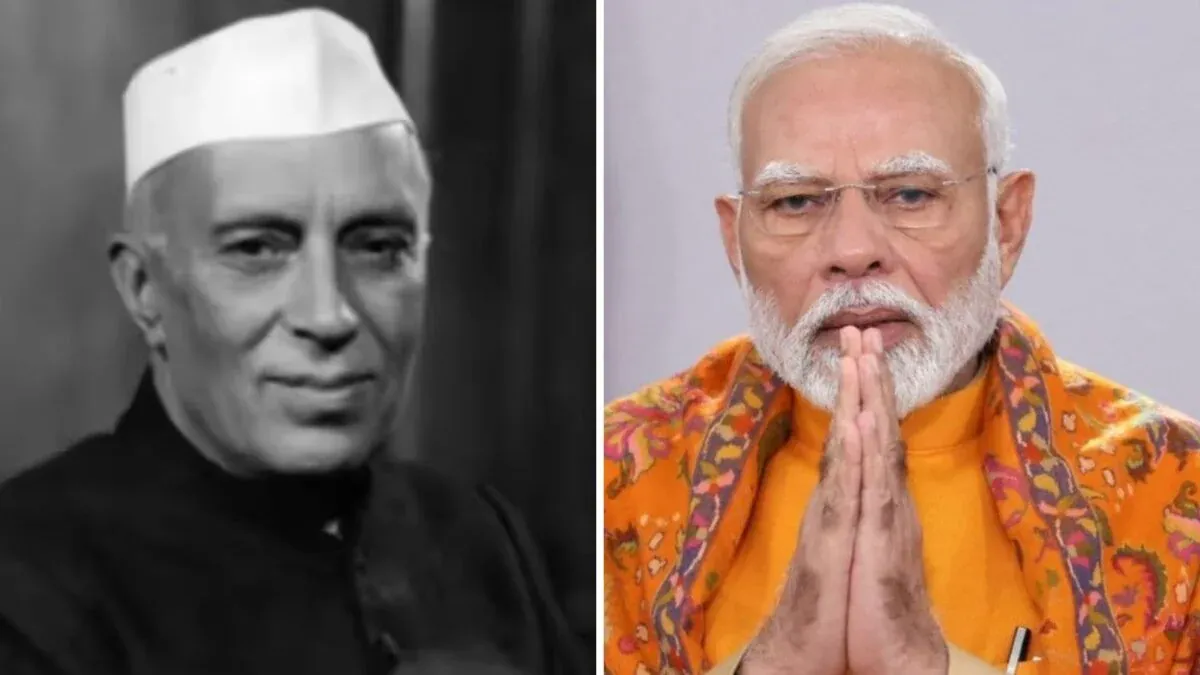
As Prime Minister Narendra Modi nears surpassing Jawaharlal Nehru as India's longest-serving democratically elected leader by June 2026, their distinct political journeys and India's socio-economic evolution are highlighted. Nehru rose amid post-independence consensus with Congress dominance, focusing on nation-building, while Modi's ascent involved competitive politics and grassroots engagement. Concurrently, India has transformed from elite privilege to widespread access in areas like transportation and communication, reflecting significant generational and infrastructural changes.
First-hand measurement across 2 sources
We measured how 2 outlets covered this story. Coverage leans balanced overall (Left 10%, Centre 55%, Right 35%). Overall sentiment is positive (72/100). Lens Score 27/100 — low public interest.
Outlets analysed (first-hand measurement by TBN's Bias Engine):
- news18— balanced framing, neutral sentiment
- news18— right-leaning framing, positive sentiment
AI Analysis
The articles present perspectives emphasizing both leaders' achievements without favoring either. Nehru is portrayed as inheriting a dominant Congress legacy post-independence, while Modi's rise is framed through competitive democratic processes. The coverage balances historical context with contemporary political dynamics, reflecting a neutral stance on their respective political environments and leadership styles.
The tone across the articles is generally positive and informative, focusing on progress and transformation. While acknowledging challenges faced by both leaders, the sentiment highlights India's development from Nehru's era to Modi's tenure, especially in infrastructure and technology, without overt criticism or praise, maintaining an optimistic yet balanced narrative.
How 2 sources covered this story
Each source's own headline, political lean, and sentiment — so you can see framing differences at a glance.