India Advances E20 Ethanol Fuel Blend Amid Debate on Pricing and Vehicle Impact
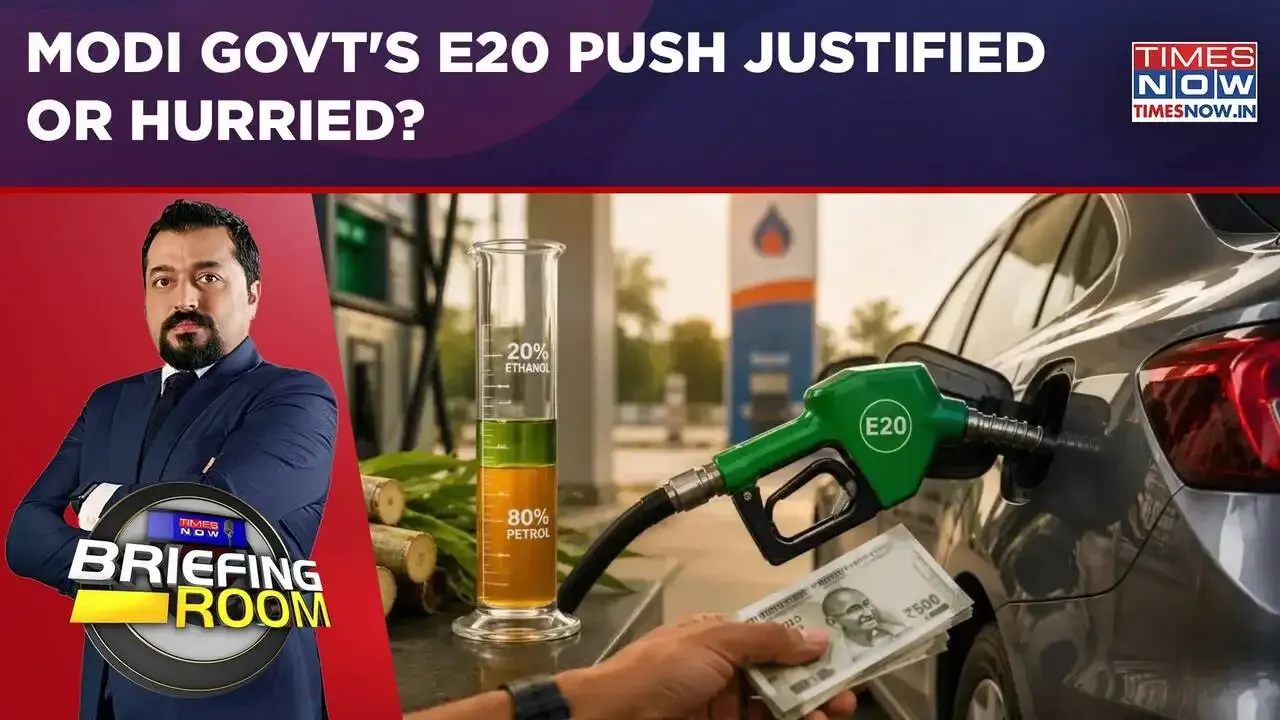
India has implemented mandatory E20 fuel blending, mixing 20% ethanol with petrol, ahead of the 2030 target. The government highlights savings of ₹1.9 lakh crore and supports the clean fuel initiative, while some consumers report mileage drops and technical issues. Former HPCL chief MK Surana clarified that ethanol blending does not reduce fuel prices since ethanol is costlier than petrol but noted it helps stabilize prices amid global crude volatility. Political leaders, including AAP's Arvind Kejriwal, have raised concerns about vehicle compatibility and called for options between pure petrol and E20.
First-hand measurement across 2 sources
We measured how 2 outlets covered this story. Coverage leans balanced overall (Left 33%, Centre 50%, Right 17%). Overall sentiment is neutral (50/100). Lens Score 32/100 — low public interest.
Outlets analysed (first-hand measurement by TBN's Bias Engine):
- timesnow— balanced framing, neutral sentiment
- english— balanced framing, positive sentiment
AI Analysis
The articles present multiple perspectives, including government promotion of E20 blending for economic and environmental benefits, expert views from a former HPCL chief clarifying cost implications, and opposition voices like AAP's Arvind Kejriwal expressing public concerns. Coverage balances official claims with consumer and political critiques, reflecting a range of viewpoints without favoring any side.
The overall tone is mixed, combining government optimism about cost savings and clean fuel benefits with consumer complaints about mileage and technical issues. Expert commentary provides a neutral economic analysis, while political reactions introduce critical concerns. This blend results in a balanced sentiment that acknowledges both advantages and challenges of the E20 rollout.
How 2 sources covered this story
Each source's own headline, political lean, and sentiment — so you can see framing differences at a glance.