Stanford Students Walk Out During Sundar Pichai's Commencement Speech Over Google-Israel Contract
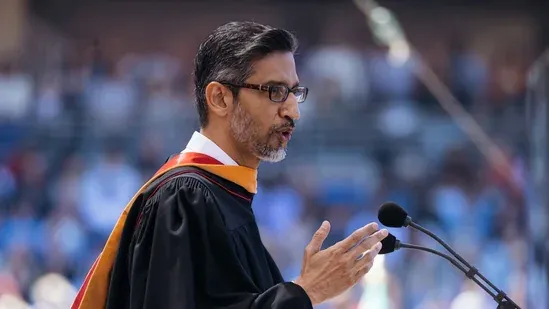
During Stanford University's 2026 commencement, around 200 students staged a walkout during Google CEO Sundar Pichai's keynote speech to protest Google's Project Nimbus, a $1.2 billion cloud computing and AI contract with the Israeli government. Organized by groups including Students for Justice in Palestine and No Tech for Apartheid, protesters cited concerns over the contract's links to Israeli military operations amid the Gaza conflict. Pichai, a Stanford alumnus, continued his speech focusing on personal journeys and optimism, avoiding mention of AI. The protest sparked varied reactions, including criticism from venture capitalist Vinod Khosla and support from others highlighting the students' stance against war profiteering.
First-hand measurement across 15 sources
We measured how 15 outlets covered this story. Coverage leans left-leaning overall (Left 61%, Centre 33%, Right 6%). Overall sentiment is neutral (40/100). Lens Score 33/100 — low public interest.
Outlets analysed (first-hand measurement by TBN's Bias Engine):
- freepressjournal— left-leaning framing, neutral sentiment
- indiatoday— balanced framing, neutral sentiment
- httpswwwoutlookindiacom— left-leaning framing, neutral sentiment
- thehindu— left-leaning framing, neutral sentiment
- freepressjournal— left-leaning framing, neutral sentiment
- indiatvnews— left-leaning framing, neutral sentiment
- ndtv— left-leaning framing, neutral sentiment
- republicworld— left-leaning framing, neutral sentiment
AI Analysis
The article group presents multiple perspectives including the protesters' viewpoint criticizing Google's contract with the Israeli government, the company's and supporters' defense of the contract as standard government services, and reactions from figures like Vinod Khosla who criticized the protest as shortsighted. Coverage includes voices from student activists, corporate leadership, and commentators, reflecting a spectrum of political opinions related to the Israel-Palestine conflict and corporate ethics.
The overall tone across the articles is mixed, combining the seriousness of the protest and its political motivations with the celebratory context of a commencement ceremony. While the protest is portrayed as a significant disruption, Pichai's speech is described as measured and optimistic. Reactions vary from critical to supportive of the students, resulting in a balanced sentiment that neither sensationalizes nor dismisses the event.