Skip to content
Get the Balanced News app for a better experience!
The Balanced News Logo
Analytics
The Balanced News Logo

Stay Balanced, Stay Informed

Menu
  • Browse News
  • Underreported Stories
  • Curated Feeds
  • Insights
  • Analytics
  • Our Writers
  • About Us
  • Download App
Learn
  • How It Works
  • Bias Detection
  • Lens Score
  • Source Bias Checker
  • Accountability
  • Custom Feeds
Newsroom
  • Writers & Analysts
  • About TBN
  • Editorial Standards
  • Corrections Policy
  • Our Partners
  • Insights
Socials
  • Youtube
  • Instagram
  • X
  • Facebook
News Categories
  • Trending
  • Politics
  • Sports
  • Business
  • Tech
  • Entertainment
  • Health
  • Science
  • Crime
  • Lifestyle
  • National
  • International
  • Good News
  • Crypto

Get Our App

Available for iOS and Android


LensFeedsInsightsAnalyticsTrendingGood NewsSportsPoliticsBusinessCrimeTechEntertainmentHealthNationalInternational

© 2026 The Balanced News. All rights reserved.

About UsEditorial StandardsCorrectionsHelp & SupportPrivacy PolicyTerms & Conditions
Pakistani Pilots Train in China for Potential Tiangong Space Station Mission
Categories

Categories

Related Coverage

Select a news story to see related coverage from other media outlets.

Related Coverage

Select a news story to see related coverage from other media outlets.

  1. Home
  2. /
  3. Politics

Pakistani Pilots Train in China for Potential Tiangong Space Station Mission

Analysed 28 Sept 2026·2 sources analysed·Pakistan·Politics
Pakistani Pilots Train in China for Potential Tiangong Space Station MissionPreviousNext

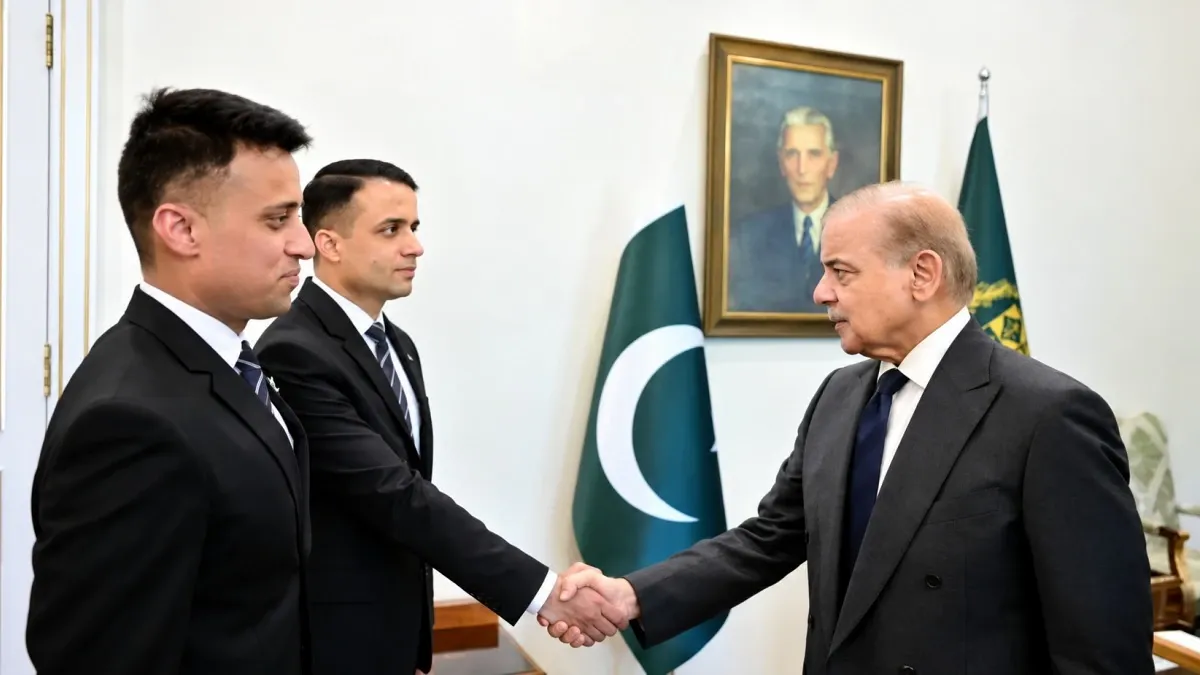
Two Pakistani pilots, Zeeshan Ali and Khurram Daud, are undergoing intensive training in Beijing to become the first foreign astronaut aboard China's Tiangong space station. Selected from about 20 candidates, they are learning Mandarin, spacecraft systems, and adapting to microgravity and high g-forces. A final decision on who will fly is expected by mid-to-late October. The mission, conceived in 2019, aims to strengthen China-Pakistan space cooperation and will involve conducting Pakistani scientific experiments during a week-long stay in orbit.

Sentiment
52%
TBN's observations

First-hand measurement across 2 sources

We measured how 2 outlets covered this story. No outlet gave this story a measurable political slant — there is no left–right reading to report. Overall sentiment is neutral (52/100). Lens Score 42/100.

Outlets measured: indiatoday, thehindu. See how each one headlined and framed the same story in the source comparison below.

AI analysis of 2 sources · Published under editorial oversight by The Balanced News
Analysed 28 Sept 2026· How this analysis is produced· Editorial standards· Corrections

AI Analysis

Sentiment — Neutral (52/100)

Sentiment was consistent across outlets (52–52/100), indicating broadly factual reporting rather than editorialising.

Coverage timeline

thehindu broke this story on 28 Sept, 06:46 am. Other outlets followed.

28 Sept, 06:46 am2 sources · 31 min28 Sept, 07:17 am
  1. 1
AI analysis by the TBN Bias Engine · beat methodology byPrajakta Kale· Political Analyst· editorial standards byOjas Kale
← Previous
Pakistan Denies Airspace Clearance Delaying Uranium Transport to Bangladesh's Rooppur Plant
Next →
Supreme Court Urges Expedited Decisions on Disqualification Petitions Against Rebel TMC Legislators
thehindu28 Sept, 06:46 am
China's space diplomacy brings Pakistani astronauts closer to orbit
  • 2
    indiatoday28 Sept, 07:17 am
    How China is training Pakistani pilots to work and live on Chinese space station
  • Who's involved

    Institutions and figures named across source coverage.

    Government
    China Astronaut Research and Training CenterPakistan Space and Upper Atmosphere Research CommissionChina National Space Administration

    Story context

    Category
    Politics
    Location
    Pakistan
    Sources analysed
    2
    Last analysed
    28 Sept 2026
    Key entities
    Tiangong space stationAstronautPakistanChinaBeijingMandarin ChineseWeightlessnessPayload specialistHuman spaceflightSpacecraftChinese languageFluid mechanics