Skip to content
Get the Balanced News app for a better experience!
The Balanced News Logo
Analytics
The Balanced News Logo

Stay Balanced, Stay Informed

Menu
  • Browse News
  • Underreported Stories
  • Curated Feeds
  • Insights
  • Analytics
  • Our Writers
  • About Us
  • Download App
Learn
  • How It Works
  • Bias Detection
  • Lens Score
  • Source Bias Checker
  • Accountability
  • Custom Feeds
Newsroom
  • Writers & Analysts
  • About TBN
  • Editorial Standards
  • Corrections Policy
  • Our Partners
  • Insights
Socials
  • Youtube
  • Instagram
  • X
  • Facebook
News Categories
  • Trending
  • Politics
  • Sports
  • Business
  • Tech
  • Entertainment
  • Health
  • Science
  • Crime
  • Lifestyle
  • National
  • International
  • Good News
  • Crypto

Get Our App

Available for iOS and Android


LensFeedsInsightsAnalyticsTrendingGood NewsSportsPoliticsBusinessCrimeTechEntertainmentHealthNationalInternational

© 2026 The Balanced News. All rights reserved.

About UsEditorial StandardsCorrectionsHelp & SupportPrivacy PolicyTerms & Conditions
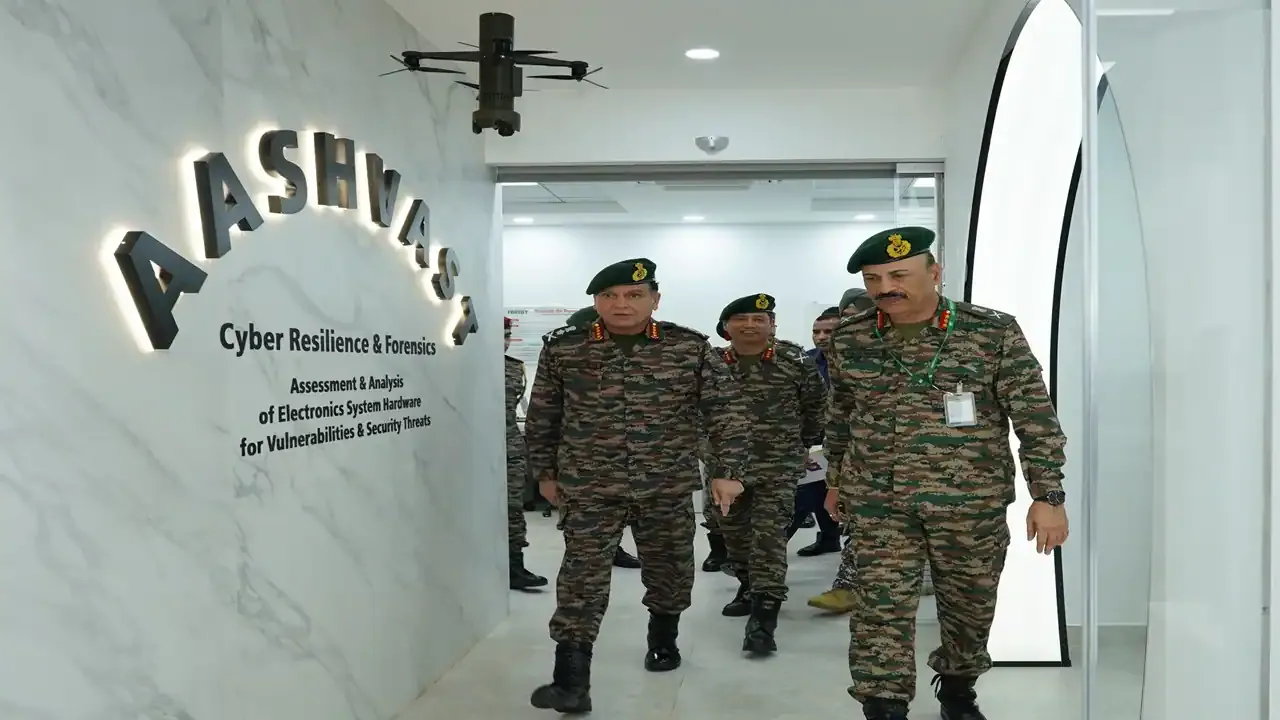
Indian Army Launches AASHVAST Lab to Detect Chinese Components in Military Drones
Categories

Categories

Related Coverage

Select a news story to see related coverage from other media outlets.

Related Coverage

Select a news story to see related coverage from other media outlets.

  1. Home
  2. /
  3. Politics

Indian Army Launches AASHVAST Lab to Detect Chinese Components in Military Drones

Analysed 7 Sept 2026·2 sources analysed·New Delhi, India·Politics
Indian Army Launches AASHVAST Lab to Detect Chinese Components in Military DronesPreviousNext

The Indian Army has established the AASHVAST lab in New Delhi to examine military drones for security vulnerabilities, focusing on detecting Chinese components and unauthorized modifications. The facility assesses firmware, hidden passwords, embedded encryption keys, and remote-access tools to ensure drones accept only authorized software updates and resist GPS spoofing or jamming. Developed for the Directorate General of Electronics and Mechanical Engineering, AASHVAST addresses previously overlooked risks in drone electronics to enhance mission-critical system security.

Sentiment
58%
TBN's observations

First-hand measurement across 2 sources

We measured how 2 outlets covered this story. No outlet gave this story a measurable political slant — there is no left–right reading to report. Overall sentiment is neutral (58/100). Lens Score 45/100.

Outlets measured: moneycontrol, thetribune. See how each one headlined and framed the same story in the source comparison below.

AI analysis of 2 sources · Published under editorial oversight by The Balanced News
Analysed 7 Sept 2026· How this analysis is produced· Editorial standards· Corrections

AI Analysis

Sentiment — Neutral (58/100)

Sentiment was consistent across outlets (52–65/100), indicating broadly factual reporting rather than editorialising.

Coverage timeline

thetribune broke this story on 6 Sept, 08:06 pm. Other outlets followed.

6 Sept, 08:06 pm2 sources · 15 h7 Sept, 11:15 am
AI analysis by the TBN Bias Engine · beat methodology byPrajakta Kale· Political Analyst· editorial standards byOjas Kale
← Previous
Ukraine and Russia Report Strikes on Each Other’s Facilities and Vessels
Next →
Asia-Pacific Media Forum Opens in Shenzhen to Promote Regional Media Cooperation
1
thetribune6 Sept, 08:06 pm
Army sets up lab to detect Chinese components in drones - The Tribune
  • 2
    moneycontrol7 Sept, 11:15 am
    Army sets up AASHVAST lab to detect Chinese components in military drones- Moneycontrol.com
  • Who's involved

    Institutions and figures named across source coverage.

    Government
    Indian ArmyDirectorate General of Electronics and Mechanical Engineering
    Corporate
    QuickPay Tech

    Story context

    Category
    Politics
    Location
    New Delhi, India
    Sources analysed
    2
    Last analysed
    7 Sept 2026
    Key entities
    Unmanned combat aerial vehicleUnmanned aerial vehicleSoftwareElectronicsChinaVulnerability (computing)Electronic musicUnited States ArmyNew DelhiRadio jammingSpoofing attackMechanical engineering