Sonam Wangchuk Begins Hunger Strike at Jantar Mantar Protest Demanding Education Minister's Resignation
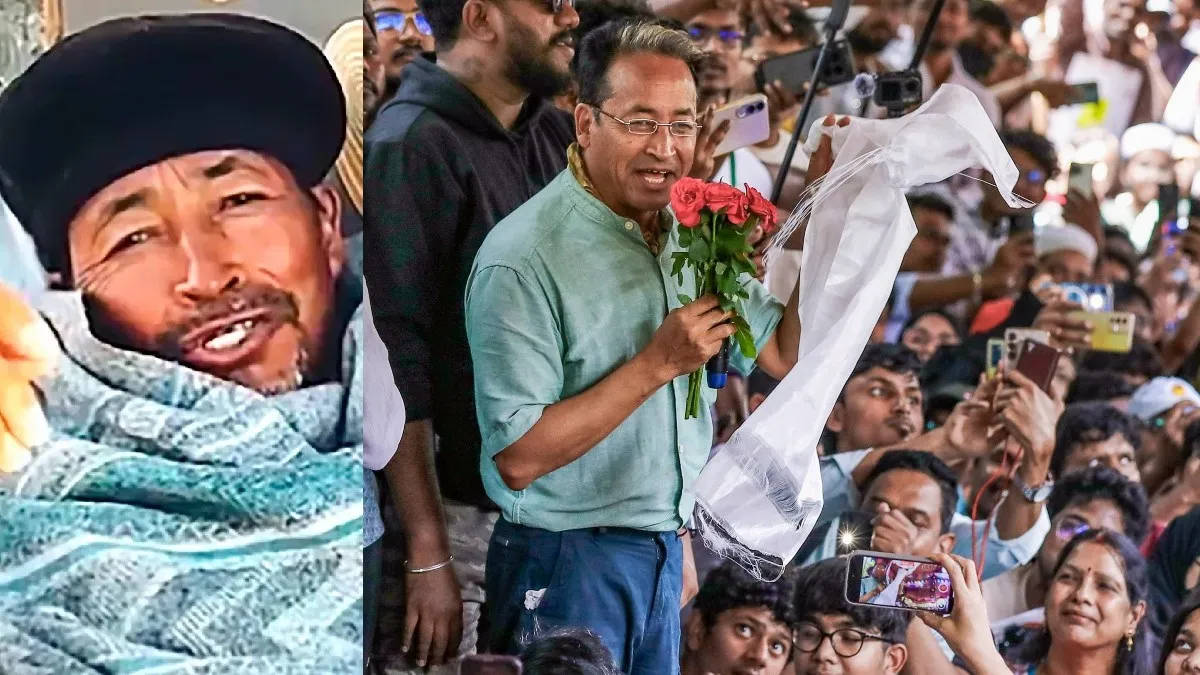
Climate activist Sonam Wangchuk began an indefinite hunger strike on June 28 at Delhi's Jantar Mantar, joining the Cockroach Janata Party (CJP) protest demanding the resignation of Union Education Minister Dharmendra Pradhan over alleged irregularities in competitive examinations, including the NEET paper leak. The protest, ongoing since June 20, has drawn students, farmer leaders, and civil society members. Organisers allege police cut water and sanitation facilities and placed several farmer leaders under house arrest to restrict participation. Wangchuk emphasized peaceful protest and accountability in education and environmental issues, while CJP leader Abhijeet Dipke indicated the movement may expand to electoral reforms after Pradhan's resignation.
First-hand measurement across 15 sources
We measured how 15 outlets covered this story. Coverage leans left-leaning overall (Left 68%, Centre 26%, Right 6%). Overall sentiment is neutral (34/100). Lens Score 36/100 — moderate-to-low public interest.
Outlets analysed (first-hand measurement by TBN's Bias Engine):
- easternmirror— left-leaning framing, negative sentiment
- thetribune— left-leaning framing, negative sentiment
- theprint— left-leaning framing, neutral sentiment
- thetribune— left-leaning framing, neutral sentiment
- economictimes— left-leaning framing, neutral sentiment
- thetribune— left-leaning framing, negative sentiment
- thetribune— left-leaning framing, neutral sentiment
- thetribune— left-leaning framing, negative sentiment
AI Analysis
The article group presents perspectives primarily from the Cockroach Janata Party and activist Sonam Wangchuk, focusing on demands for accountability and ministerial resignation over examination irregularities. It includes allegations against government authorities regarding restrictions on protesters and facility cutoffs. While government responses are limited or absent, the coverage reflects the protestors' viewpoints and their framing of systemic issues in education and governance without overt editorializing.
The overall tone across the articles is serious and concerned, highlighting the protestors' grievances and actions such as hunger strikes and sit-ins. The sentiment is largely sympathetic to the protestors, emphasizing calls for accountability and transparency, while reporting allegations of police actions that may hinder the protest. There is minimal positive or celebratory language, with a focus on the gravity of the issues and the protest's escalation.