Skip to content
Get the Balanced News app for a better experience!
The Balanced News Logo
Analytics
The Balanced News Logo

Stay Balanced, Stay Informed

Menu
  • Browse News
  • Underreported Stories
  • Curated Feeds
  • Insights
  • Analytics
  • Our Writers
  • About Us
  • Download App
Learn
  • How It Works
  • Bias Detection
  • Lens Score
  • Source Bias Checker
  • Accountability
  • Custom Feeds
Newsroom
  • Writers & Analysts
  • About TBN
  • Editorial Standards
  • Corrections Policy
  • Our Partners
  • Insights
Socials
  • Youtube
  • Instagram
  • X
  • Facebook
News Categories
  • Trending
  • Politics
  • Sports
  • Business
  • Tech
  • Entertainment
  • Health
  • Science
  • Crime
  • Lifestyle
  • National
  • International
  • Good News
  • Crypto

Get Our App

Available for iOS and Android


LensFeedsInsightsAnalyticsTrendingGood NewsSportsPoliticsBusinessCrimeTechEntertainmentHealthNationalInternational

© 2026 The Balanced News. All rights reserved.

About UsEditorial StandardsCorrectionsHelp & SupportPrivacy PolicyTerms & Conditions
Emerging Foreign Policy Approaches: Active Non-Alignment and Russia-India-China Relations
Categories

Categories

Related Coverage

Select a news story to see related coverage from other media outlets.

Related Coverage

Select a news story to see related coverage from other media outlets.

  1. Home
  2. /
  3. Politics

Emerging Foreign Policy Approaches: Active Non-Alignment and Russia-India-China Relations

Reviewed byPrajakta Kale· Political Analyst· Edited byOjas Kale
Analysed 8 Jun 2026·2 sources analysed·New Delhi, India·Politics
Emerging Foreign Policy Approaches: Active Non-Alignment and Russia-India-China RelationsPreviousNext

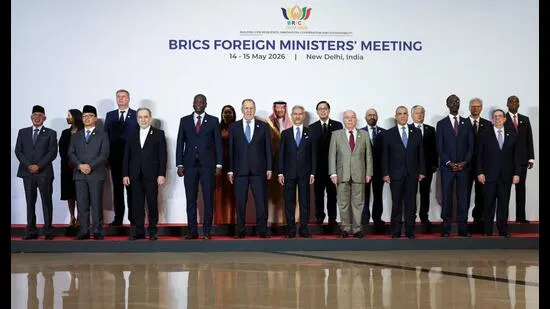
The concept of "active non-alignment" (ANA), developed by Chilean scholars, is gaining traction among world leaders from Indonesia, Brazil, Malaysia, and South Africa as a pragmatic foreign policy approach amid great-power competition. Concurrently, Russian President Vladimir Putin highlighted the Russia-India-China (RIC) trilateral's historical role and ongoing relevance, emphasizing India's independent foreign policy and Russia's intent to maintain strategic partnerships in South Asia despite geopolitical tensions. Both developments reflect efforts by middle powers to navigate complex global dynamics without strict alignment.

TBN's observations

First-hand measurement across 2 sources

We measured how 2 outlets covered this story. Coverage leans balanced overall (Left 10%, Centre 82%, Right 8%). Overall sentiment is neutral (60/100). Lens Score 24/100 — low public interest.

Outlets analysed (first-hand measurement by TBN's Bias Engine):

  • thetribune— balanced framing, neutral sentiment
  • hindustantimes— balanced framing, neutral sentiment
Political Bias
10%82%8%
Sentiment
60%
AI analysis of 2 sources · Published under editorial oversight by The Balanced News
Analysed 8 Jun 2026· How this analysis is produced· Editorial standards· Corrections

AI Analysis

Political bias across 2 sources
● Left 10%● Center 82%● Right 8%

The articles present perspectives from multiple countries emphasizing independent foreign policy strategies amid great-power rivalry. The first article highlights views from leaders of Indonesia, Brazil, Malaysia, and South Africa adopting active non-alignment, while the second focuses on Russia's framing of the RIC trilateral and its relations with India and China. Both sources frame their narratives around strategic autonomy without favoring any particular power bloc, reflecting a balanced representation of middle-power diplomacy.

Sentiment — Neutral (60/100)

The overall tone across the articles is neutral to cautiously optimistic, focusing on pragmatic diplomatic strategies rather than conflict or confrontation. Coverage emphasizes efforts to maintain peaceful, independent foreign policies and strategic partnerships, avoiding sensationalism. The sentiment reflects recognition of geopolitical challenges while highlighting constructive approaches by involved nations.

← Previous
Haryana CM Highlights Pilgrimage Role in Social Harmony and Cultural Heritage
Next →
US DOJ Initiates Citizenship Revocation Proceedings Against 17 Naturalized Americans

How 2 sources covered this story

Each source's own headline, political lean, and sentiment — so you can see framing differences at a glance.

SourceTheir headlineBiasSentiment
thetribuneReturn of RIC -- with strings attached - The TribuneCenterNeutral
hindustantimesWhen world leaders speak like academicsCenterNeutral

Coverage timeline

hindustantimes broke this story on 8 Jun, 03:13 pm. Other outlets followed.

  1. 1
    hindustantimes8 Jun, 03:13 pm
    When world leaders speak like academics
  2. 2
    thetribune8 Jun, 07:36 pm
    Return of RIC -- with strings attached - The Tribune

Lens Score breakdown

24/100
Public interest0/100
Coverage gap100%

Well-covered story — coverage matches public importance.

Who's involved

Institutions and figures named across source coverage.

Government
Chinese GovernmentIndian GovernmentIndian Ministry of External AffairsRussian Government

Story context

Category
Politics
Location
New Delhi, India
Sources analysed
2
Last analysed
8 Jun 2026
Key entities
Foreign policyBeijingNew DelhiIndiaChinaGeopoliticsBRICSAutonomyRussiaNon-Aligned MovementChileBrazil