India's MSMEs Struggle with Delayed Payments and GST Compliance Challenges
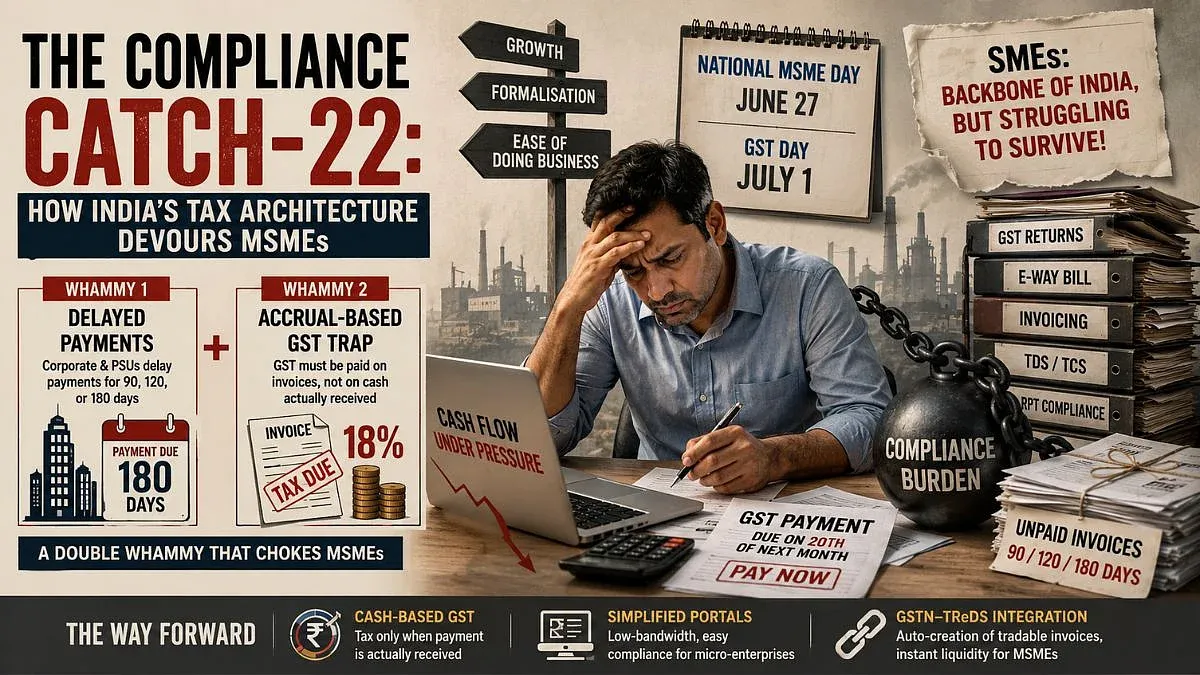
India's MSMEs face significant challenges due to delayed payments from large corporate buyers and a rigid GST tax system. Despite legal provisions under the MSMED Act mandating timely payments, many buyers extend payment cycles up to 180 days. Meanwhile, MSMEs must pay GST on receivables not yet received, creating financial strain. Institutional solutions like the RBI's TReDS platform aim to improve liquidity but have seen limited success due to corporate non-cooperation, highlighting a gap between policy and commercial realities.
First-hand measurement across 2 sources
We measured how 2 outlets covered this story. Coverage leans left-leaning overall (Left 60%, Centre 40%, Right 0%). Overall sentiment is neutral (35/100). Lens Score 28/100 — low public interest.
Outlets analysed (first-hand measurement by TBN's Bias Engine):
- freepressjournal— left-leaning framing, neutral sentiment
- thetribune— left-leaning framing, neutral sentiment
AI Analysis
The articles present a critical view of existing tax and payment systems affecting MSMEs without aligning with any political party. They highlight systemic issues involving government policies and corporate practices, reflecting concerns from both regulatory and business perspectives. The coverage emphasizes structural challenges rather than partisan viewpoints, focusing on policy impacts on small enterprises.
The overall tone is critical and concerned, emphasizing the difficulties MSMEs face due to delayed payments and strict tax compliance. While acknowledging government initiatives like TReDS, the articles underscore the limited effectiveness of these measures, resulting in a predominantly negative sentiment regarding the operational environment for small businesses.
How 2 sources covered this story
Each source's own headline, political lean, and sentiment — so you can see framing differences at a glance.