NCERT Class 9 Textbook Adds Election Commission Role and SIR Amid Opposition Criticism
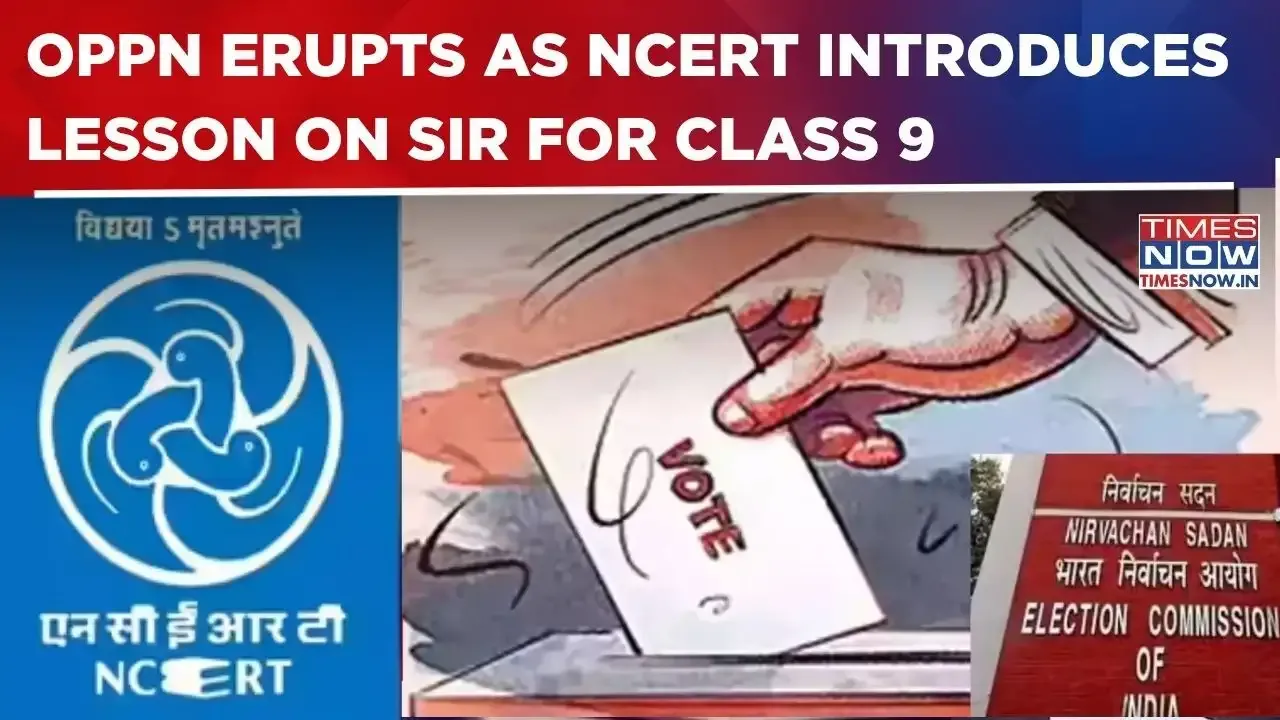
The NCERT Class 9 Social Science textbook now includes a chapter on India's electoral process, featuring the Special Intensive Revision (SIR) of electoral rolls and the Election Commission of India's (ECI) role in conducting free and fair elections. The textbook praises the ECI's efforts despite challenges like misinformation and intimidation. However, opposition parties, notably TMC MP Saugata Roy, have criticized the inclusion, alleging voter disenfranchisement during SIR, particularly in West Bengal, and deem the portrayal misleading and unacceptable.
First-hand measurement across 10 sources
We measured how 10 outlets covered this story. Coverage leans balanced overall (Left 34%, Centre 59%, Right 7%). Overall sentiment is neutral (54/100). Lens Score 32/100 — low public interest.
Outlets analysed (first-hand measurement by TBN's Bias Engine):
- indiatoday— balanced framing, neutral sentiment
- thetelegraph— balanced framing, neutral sentiment
- thetribune— balanced framing, neutral sentiment
- economictimes— balanced framing, neutral sentiment
- english— balanced framing, neutral sentiment
- zeenews— left-leaning framing, neutral sentiment
- economictimes— left-leaning framing, neutral sentiment
- news18— left-leaning framing, neutral sentiment
AI Analysis
The article group presents perspectives from both the NCERT and the Election Commission, which highlight the impartiality and scale of India's electoral process, and opposition voices, primarily from the Trinamool Congress, which criticize the portrayal due to alleged disenfranchisement during the SIR exercise. Coverage reflects a balance between official institutional narratives and political dissent, with emphasis on the controversy surrounding voter roll revisions.
The overall sentiment is mixed, combining positive tones in describing the NCERT's educational update and the Election Commission's praised role with critical viewpoints from opposition parties expressing concern over voter disenfranchisement. The coverage maintains a neutral tone by presenting both commendation and criticism without emotive language, reflecting the contentious nature of the topic.