Skip to content
Get the Balanced News app for a better experience!
The Balanced News Logo
Analytics
The Balanced News Logo

Stay Balanced, Stay Informed

Menu
  • Browse News
  • Underreported Stories
  • Curated Feeds
  • Insights
  • Analytics
  • Our Writers
  • About Us
  • Download App
Learn
  • How It Works
  • Bias Detection
  • Lens Score
  • Source Bias Checker
  • Accountability
  • Custom Feeds
Newsroom
  • Writers & Analysts
  • About TBN
  • Editorial Standards
  • Corrections Policy
  • Our Partners
  • Insights
Socials
  • Youtube
  • Instagram
  • X
  • Facebook
News Categories
  • Trending
  • Politics
  • Sports
  • Business
  • Tech
  • Entertainment
  • Health
  • Science
  • Crime
  • Lifestyle
  • National
  • International
  • Good News
  • Crypto

Get Our App

Available for iOS and Android


LensFeedsInsightsAnalyticsTrendingGood NewsSportsPoliticsBusinessCrimeTechEntertainmentHealthNationalInternational

© 2026 The Balanced News. All rights reserved.

About UsEditorial StandardsCorrectionsHelp & SupportPrivacy PolicyTerms & Conditions
Supreme Court of India’s Role and Internal Dynamics Explored in Recent Memoir
Categories

Categories

Related Coverage

Select a news story to see related coverage from other media outlets.

Related Coverage

Select a news story to see related coverage from other media outlets.

  1. Home
  2. /
  3. Politics

Supreme Court of India’s Role and Internal Dynamics Explored in Recent Memoir

Analysed 29 Oct 2026·2 sources analysed·United States·Politics
Supreme Court of India’s Role and Internal Dynamics Explored in Recent MemoirPreviousNext

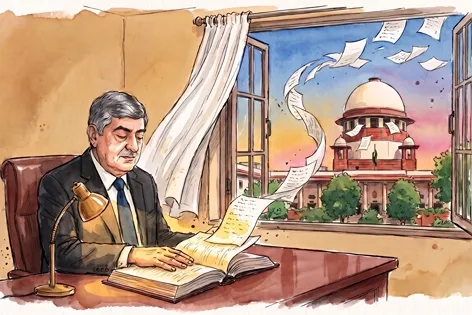
The Supreme Court of India, established in 1950 with broad constitutional powers, was envisioned as a transformative institution upholding citizens' rights alongside societal interests. Recent developments include former Justice Sanjay Kishan Kaul's memoir revealing internal Collegium deliberations and critiques of Chief Justice DY Chandrachud's approach to government relations. While such disclosures raise concerns about judicial comity and transparency, they also highlight ongoing debates about the Court's role and internal dynamics in India's constitutional framework.

Sentiment
48%
TBN's observations

First-hand measurement across 2 sources

We measured how 2 outlets covered this story. No outlet gave this story a measurable political slant — there is no left–right reading to report. Overall sentiment is neutral (48/100). Lens Score 33/100.

Outlets measured: swarajyamag, moneycontrol. See how each one headlined and framed the same story in the source comparison below.

AI analysis of 2 sources · Published under editorial oversight by The Balanced News
Analysed 29 Oct 2026· How this analysis is produced· Editorial standards· Corrections

AI Analysis

Sentiment — Neutral (48/100)

Sentiment was consistent across outlets (42–55/100), indicating broadly factual reporting rather than editorialising.

Coverage timeline

moneycontrol broke this story on 28 Oct, 12:41 pm. Other outlets followed.

28 Oct, 12:41 pm2 sources · 16 h29 Oct, 04:31 am
  1. 1
AI analysis by the TBN Bias Engine · beat methodology byPrajakta Kale· Political Analyst· editorial standards byOjas Kale
← Previous
Japanese Soccer Official Resigns Over FIFA Politics Amid Infantino Re-election Bid
Next →
Political Rumors and Development Concerns Shape Voter Sentiment in UP's Yadav Belt
moneycontrol28 Oct, 12:41 pm
OPINION Has the Supreme Court lived up to its founding promise?- Moneycontrol.com
  • 2
    swarajyamag29 Oct, 04:31 am
    Institutional Sovereignty And The Curious Case Of Judicial Memoirs
  • Who's involved

    Institutions and figures named across source coverage.

    Government
    Parliament of IndiaSupreme Court of India
    Judiciary
    Supreme Court of India

    Story context

    Category
    Politics
    Location
    United States
    Sources analysed
    2
    Last analysed
    29 Oct 2026
    Key entities
    Supreme Court of the United StatesJudiciarySupreme Court of IndiaJurisdictionConstitutionIndiaPurposive approachJudicial interpretationAttorney-General for IndiaConstitutionalismFundamental rightsProgressivism