India Rejects Pakistan President Zardari's Remarks on Religious Sites and Internal Affairs
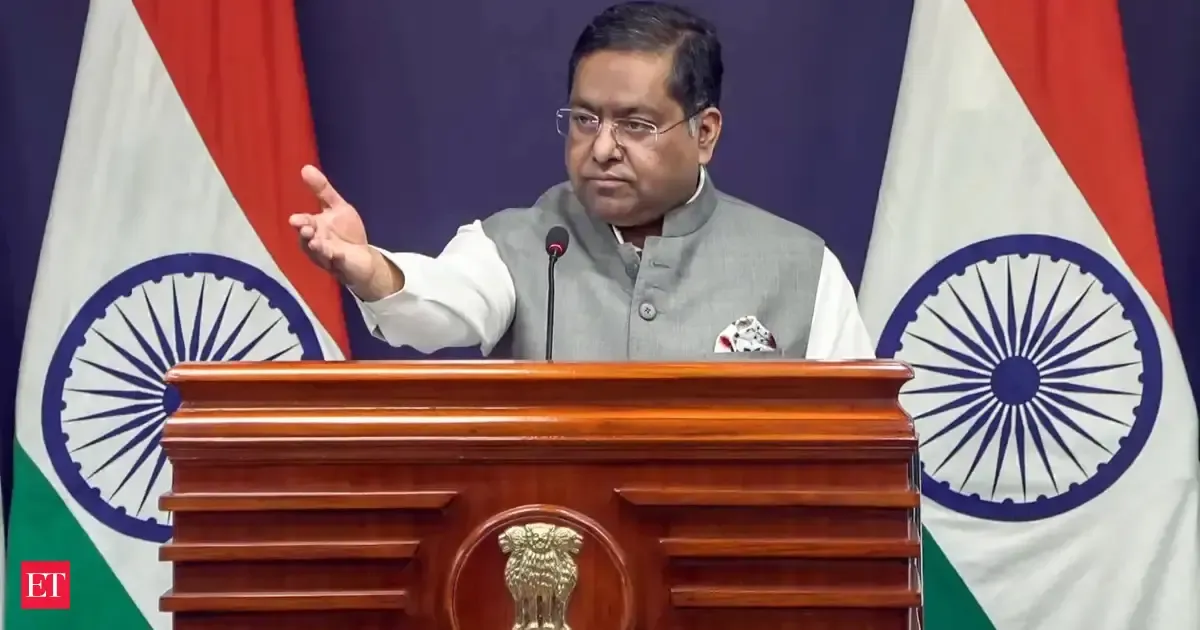
India strongly rejected remarks by Pakistan President Asif Ali Zardari concerning alleged demolition threats to Muslim religious sites in Varanasi, stating he has no locus standi to comment on India's internal matters. The Ministry of External Affairs described the comments as unwarranted and politically motivated, highlighting Pakistan's own criticized human rights record and history of minority persecution. Zardari urged India to halt such actions, warning of potential social unrest, while India dismissed these claims as interference based on unverified information.
First-hand measurement across 15 sources
We measured how 15 outlets covered this story. Coverage leans centre-right overall (Left 15%, Centre 38%, Right 47%). Overall sentiment is neutral (36/100). Lens Score 32/100 — low public interest.
Outlets analysed (first-hand measurement by TBN's Bias Engine):
- hindustantimes— right-leaning framing, neutral sentiment
- zeenews— right-leaning framing, neutral sentiment
- mint— balanced framing, neutral sentiment
- theprint— right-leaning framing, neutral sentiment
- thetribune— balanced framing, neutral sentiment
- wion— right-leaning framing, negative sentiment
- republicworld— right-leaning framing, neutral sentiment
- thehindu— right-leaning framing, neutral sentiment
AI Analysis
The article group predominantly reflects the Indian government's perspective, emphasizing rejection of Pakistan President Zardari's comments and highlighting Pakistan's human rights record. Pakistan's viewpoint is represented through Zardari's concerns over minority rights and cultural heritage. Coverage frames the issue as a political dispute, with India portraying the remarks as interference and Pakistan expressing criticism, showing a bilateral tension narrative.
The overall tone across the articles is critical and defensive from the Indian side, rejecting Pakistan's statements as unwarranted and politically motivated. Pakistan's remarks are presented as expressions of concern, but India’s response dominates with strong language. The sentiment is largely negative regarding the exchange, focusing on accusations and rebuttals, with limited positive or neutral elements.