Jamiat Ulema-e-Hind Chief Links 'Jihad' to India's Freedom Struggle, Calls for Communal Harmony
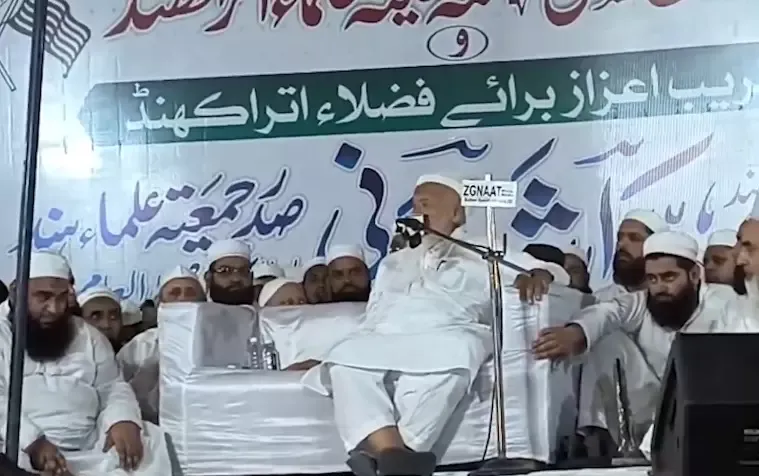
Jamiat Ulema-e-Hind president Maulana Syed Arshad Madani, speaking at a meeting in Uttarakhand, linked the concept of 'jihad' to India's anti-colonial struggle, stating it was a duty for Muslims to fight against British rule. He highlighted Muslims' contributions to India's independence and development, while expressing concerns over alleged demolition of mosques and incidents affecting Muslims today. Madani urged for communal harmony, promoting love over hatred to sustain the nation.
First-hand measurement across 2 sources
We measured how 2 outlets covered this story. Coverage leans left-leaning overall (Left 63%, Centre 32%, Right 5%). Overall sentiment is neutral (48/100). Lens Score 31/100 — low public interest.
Outlets analysed (first-hand measurement by TBN's Bias Engine):
- theassamtribune— left-leaning framing, neutral sentiment
- thestatesman— left-leaning framing, neutral sentiment
AI Analysis
The articles present perspectives emphasizing Muslim contributions to India's independence and current grievances regarding religious freedoms. The coverage includes both Madani's historical framing of 'jihad' and his calls for social harmony, reflecting viewpoints from Muslim community leadership. The framing is largely descriptive, focusing on Madani's statements without extensive critique or opposition views.
The tone across the articles is mixed, combining historical reflection and community pride with concerns about present-day challenges faced by Muslims. While Madani's call for love and harmony introduces a positive sentiment, references to mosque demolitions and communal tensions contribute a critical and serious tone, resulting in balanced coverage of both hope and grievance.
How 2 sources covered this story
Each source's own headline, political lean, and sentiment — so you can see framing differences at a glance.