US Supreme Court Expands Deportation Powers Over Green Card Holders Accused of Crimes
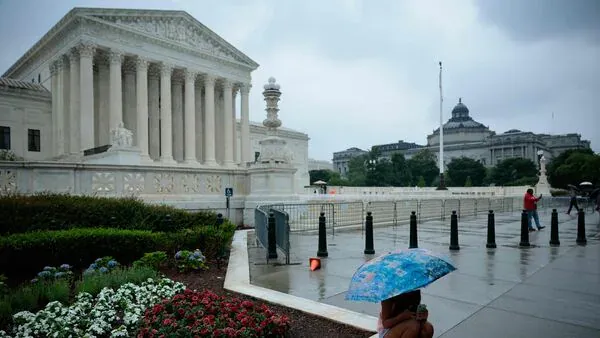
The US Supreme Court ruled 6-3 in Blanche v. Lau to expand federal immigration authorities' power to place green card holders accused of crimes on immigration parole and initiate deportation without proving guilt by clear and convincing evidence. The case involved Muk Choi Lau, a lawful permanent resident accused of counterfeiting. The majority held that suspicion suffices to deny admission, while dissenting justices warned this grants broad government authority and risks indefinite immigration limbo. The ruling affects lawful permanent residents, including millions in the Indian diaspora.
First-hand measurement across 5 sources
We measured how 5 outlets covered this story. Coverage leans balanced overall (Left 24%, Centre 72%, Right 4%). Overall sentiment is neutral (42/100). Lens Score 39/100 — moderate-to-low public interest.
Outlets analysed (first-hand measurement by TBN's Bias Engine):
- thetribune— balanced framing, neutral sentiment
- timesnow— balanced framing, neutral sentiment
- hindustantimes— balanced framing, neutral sentiment
- thefinancialexpress— balanced framing, neutral sentiment
- mint— left-leaning framing, neutral sentiment
AI Analysis
The article group presents perspectives from both conservative and liberal viewpoints. Majority opinions emphasize strengthening immigration enforcement aligned with the Trump administration's policies, while dissenting voices express concern over expanded government power and potential rights infringements. Coverage includes official legal reasoning and critiques from dissenting justices, reflecting a balanced presentation of the judicial decision and its implications.
The overall tone is mixed, combining factual reporting of the Supreme Court's decision with cautionary dissent highlighting potential negative consequences. Majority opinions are presented in a neutral, legalistic manner, while dissenting views introduce a critical perspective. The coverage neither sensationalizes nor endorses the ruling but acknowledges its significance and controversy.