Madhya Pradesh Advances Uniform Civil Code Draft Amid Political and Community Divergence
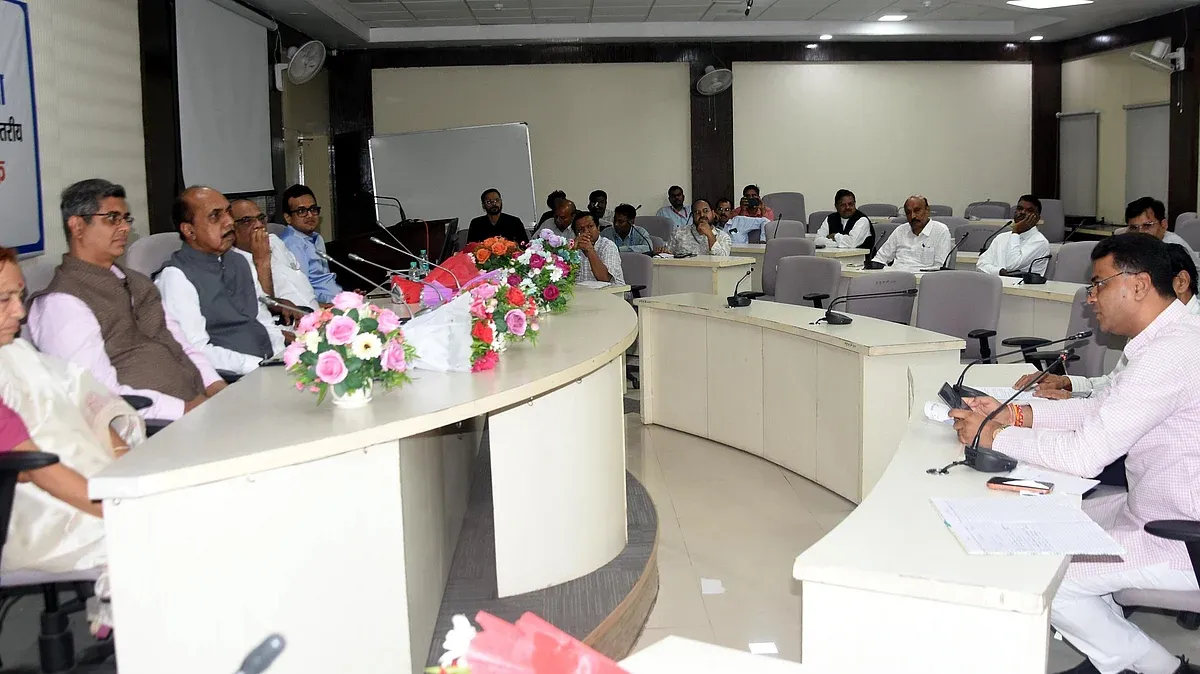
The Madhya Pradesh government is advancing its Uniform Civil Code (UCC) initiative, with a draft bill expected by late June or early July and planned introduction in the state assembly's monsoon session starting July 20. A six-member committee led by Justice Ranjana Desai has held extensive consultations with political parties, religious leaders, and stakeholders. While BJP supports the UCC, opposition parties like Congress, BSP, AAP, and NCP largely boycotted the meetings, citing concerns over cultural diversity and tribal customs. Muslim representatives opposed changes to personal laws, emphasizing protection of their traditions. Tribal communities, comprising 21% of the population, are widely suggested to be excluded from the UCC to respect their distinct customs. The debate reflects differing views on balancing uniformity with cultural and religious diversity in Madhya Pradesh.
First-hand measurement across 4 sources
We measured how 4 outlets covered this story. Coverage leans balanced overall (Left 37%, Centre 40%, Right 23%). Overall sentiment is neutral (51/100). Lens Score 39/100 — moderate-to-low public interest.
Outlets analysed (first-hand measurement by TBN's Bias Engine):
- freepressjournal— balanced framing, neutral sentiment
- ndtv— balanced framing, neutral sentiment
- freepressjournal— centre-left framing, neutral sentiment
- freepressjournal— centre-left framing, neutral sentiment
AI Analysis
The article group presents multiple political perspectives: BJP advocates for the UCC, emphasizing uniformity and legal reforms, while opposition parties such as Congress, BSP, AAP, and NCP largely abstain from consultations, framing the UCC as a diversion or threat to cultural diversity. CPI(M) voices concerns about timing and tribal customs. Muslim representatives express strong opposition to altering personal laws. This range of views reflects the political contestation and cultural sensitivities surrounding the UCC in Madhya Pradesh.
The overall tone across the articles is mixed, combining cautious support from the BJP and government officials with critical and oppositional sentiments from other political parties and community representatives. Concerns about cultural preservation, tribal rights, and religious freedoms temper enthusiasm for the UCC, while government sources highlight procedural progress and stakeholder engagement. The coverage balances optimism about legislative advancement with acknowledgment of significant challenges and dissent.