Supreme Court Recognises Homemakers as Nation Builders, Sets Rs 30,000 Monthly Compensation
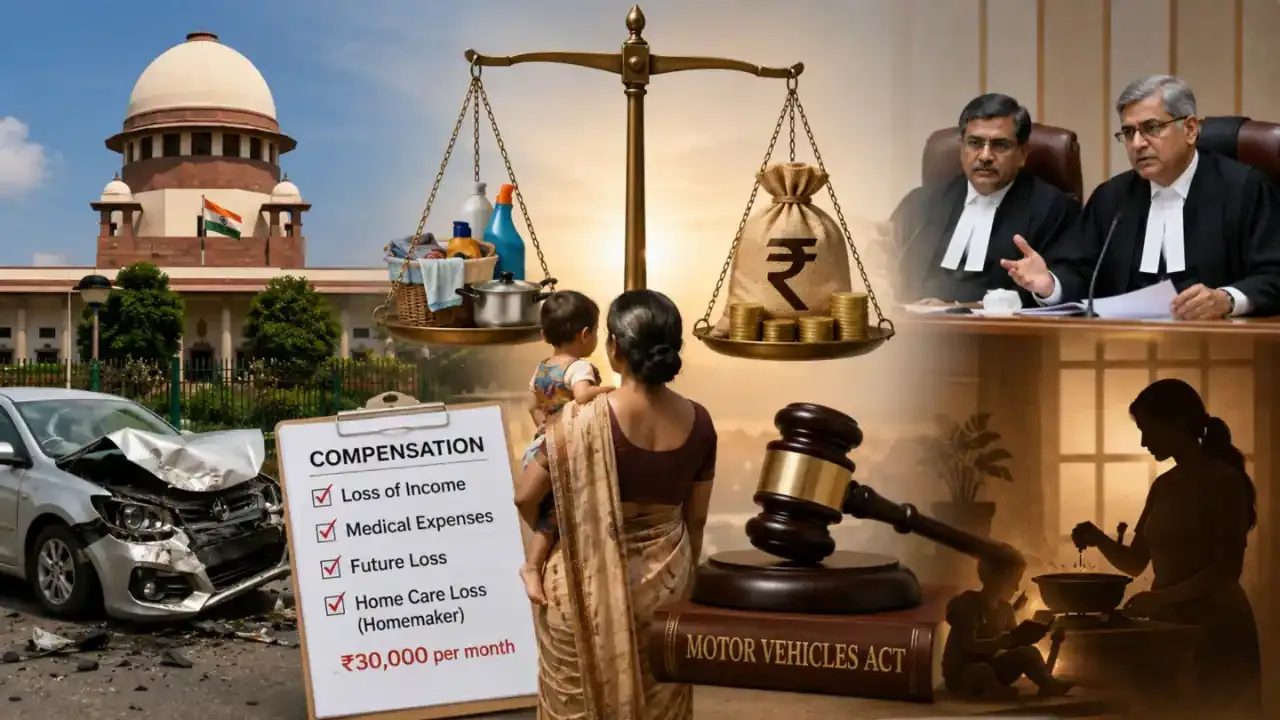
The Supreme Court of India has recognised homemakers as 'nation builders' and ruled that the loss of their unpaid domestic care constitutes a distinct and compensable head in motor accident claims. The court set a minimum monthly valuation of Rs 30,000 for such domestic services, acknowledging their significant socio-economic contribution beyond household chores. The ruling arose from a 2001 accident case and aims to ensure timely, fair compensation while emphasising shared domestic responsibilities and women's rights to pursue careers post-marriage.
First-hand measurement across 11 sources
We measured how 11 outlets covered this story. Coverage leans balanced overall (Left 23%, Centre 73%, Right 4%). Overall sentiment is positive (74/100). Lens Score 29/100 — low public interest.
Outlets analysed (first-hand measurement by TBN's Bias Engine):
- thetribune— balanced framing, positive sentiment
- indiatvnews— balanced framing, positive sentiment
- freepressjournal— balanced framing, positive sentiment
- thehindu— balanced framing, positive sentiment
- news18— balanced framing, positive sentiment
- english— balanced framing, positive sentiment
- thetelegraph— balanced framing, positive sentiment
- economictimes— balanced framing, positive sentiment
AI Analysis
The article group presents a largely uniform judicial perspective emphasizing gender equality and socio-economic recognition of unpaid domestic work. Coverage focuses on the Supreme Court's progressive stance without partisan framing, reflecting legal and social viewpoints that highlight women's contributions and rights. There is minimal political polarization, with sources concentrating on the court's rationale and implications for compensation law.
The overall tone across the articles is positive and respectful, highlighting the Supreme Court's landmark decision as a significant step toward valuing unpaid domestic labor. The sentiment conveys recognition and empowerment of homemakers, with an emphasis on fairness and social justice. There is no notable negative or critical sentiment, reflecting broad approval of the ruling's implications.