AIMPLB Member Claims Hindus Are Not Majority When Communities Are Separately Counted
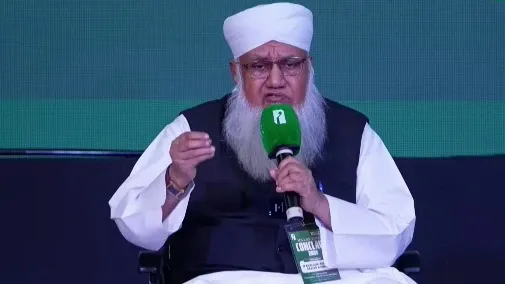
Maulana Sajjad Nomani, a senior member of the All India Muslim Personal Law Board, claimed that Hindus are no longer the majority in India when various communities are considered separately. He argued that groups such as Sikhs, Christians, Buddhists, Scheduled Castes, tribal communities, people from Tamil Nadu, Lingayats, and some Jats should not be classified as Hindus. Nomani also noted political divisions among Hindus, stating that reliance on both 'secular' and 'fascist' Hindu groups had affected Muslim political interests. These remarks have sparked debate on religious and demographic classifications in India.
First-hand measurement across 3 sources
We measured how 3 outlets covered this story. Coverage leans left-leaning overall (Left 57%, Centre 28%, Right 15%). Overall sentiment is negative (33/100). Lens Score 32/100 — low public interest.
Outlets analysed (first-hand measurement by TBN's Bias Engine):
- republicworld— centre-left framing, neutral sentiment
- opindia— left-leaning framing, negative sentiment
- indiatoday— left-leaning framing, neutral sentiment
AI Analysis
The articles present perspectives primarily from Maulana Sajjad Nomani, a senior AIMPLB member, reflecting a viewpoint that challenges conventional demographic classifications of Hindus in India. The coverage includes his critique of Hindu political divisions without endorsing or disputing his claims. Both sources focus on his statements, with limited inclusion of counterarguments or official data, highlighting a perspective centered on religious identity debates.
The tone across the articles is largely neutral to critical, focusing on the controversy sparked by Nomani's statements. The coverage emphasizes the contentious nature of his claims without overtly positive or negative language, presenting his remarks as a subject of public debate. The sentiment reflects the sensitive and potentially divisive nature of discussions on religious demographics and identity.