UK Court Reviews Legal Challenge Over Sale of Hindu Temple to Islamic Group
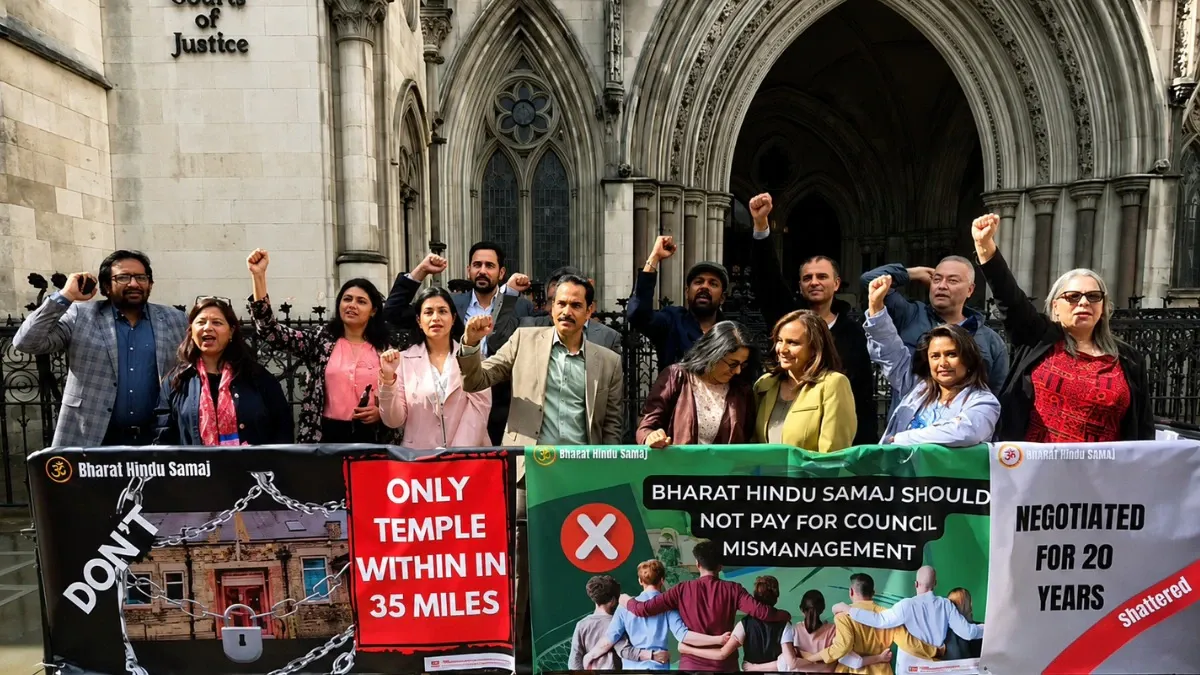
The UK High Court is reviewing a legal challenge against Peterborough City Council's decision to sell the New England Complex, home to the 40-year-old Bharat Hindu Samaj (BHS) temple, to the United Kingdom Islamic Mission (UKIM). The temple, serving around 14,000 to 18,000 Hindus across several counties, was established by families expelled from Uganda in 1972. The council cites financial debt as the reason for the sale, while BHS trustees argue the process was unfair and discriminatory, emphasizing the temple's community significance. UKIM plans to develop the site into a mosque and community centre. Both parties stress the dispute concerns council procedures rather than faith conflict, and alternative premises are being considered for BHS.
First-hand measurement across 8 sources
We measured how 8 outlets covered this story. Coverage leans balanced overall (Left 20%, Centre 75%, Right 5%). Overall sentiment is neutral (43/100). Lens Score 35/100 — moderate-to-low public interest.
Outlets analysed (first-hand measurement by TBN's Bias Engine):
- news18— balanced framing, neutral sentiment
- ndtv— balanced framing, neutral sentiment
- news18— balanced framing, neutral sentiment
- thetribune— balanced framing, neutral sentiment
- indiatoday— balanced framing, neutral sentiment
- firstpost— balanced framing, neutral sentiment
- hindustantimes— balanced framing, neutral sentiment
- indiatoday— balanced framing, neutral sentiment
AI Analysis
The article group presents perspectives from both the Hindu temple trustees and the Peterborough City Council, reflecting concerns about community impact and legal fairness. Coverage includes the council's financial motivations and the temple trust's claims of discrimination and procedural flaws. The Islamic group’s plans and statements are also noted, with sources emphasizing that the dispute centers on administrative decisions rather than religious tensions, providing a balanced representation of stakeholders.
The overall tone across the articles is neutral to cautiously concerned, focusing on the legal and community implications without sensationalizing the conflict. While the temple trustees express anxiety and disappointment, the council and Islamic group highlight procedural justifications and future plans. The coverage acknowledges the emotional significance for worshippers alongside the council’s financial challenges, resulting in a measured and fact-based sentiment.