Skip to content
Get the Balanced News app for a better experience!
The Balanced News Logo
Analytics
The Balanced News Logo

Stay Balanced, Stay Informed

Menu
  • Browse News
  • Underreported Stories
  • Curated Feeds
  • Insights
  • Analytics
  • Our Writers
  • About Us
  • Download App
Learn
  • How It Works
  • Bias Detection
  • Lens Score
  • Source Bias Checker
  • Accountability
  • Custom Feeds
Newsroom
  • Writers & Analysts
  • About TBN
  • Editorial Standards
  • Corrections Policy
  • Our Partners
  • Insights
Socials
  • Youtube
  • Instagram
  • X
  • Facebook
News Categories
  • Trending
  • Politics
  • Sports
  • Business
  • Tech
  • Entertainment
  • Health
  • Science
  • Crime
  • Lifestyle
  • National
  • International
  • Good News
  • Crypto

Get Our App

Available for iOS and Android


LensFeedsInsightsAnalyticsTrendingGood NewsSportsPoliticsBusinessCrimeTechEntertainmentHealthNationalInternational

© 2026 The Balanced News. All rights reserved.

About UsEditorial StandardsCorrectionsHelp & SupportPrivacy PolicyTerms & Conditions

Categories

Categories

Related Coverage

Select a news story to see related coverage from other media outlets.

Related Coverage

Select a news story to see related coverage from other media outlets.

  1. Home
  2. /
  3. Politics

Shifting Global Power Dynamics and Strategic Realignments in International Relations

Reviewed byPrajakta Kale· Political Analyst· Edited byOjas Kale
Analysed 10 Jun 2026·3 sources analysed·Washington (state), United States·Politics
Shifting Global Power Dynamics and Strategic Realignments in International RelationsPrevious
Next

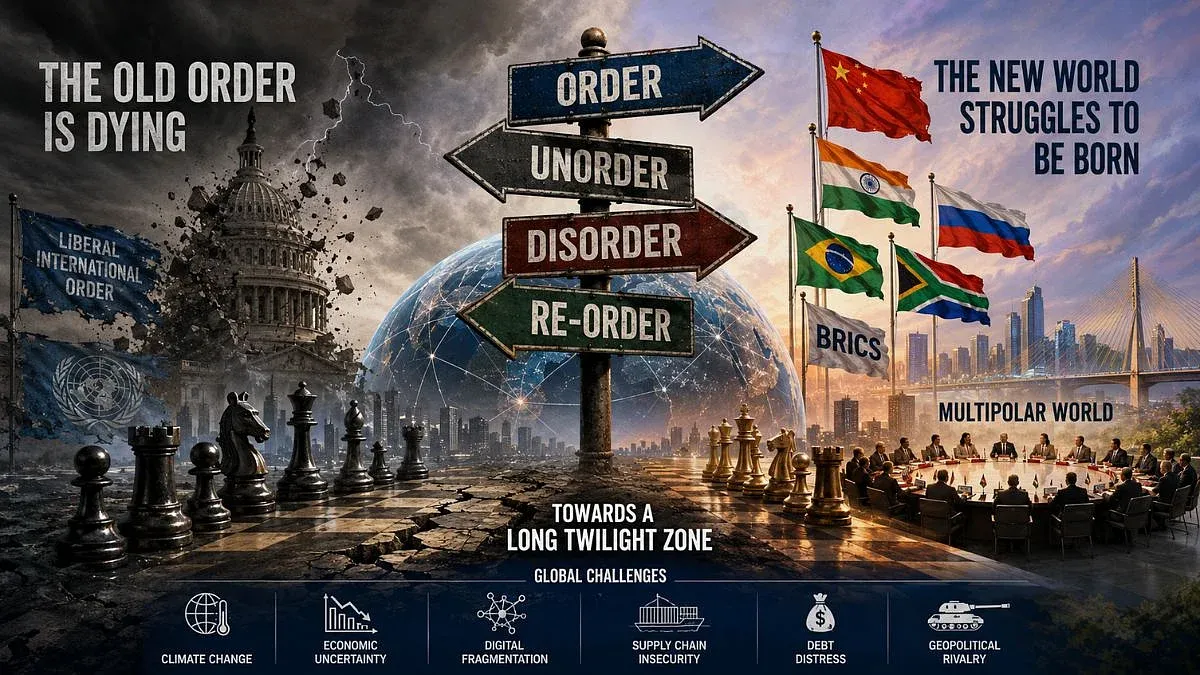
Global geopolitical dynamics are undergoing significant shifts marked by the decline of the liberal international order and the emergence of new power equilibriums. The US and China have acknowledged a strategic stability reflecting China's rise as a peer competitor, affecting regional alliances like the Quad. Meanwhile, the European Union's approach to conflicts such as Kashmir and Ukraine has drawn criticism for equating distinct disputes, highlighting tensions in international diplomacy and realpolitik considerations.

TBN's observations

First-hand measurement across 3 sources

We measured how 3 outlets covered this story. Coverage leans balanced overall (Left 27%, Centre 63%, Right 10%). Overall sentiment is neutral (43/100). Lens Score 25/100 — low public interest.

Outlets analysed (first-hand measurement by TBN's Bias Engine):

  • freepressjournal— balanced framing, neutral sentiment
  • news18— balanced framing, neutral sentiment
  • scrollin— balanced framing, neutral sentiment
Political Bias
27%63%10%
Sentiment
43%
AI analysis of 3 sources · Published under editorial oversight by The Balanced News
Analysed 10 Jun 2026· How this analysis is produced· Editorial standards· Corrections

AI Analysis

Political bias across 3 sources
● Left 27%● Center 63%● Right 10%

The articles collectively present multiple geopolitical perspectives, including Western critiques of the liberal order's decline, recognition of China's growing influence by US officials, and India's nuanced stance on sovereignty issues vis-à-vis EU diplomacy. Sources reflect a range of viewpoints from Western policymakers, Asian regional actors, and analysts emphasizing realpolitik, without overt partisan framing, offering a broad spectrum of international relations discourse.

Sentiment — Neutral (43/100)

The overall tone across the articles is analytical and measured, focusing on describing evolving geopolitical realities without emotive language. While some critiques are present, such as the EU's diplomatic approach, the coverage remains largely neutral, emphasizing complexity and uncertainty rather than positive or negative judgments about the actors or developments involved.

How 3 sources covered this story

← Previous
Indian Railways to Conduct Nationwide Fire Safety Audits at Stations
Next →
BJP Marks Prime Minister Modi's 12th Year in Office with Celebrations in Karnataka

Each source's own headline, political lean, and sentiment — so you can see framing differences at a glance.

SourceTheir headlineBiasSentiment
freepressjournalOrder, Unorder, Disorder, Re-Order: Towards A Long Twilight ZoneCenterNeutral
news18Global Watch I Why EU's Kashmir-Ukraine Equivalence Is A Strategic ErrorCenterNeutral
scrollinQuad and India take second place as US, China cement tiesCenterNeutral

Coverage timeline

scrollin broke this story on 10 Jun, 02:09 pm. Other outlets followed.

  1. 1
    scrollin10 Jun, 02:09 pm
    Quad and India take second place as US, China cement ties
  2. 2
    news1810 Jun, 02:32 pm
    Global Watch I Why EU's Kashmir-Ukraine Equivalence Is A Strategic Error
  3. 3
    freepressjournal10 Jun, 04:35 pm
    Order, Unorder, Disorder, Re-Order: Towards A Long Twilight Zone

Lens Score breakdown

25/100
Public interest0/100
Coverage gap90%

Well-covered story — coverage matches public importance.

Who's involved

Institutions and figures named across source coverage.
Government
Chinese GovernmentIndonesian GovernmentSouth Korean GovernmentAustralian GovernmentPhilippine GovernmentUS Secretary of StateJapanese GovernmentIndian GovernmentUS Government
Political
BRICSQuadrilateral Security Dialogue

Story context

Category
Politics
Location
Washington (state), United States
Sources analysed
3
Last analysed
10 Jun 2026
Key entities
ChinaIndiaEuropeUnited StatesGeopoliticsDonald TrumpGreat powerBRICSNon-Aligned MovementXi JinpingBeijingNew Delhi
Shifting Global Power Dynamics and Strategic Realignments in International Relations