IBM Unveils World's First Sub-1 Nanometer Chip Technology with NanoStack Architecture
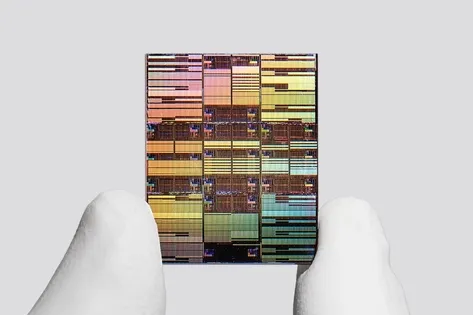
IBM has unveiled the world's first sub-1 nanometer chip technology featuring a 0.7nm transistor architecture called NanoStack. This design stacks transistors vertically, nearly doubling transistor density to about 100 billion on a fingernail-sized chip. Laboratory tests show up to 50% higher performance and 70% greater energy efficiency compared to IBM's 2nm chips. While the technology remains in research and commercial production is expected within five years, it represents a significant advancement for AI, cloud computing, and semiconductor scaling.
First-hand measurement across 6 sources
We measured how 6 outlets covered this story. Coverage leans balanced overall (Left 0%, Centre 100%, Right 0%). Overall sentiment is positive (77/100). Lens Score 32/100 — low public interest.
Outlets analysed (first-hand measurement by TBN's Bias Engine):
- economictimes— balanced framing, positive sentiment
- northeastnow— balanced framing, positive sentiment
- indianexpress— balanced framing, positive sentiment
- economictimes— balanced framing, positive sentiment
- firstpost— balanced framing, positive sentiment
- swarajyamag— balanced framing, positive sentiment
AI Analysis
The article group primarily presents a technological and industry-focused perspective without evident political framing. Coverage centers on IBM's innovation and its implications for the semiconductor sector and AI computing. Sources emphasize technical achievements and competitive positioning among chipmakers, with no partisan viewpoints or political controversies discussed.
The overall tone across the articles is positive and forward-looking, highlighting IBM's breakthrough as a significant advancement in chip technology. While acknowledging the research-stage status and timeline for commercial production, the coverage emphasizes performance gains and energy efficiency, reflecting optimism about future computing capabilities.
How 6 sources covered this story
Each source's own headline, political lean, and sentiment — so you can see framing differences at a glance.