China Tests Sea-Based Rocket Booster Recovery System with Long March 10B
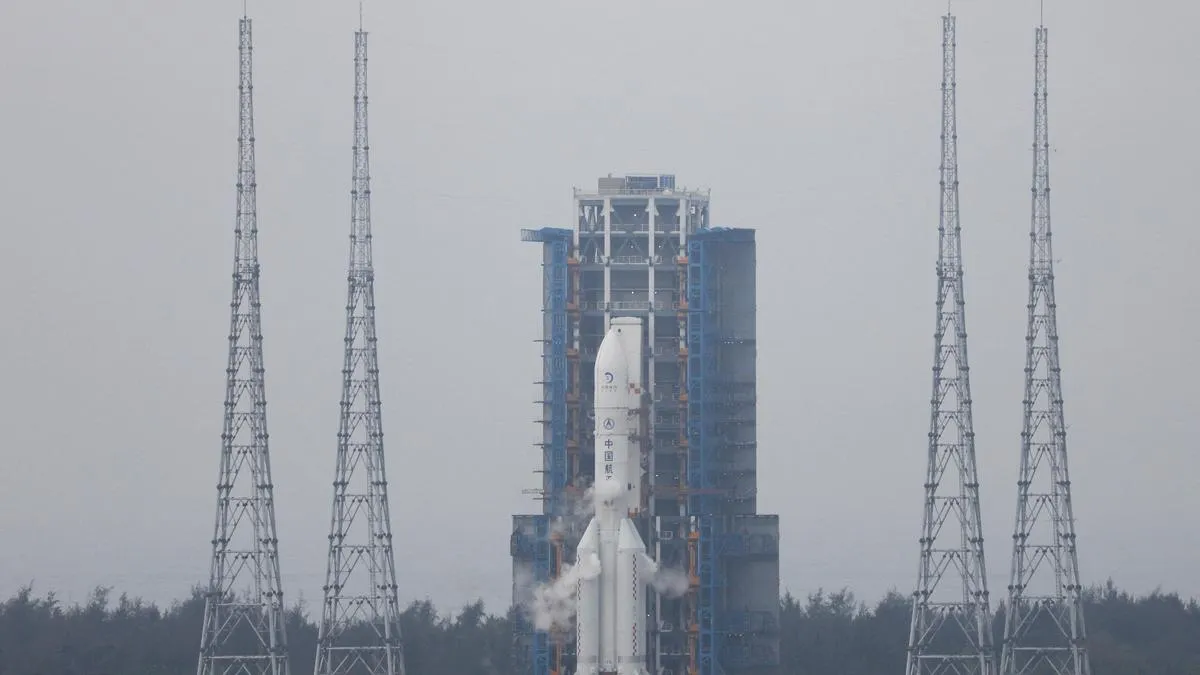
China successfully tested an experimental sea-based rocket booster recovery system using a net attached to an offshore platform. The Long March 10B rocket, launched from Hainan, achieved controlled vertical booster recovery about six minutes after stage separation. This marks China's first retrieval of an orbital-class rocket booster and advances its goal of developing reusable rockets to reduce launch costs and challenge U.S. dominance. The system differs from SpaceX's Falcon 9 by using landing hooks to catch the net rather than autonomous landings.
First-hand measurement across 2 sources
We measured how 2 outlets covered this story. Coverage leans balanced overall (Left 0%, Centre 100%, Right 0%). Overall sentiment is positive (72/100). Lens Score 36/100 — moderate-to-low public interest.
Outlets analysed (first-hand measurement by TBN's Bias Engine):
- economictimes— balanced framing, positive sentiment
- thehindu— balanced framing, positive sentiment
AI Analysis
The articles present a primarily technical and developmental perspective on China's rocket recovery test, focusing on its significance in advancing reusable rocket technology. They highlight China's ambition to compete with U.S. aerospace capabilities without overt political commentary. The coverage includes comparisons to U.S. SpaceX technology, reflecting an international competitive context but maintains a neutral tone without favoring any side.
The overall tone is positive and factual, emphasizing the successful test and technological progress. The articles convey a sense of achievement and advancement for China's space program, noting market reactions and future plans. There is no evident negative sentiment or criticism, resulting in an optimistic but balanced portrayal of the event.
How 2 sources covered this story
Each source's own headline, political lean, and sentiment — so you can see framing differences at a glance.