SpaceX Advances Reusable Rocket Technology with Ambitions for Mars Exploration
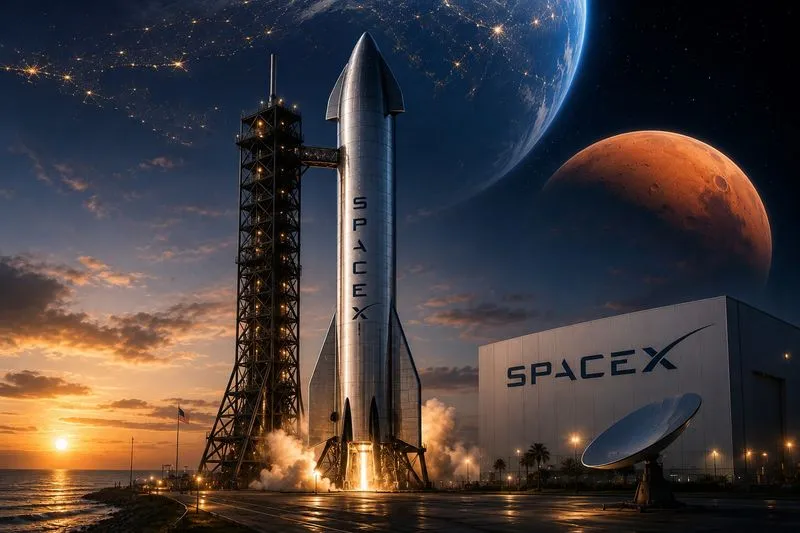
SpaceX, founded by Elon Musk in 2002, has revolutionized space travel by developing reusable rockets, significantly reducing launch costs. Its Falcon 9 and Falcon Heavy rockets frequently carry satellites, cargo, and astronauts into orbit. The company aims to make humanity multi-planetary, with plans extending beyond current rockets to the development of the Starship vehicle for deeper space missions, including Mars colonization.
First-hand measurement across 3 sources
We measured how 3 outlets covered this story. Coverage leans balanced overall (Left 3%, Centre 95%, Right 2%). Overall sentiment is positive (75/100). Lens Score 23/100 — low public interest.
Outlets analysed (first-hand measurement by TBN's Bias Engine):
- economictimes— balanced framing, positive sentiment
- northeastnow— balanced framing, positive sentiment
- thetribune— balanced framing, positive sentiment
AI Analysis
The articles present a largely technological and entrepreneurial perspective focused on SpaceX's innovations and ambitions. They highlight Elon Musk's role and the company's impact on space travel economics without engaging in political debate. The coverage is framed around industry transformation and future goals, reflecting a business and technology viewpoint rather than political ideologies.
The tone across the articles is generally positive, emphasizing SpaceX's achievements in reducing space travel costs and pioneering reusable rocket technology. While acknowledging the challenges of space exploration, the coverage conveys optimism about the company's potential to advance human spaceflight and colonization efforts, portraying Musk's vision as ambitious and transformative.
How 3 sources covered this story
Each source's own headline, political lean, and sentiment — so you can see framing differences at a glance.