Google's Smartphone Network Provided Early Alerts for Venezuela Earthquakes
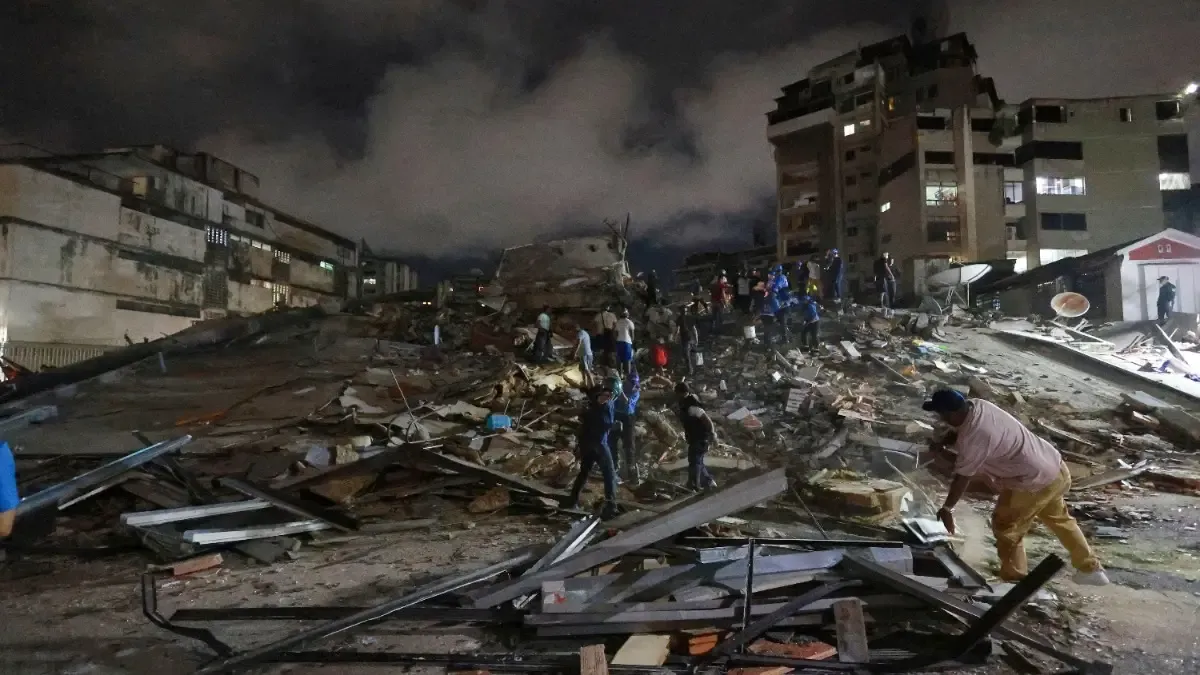
Venezuela experienced two powerful earthquakes, measuring 7.1 and 7.5, causing significant damage. Users reported receiving Google earthquake alerts seconds before feeling the tremors. Google's Android Earthquake Alerts System detects initial, faster seismic P-waves via accelerometers in smartphones, which send data to servers that confirm quakes by aggregating signals from multiple devices. This early detection allows warnings before the more destructive waves arrive. Venezuela lacks a traditional government warning system, making Google's crowdsourced approach crucial there.
First-hand measurement across 3 sources
We measured how 3 outlets covered this story. Coverage leans balanced overall (Left 3%, Centre 97%, Right 0%). Overall sentiment is positive (67/100). Lens Score 26/100 — low public interest.
Outlets analysed (first-hand measurement by TBN's Bias Engine):
- oneindia— balanced framing, positive sentiment
- republicworld— balanced framing, neutral sentiment
- indiatoday— balanced framing, positive sentiment
AI Analysis
The articles primarily focus on the technical aspects of Google's earthquake detection system without political framing. They highlight the absence of a government warning system in Venezuela, presenting a neutral view on the reliance on technology. The coverage includes perspectives on how Google's system works and its role in early warnings, avoiding political commentary or critique.
The overall tone is informative and neutral, emphasizing the technological capabilities of Google's alert system and its practical benefits during the Venezuela earthquakes. While acknowledging the damage caused by the quakes, the articles maintain a factual and explanatory approach without emotional or sensational language.
How 3 sources covered this story
Each source's own headline, political lean, and sentiment — so you can see framing differences at a glance.