IIT Madras Releases Detailed 3D Atlas of Human Brainstem
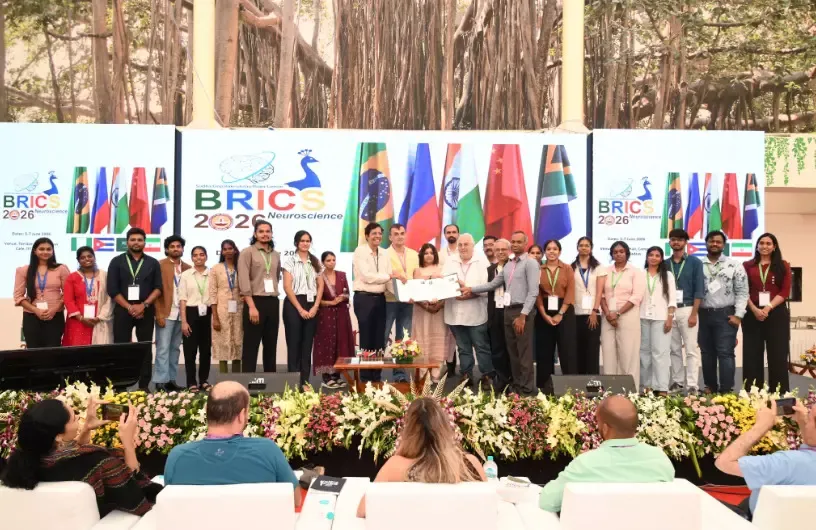
IIT Madras has released ANCHOR, the world's most detailed 3D atlas of the human brainstem, developed by the Sudha Gopalakrishnan Brain Centre. This publicly accessible atlas includes over 200 brainstem nuclei and fiber tracts reconstructed from more than 500 serial sections using multiple immunostains. Spanning prenatal to adult brains, ANCHOR integrates MRI, histology, and chemoarchitecture. The release occurred at the 3rd BRICS Neuroscience Symposium, highlighting a global collaboration of over 200 researchers aiming to map human brains across lifespans and diseases.
First-hand measurement across 2 sources
We measured how 2 outlets covered this story. Coverage leans balanced overall (Left 0%, Centre 100%, Right 0%). Overall sentiment is positive (75/100). Lens Score 32/100 — low public interest.
Outlets analysed (first-hand measurement by TBN's Bias Engine):
- ndtv— balanced framing, positive sentiment
- theassamtribune— balanced framing, positive sentiment
AI Analysis
The articles present a scientific and institutional perspective focused on the achievements of IIT Madras and its research center. Coverage is neutral, emphasizing the technical and collaborative aspects without political framing. The sources highlight the global and interdisciplinary nature of the project, reflecting a consensus on its significance in neuroscience without partisan viewpoints.
The tone across the articles is positive and informative, celebrating a scientific milestone. The language underscores the accomplishment and potential benefits for researchers and clinicians, maintaining an optimistic yet factual approach. There is no critical or negative sentiment, focusing instead on the advancement and accessibility of the brainstem atlas.
How 2 sources covered this story
Each source's own headline, political lean, and sentiment — so you can see framing differences at a glance.