F-22 Fighter Jet's Stealth Paint Challenges and Repair Process Explained
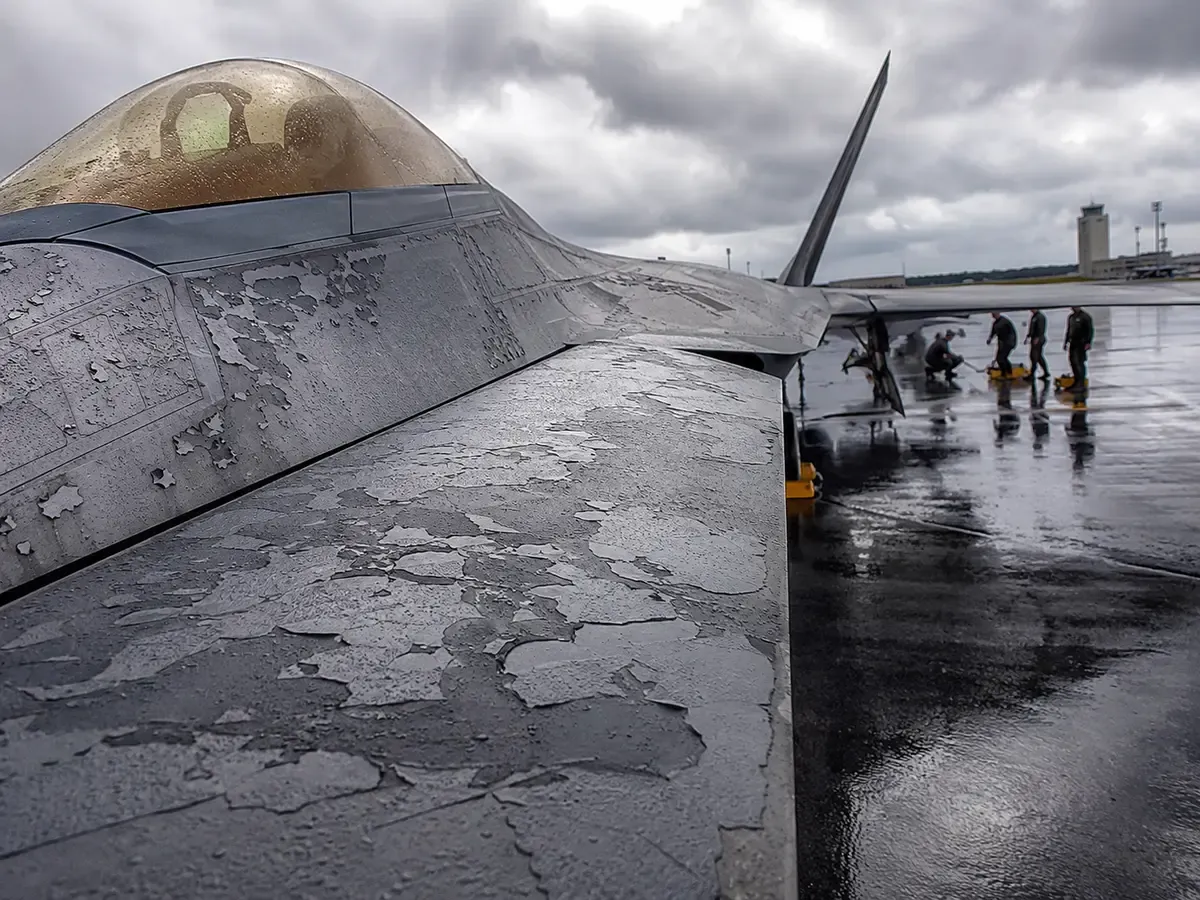
The F-22 fighter jet's stealth capabilities depend on a specialized composite skin and grey paint that reduce radar detection. High-speed flight and humidity can cause the paint to blister and peel, exposing the airframe and compromising stealth. Repairs involve meticulous processes, including applying putty and curing under heat lamps for over 24 hours, to restore the jet's radar invisibility and maintain its operational effectiveness.
First-hand measurement across 2 sources
We measured how 2 outlets covered this story. Coverage leans balanced overall (Left 0%, Centre 100%, Right 0%). Overall sentiment is neutral (55/100). Lens Score 25/100 — low public interest.
Outlets analysed (first-hand measurement by TBN's Bias Engine):
- wion— balanced framing, neutral sentiment
- wion— balanced framing, neutral sentiment
AI Analysis
The articles focus on technical aspects of the F-22 fighter jet without political framing. They present factual information about the jet's materials and maintenance procedures, reflecting a neutral, defense-technology perspective without engaging in political debate or nationalistic rhetoric.
The tone across the articles is informative and neutral, emphasizing the technical challenges and maintenance efforts related to the F-22's stealth features. There is no evident positive or negative sentiment; instead, the coverage highlights operational realities and the importance of upkeep for mission readiness.
How 2 sources covered this story
Each source's own headline, political lean, and sentiment — so you can see framing differences at a glance.