NASA Studies 2026 FIFA World Cup Ball Trionda Aboard International Space Station
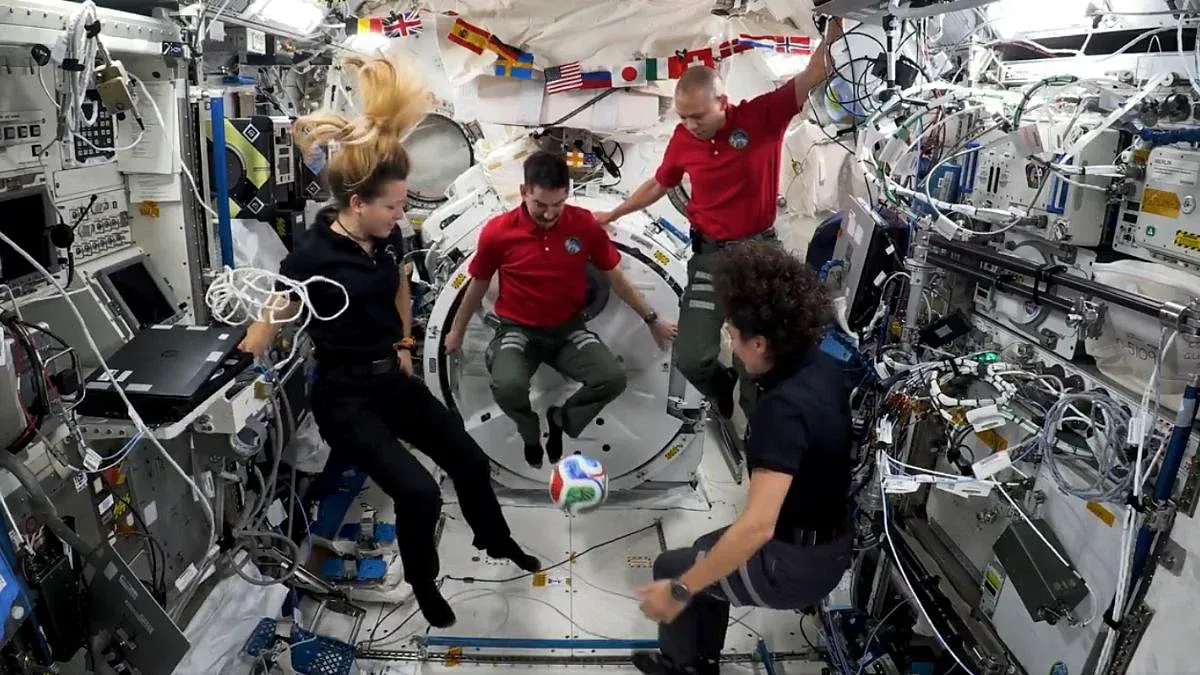
Astronauts aboard the International Space Station conducted microgravity experiments with the Adidas-designed Trionda, the official 2026 FIFA World Cup ball, to study how balance and center of mass affect its movement. The research, recreating a 2019 study, aims to understand the impact of embedded sensors and weight distribution on ball performance. Named for the 'three waves' symbolizing the joint hosting by Canada, Mexico, and the United States, the ball's design reflects the unity of the host nations. NASA highlights this work as an example of space science benefiting life on Earth.
First-hand measurement across 4 sources
We measured how 4 outlets covered this story. Coverage leans balanced overall (Left 0%, Centre 100%, Right 0%). Overall sentiment is positive (75/100). Lens Score 33/100 — low public interest.
Outlets analysed (first-hand measurement by TBN's Bias Engine):
- indianexpress— balanced framing, positive sentiment
- theprint— balanced framing, positive sentiment
- freepressjournal— balanced framing, positive sentiment
- english— balanced framing, positive sentiment
AI Analysis
The articles primarily present a scientific and technological perspective without political framing. They focus on NASA's research and the engineering aspects of the World Cup ball, reflecting institutional and sports-related viewpoints. There is no evident political bias, as coverage centers on innovation and international collaboration symbolized by the ball's design and the joint hosting of the tournament.
The overall tone across the articles is positive and informative, emphasizing scientific advancement and the intersection of space research with sports technology. The coverage highlights NASA's role in improving sports equipment and the symbolic significance of the ball, without critical or negative sentiment. The sentiment is optimistic about the benefits of this research for both sports and broader applications.