Skip to content
Get the Balanced News app for a better experience!
The Balanced News Logo
Analytics
The Balanced News Logo

Stay Balanced, Stay Informed

Menu
  • Browse News
  • Underreported Stories
  • Curated Feeds
  • Insights
  • Analytics
  • Our Writers
  • About Us
  • Download App
Learn
  • How It Works
  • Bias Detection
  • Lens Score
  • Source Bias Checker
  • Accountability
  • Custom Feeds
Newsroom
  • Writers & Analysts
  • About TBN
  • Editorial Standards
  • Corrections Policy
  • Our Partners
  • Insights
Socials
  • Youtube
  • Instagram
  • X
  • Facebook
News Categories
  • Trending
  • Politics
  • Sports
  • Business
  • Tech
  • Entertainment
  • Health
  • Science
  • Crime
  • Lifestyle
  • National
  • International
  • Good News
  • Crypto

Get Our App

Available for iOS and Android


LensFeedsInsightsAnalyticsTrendingGood NewsSportsPoliticsBusinessCrimeTechEntertainmentHealthNationalInternational

© 2026 The Balanced News. All rights reserved.

About UsEditorial StandardsCorrectionsHelp & SupportPrivacy PolicyTerms & Conditions
India Plans Mandatory Vehicle-to-Vehicle Communication in New Cars by 2028
Categories

Categories

Related Coverage

Select a news story to see related coverage from other media outlets.

Related Coverage

Select a news story to see related coverage from other media outlets.

  1. Home
  2. /
  3. Technology

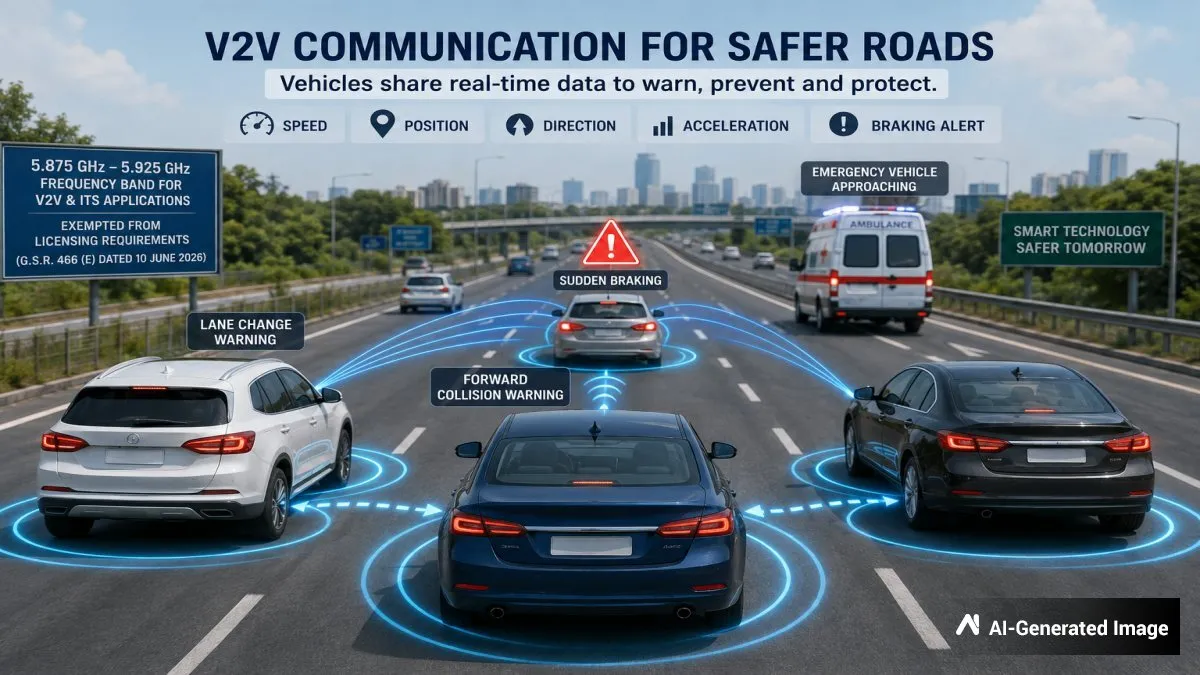
India Plans Mandatory Vehicle-to-Vehicle Communication in New Cars by 2028

Analysed 7 Aug 2026·4 sources analysed·India·Technology
India Plans Mandatory Vehicle-to-Vehicle Communication in New Cars by 2028PreviousNext

Vehicle-to-Vehicle (V2V) communication enables cars to wirelessly share real-time data like speed, position, and braking, enhancing road safety beyond what Advanced Driver Assistance Systems (ADAS) can achieve alone. While ADAS relies on onboard sensors to detect hazards within line of sight, V2V allows vehicles to receive warnings about unseen dangers, such as sudden braking ahead. The Indian government plans to mandate V2V technology in new vehicles from October 2028, aiming to complement ADAS and improve accident prevention and connected mobility.

Sentiment
55%
TBN's observations

First-hand measurement across 2 sources

We measured how 2 outlets covered this story. No outlet gave this story a measurable political slant — there is no left–right reading to report. Overall sentiment is neutral (55/100). Lens Score 45/100.

Outlets measured: mint, economictimes. See how each one headlined and framed the same story in the source comparison below.

AI analysis of 2 sources · Published under editorial oversight by The Balanced News
Analysed 7 Aug 2026· How this analysis is produced· Editorial standards· Corrections

AI Analysis

Sentiment — Neutral (55/100)

Sentiment was consistent across outlets (55–70/100), indicating broadly factual reporting rather than editorialising.

Coverage timeline

economictimes broke this story on 6 Aug, 07:02 am. Other outlets followed.

6 Aug, 07:02 am2 sources · 2 h6 Aug, 08:35 am
AI analysis by the TBN Bias Engine · beat methodology byAshwin Alsi· Technology Editor· editorial standards byOjas Kale
← Previous
Mahindra XUV 7XO Spotted With Updated Exterior and Interior Design Details
Next →
Comparing Test Automation Tools: AI-Based testRigor Suited for Diverse Teams
1
economictimes6 Aug, 07:02 am
What is V2V communication? How this proposed vehicle safety system could help prevent road accidents
  • 2
    mint6 Aug, 08:35 am
    Mint Explainer Why India wants vehicles to 'talk' to each other? Mint
  • Who's involved

    Institutions and figures named across source coverage.

    Government
    Ministry of Road Transport and HighwaysIndian governmentAutomotive Research Association of IndiaTelecom Regulatory Authority of IndiaDepartment of Telecommunications

    Story context

    Category
    Tech
    Location
    India
    Sources analysed
    4
    Last analysed
    7 Aug 2026
    Key entities
    Vehicular ad hoc networkAsiago-DLR Asteroid SurveySensorCarLine-of-sight propagationAccelerationEmergency vehicleRadarSUVAdvanced driver-assistance systemLidarCollision avoidance system