Skip to content
Get the Balanced News app for a better experience!
The Balanced News Logo
Analytics
The Balanced News Logo

Stay Balanced, Stay Informed

Menu
  • Browse News
  • Underreported Stories
  • Curated Feeds
  • Insights
  • Analytics
  • Our Writers
  • About Us
  • Download App
Learn
  • How It Works
  • Bias Detection
  • Lens Score
  • Source Bias Checker
  • Accountability
  • Custom Feeds
Newsroom
  • Writers & Analysts
  • About TBN
  • Editorial Standards
  • Corrections Policy
  • Our Partners
  • Insights
Socials
  • Youtube
  • Instagram
  • X
  • Facebook
News Categories
  • Trending
  • Politics
  • Sports
  • Business
  • Tech
  • Entertainment
  • Health
  • Science
  • Crime
  • Lifestyle
  • National
  • International
  • Good News
  • Crypto

Get Our App

Available for iOS and Android


LensFeedsInsightsAnalyticsTrendingGood NewsSportsPoliticsBusinessCrimeTechEntertainmentHealthNationalInternational

© 2026 The Balanced News. All rights reserved.

About UsEditorial StandardsCorrectionsHelp & SupportPrivacy PolicyTerms & Conditions
Aditya-L1 Observes Uneven Expansion of Solar Eruption, Enhancing Space Weather Insights
Categories

Categories

Related Coverage

Select a news story to see related coverage from other media outlets.

Related Coverage

Select a news story to see related coverage from other media outlets.

  1. Home
  2. /
  3. Technology

Aditya-L1 Observes Uneven Expansion of Solar Eruption, Enhancing Space Weather Insights

Analysed 4 Nov 2026·2 sources analysed·Bangalore, India·Technology
Aditya-L1 Observes Uneven Expansion of Solar Eruption, Enhancing Space Weather InsightsPreviousNext

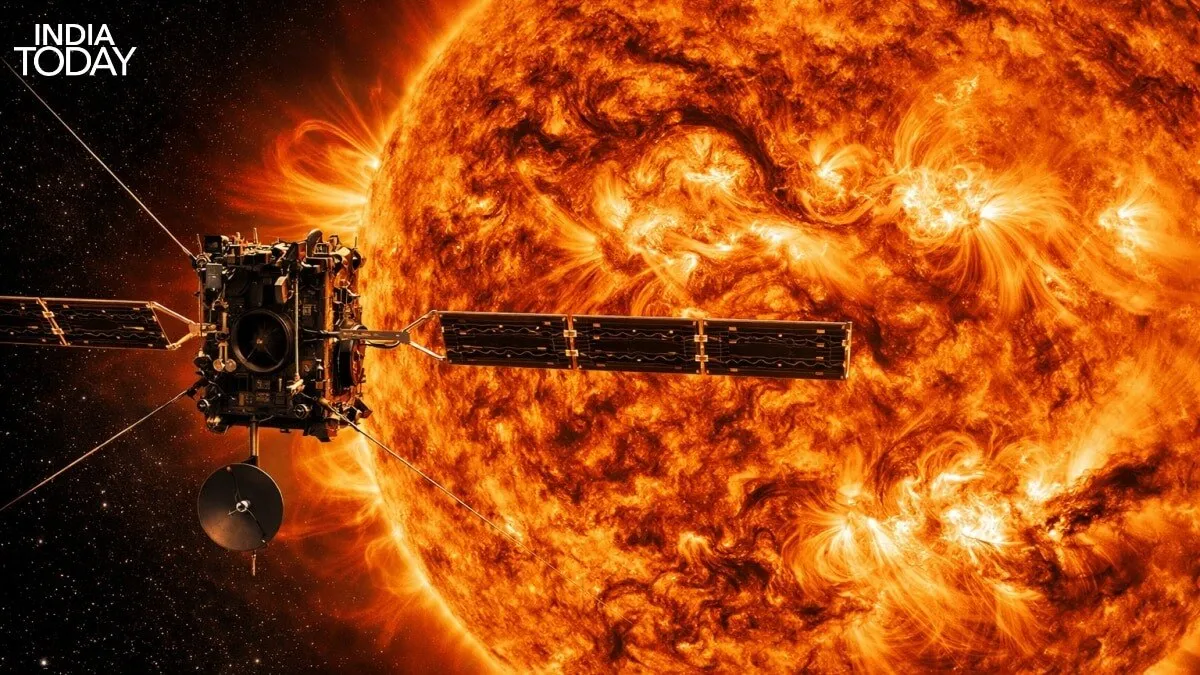
India's Aditya-L1 solar observatory observed a solar eruption on August 5, 2024, revealing that coronal mass ejections (CMEs) expand unevenly and asymmetrically rather than as uniform bubbles. Using data from Aditya-L1's Visible Emission Line Coronagraph, NASA's Solar Dynamics Observatory, and 3D modeling, scientists from the Indian Institute of Astrophysics found that different parts of the eruption move at varying speeds. This discovery could improve understanding and forecasting of solar storms that impact satellites and communication systems on Earth.

Sentiment
58%
TBN's observations

First-hand measurement across 2 sources

We measured how 2 outlets covered this story. No outlet gave this story a measurable political slant — there is no left–right reading to report. Overall sentiment is neutral (58/100). Lens Score 38/100.

Outlets measured: indiatoday, thetribune. See how each one headlined and framed the same story in the source comparison below.

AI analysis of 2 sources · Published under editorial oversight by The Balanced News
Analysed 4 Nov 2026· How this analysis is produced· Editorial standards· Corrections

AI Analysis

Sentiment — Neutral (58/100)

Sentiment was consistent across outlets (55–62/100), indicating broadly factual reporting rather than editorialising.

Coverage timeline

thetribune broke this story on 3 Nov, 03:45 pm. Other outlets followed.

3 Nov, 03:45 pm2 sources · 14 h4 Nov, 05:50 am
  1. 1
AI analysis by the TBN Bias Engine · beat methodology byAshwin Alsi· Technology Editor· editorial standards byOjas Kale
← Previous
Reviews of Fitbit Air Tracker and Sandisk Extreme Fit USB-C Flash Drive
Next →
Apple Plans iPhone 18 Launch in 2027 with Upgraded Features and Possible Price Increase
thetribune3 Nov, 03:45 pm
Aditya-L1 helps scientists understand how solar storms spread through space
  • 2
    indiatoday4 Nov, 05:50 am
    India's Aditya-L1 discovers a solar secret that challenges old assumptions
  • Who's involved

    Institutions and figures named across source coverage.

    Government
    Department of Science and Technology

    Story context

    Category
    Tech
    Location
    Bangalore, India
    Sources analysed
    2
    Last analysed
    4 Nov 2026
    Key entities
    Aditya-L1SunCoronal mass ejectionSolar Dynamics ObservatoryStellar coronaIndian Institute of AstrophysicsCoronagraphThe Astrophysical JournalEarthObservatoryStellar atmosphereNASA