Skip to content
Get the Balanced News app for a better experience!
The Balanced News Logo
Analytics
The Balanced News Logo

Stay Balanced, Stay Informed

Menu
  • Browse News
  • Underreported Stories
  • Curated Feeds
  • Insights
  • Analytics
  • Our Writers
  • About Us
  • Download App
Learn
  • How It Works
  • Bias Detection
  • Lens Score
  • Source Bias Checker
  • Accountability
  • Custom Feeds
Newsroom
  • Writers & Analysts
  • About TBN
  • Editorial Standards
  • Corrections Policy
  • Our Partners
  • Insights
Socials
  • Youtube
  • Instagram
  • X
  • Facebook
News Categories
  • Trending
  • Politics
  • Sports
  • Business
  • Tech
  • Entertainment
  • Health
  • Science
  • Crime
  • Lifestyle
  • National
  • International
  • Good News
  • Crypto

Get Our App

Available for iOS and Android


LensFeedsInsightsAnalyticsTrendingGood NewsSportsPoliticsBusinessCrimeTechEntertainmentHealthNationalInternational

© 2026 The Balanced News. All rights reserved.

About UsEditorial StandardsCorrectionsHelp & SupportPrivacy PolicyTerms & Conditions
Studies Show Solar Farms Promote Vegetation Growth but Cause Edge Soil Erosion
Categories

Categories

Related Coverage

Select a news story to see related coverage from other media outlets.

Related Coverage

Select a news story to see related coverage from other media outlets.

  1. Home
  2. /
  3. Technology

Studies Show Solar Farms Promote Vegetation Growth but Cause Edge Soil Erosion

Analysed 21 Aug 2026·2 sources analysed·China·Technology
Studies Show Solar Farms Promote Vegetation Growth but Cause Edge Soil ErosionNext

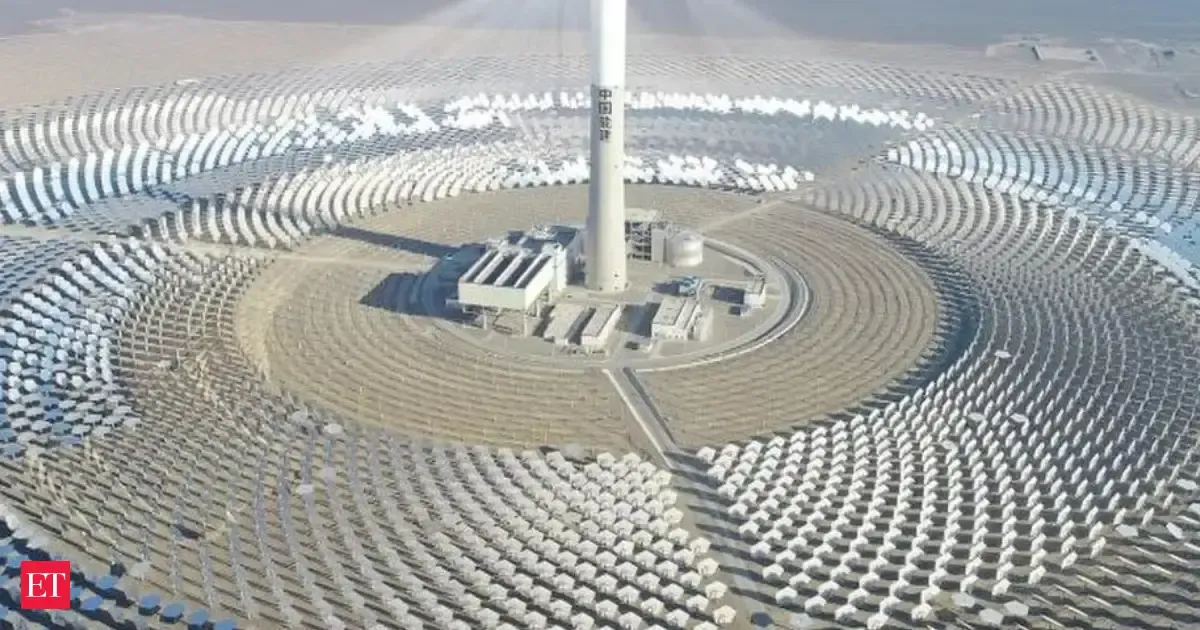
Research on China's desert solar farms reveals that solar panels contribute to vegetation growth by providing shade that reduces evaporation and wind erosion, leading to greening of arid areas. Satellite data show 30.8 square kilometers of new vegetation developed between 2011 and 2018 around solar installations. Additionally, rainfall experiments indicate soil erosion decreases by 27-63% beneath panels, though runoff concentrates at panel edges, increasing erosion there. Researchers recommend ground cover to mitigate these edge effects for sustainable solar farm expansion.

Sentiment
60%
TBN's observations

First-hand measurement across 2 sources

We measured how 2 outlets covered this story. No outlet gave this story a measurable political slant — there is no left–right reading to report. Overall sentiment is neutral (60/100). Lens Score 39/100.

Outlets measured: economictimes, economictimes. See how each one headlined and framed the same story in the source comparison below.

AI analysis of 2 sources · Published under editorial oversight by The Balanced News
Analysed 21 Aug 2026· How this analysis is produced· Editorial standards· Corrections

AI Analysis

Sentiment — Neutral (60/100)

Sentiment was consistent across outlets (52–68/100), indicating broadly factual reporting rather than editorialising.

Coverage timeline

economictimes broke this story on 20 Aug, 01:43 pm. Other outlets followed.

20 Aug, 01:43 pm2 sources · 19 h21 Aug, 08:56 am
AI analysis by the TBN Bias Engine · beat methodology byAshwin Alsi· Technology Editor· editorial standards byOjas Kale
Next →
Poco Launches M8x 5G Smartphone in India with Large Battery and Display
  • 1
    economictimes20 Aug, 01:43 pm
    Rainfall experiments found solar panels cut soil erosion beneath their surfaces by 27-63 , while concentrated dripping created new erosion hotspots along panel edges
  • 2
    economictimes21 Aug, 08:56 am
    Satellite researchers studied China's desert solar farms; vegetation developed across 30.8 square kilometres within and around the installations
  • Who's involved

    Institutions and figures named across source coverage.

    Government
    National Aeronautics and Space Administration

    Story context

    Category
    Tech
    Location
    China
    Sources analysed
    2
    Last analysed
    21 Aug 2026
    Key entities
    Solar panelChinaPhotovoltaic systemPoaceaePhotovoltaic power stationSoilVegetationAridNASADesertEvaporationSoil crust