Researchers Develop AI-Powered Camera to Track Particle Paths in 3D
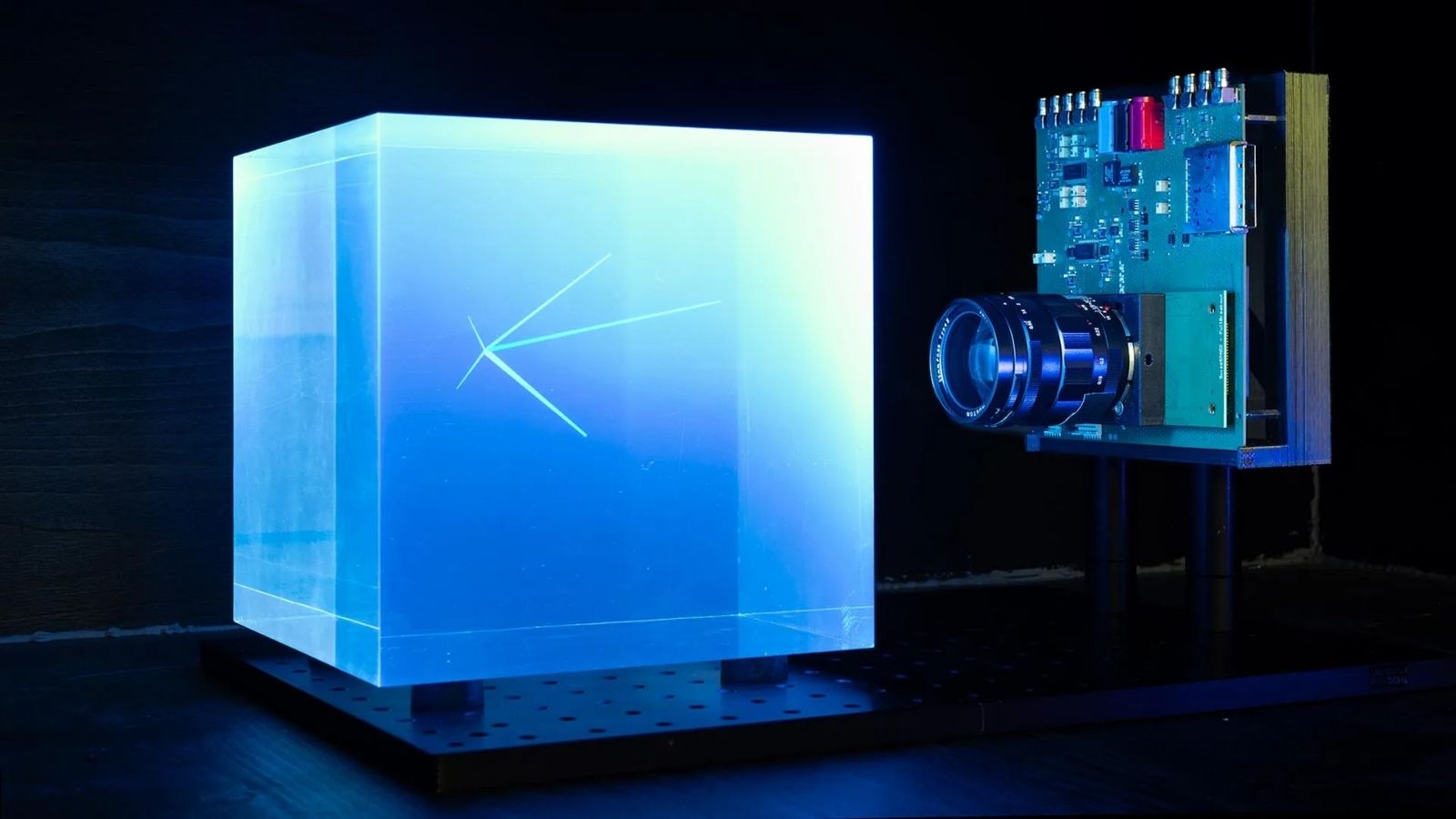
Researchers at ETH Zurich and EPFL have developed PLATON, a new particle detector that uses a single block of light-producing material combined with a light-field camera and AI to reconstruct particle paths in three dimensions. This approach could match or surpass current detectors while simplifying construction and scaling. The technology may enhance detection of elusive particles like neutrinos and improve medical imaging such as PET scans. Simulations indicate potential advantages over conventional segmented scintillator detectors used in physics experiments.
First-hand measurement across 2 sources
We measured how 2 outlets covered this story. Coverage leans balanced overall (Left 0%, Centre 100%, Right 0%). Overall sentiment is positive (75/100). Lens Score 29/100 — low public interest.
Outlets analysed (first-hand measurement by TBN's Bias Engine):
- indianexpress— balanced framing, positive sentiment
- news18— balanced framing, positive sentiment
AI Analysis
The articles present a scientific and technological development without political framing. Both sources focus on the innovation's technical aspects and potential applications, reflecting a neutral, fact-based perspective typical of science reporting. There is no evident political viewpoint or ideological framing in the coverage.
The tone across the articles is generally positive and optimistic, emphasizing the potential improvements PLATON offers over existing particle detectors and its applications in medical imaging. The coverage highlights advancements and benefits without exaggeration or criticism, maintaining an informative and forward-looking sentiment.
How 2 sources covered this story
Each source's own headline, political lean, and sentiment — so you can see framing differences at a glance.