Skip to content
Get the Balanced News app for a better experience!
The Balanced News Logo
Analytics
The Balanced News Logo

Stay Balanced, Stay Informed

Menu
  • Browse News
  • Underreported Stories
  • Curated Feeds
  • Insights
  • Analytics
  • Our Writers
  • About Us
  • Download App
Learn
  • How It Works
  • Bias Detection
  • Lens Score
  • Source Bias Checker
  • Accountability
  • Custom Feeds
Newsroom
  • Writers & Analysts
  • About TBN
  • Editorial Standards
  • Corrections Policy
  • Our Partners
  • Insights
Socials
  • Youtube
  • Instagram
  • X
  • Facebook
News Categories
  • Trending
  • Politics
  • Sports
  • Business
  • Tech
  • Entertainment
  • Health
  • Science
  • Crime
  • Lifestyle
  • National
  • International
  • Good News
  • Crypto

Get Our App

Available for iOS and Android


LensFeedsInsightsAnalyticsTrendingGood NewsSportsPoliticsBusinessCrimeTechEntertainmentHealthNationalInternational

© 2026 The Balanced News. All rights reserved.

About UsEditorial StandardsCorrectionsHelp & SupportPrivacy PolicyTerms & Conditions
Studies Explore Cooling Films and Gels to Boost Crop Growth and Solar Panel Efficiency
Categories

Categories

Related Coverage

Select a news story to see related coverage from other media outlets.

Related Coverage

Select a news story to see related coverage from other media outlets.

  1. Home
  2. /
  3. Technology

Studies Explore Cooling Films and Gels to Boost Crop Growth and Solar Panel Efficiency

Analysed 29 Aug 2026·2 sources analysed·Saudi Arabia·Technology
Studies Explore Cooling Films and Gels to Boost Crop Growth and Solar Panel EfficiencyNext

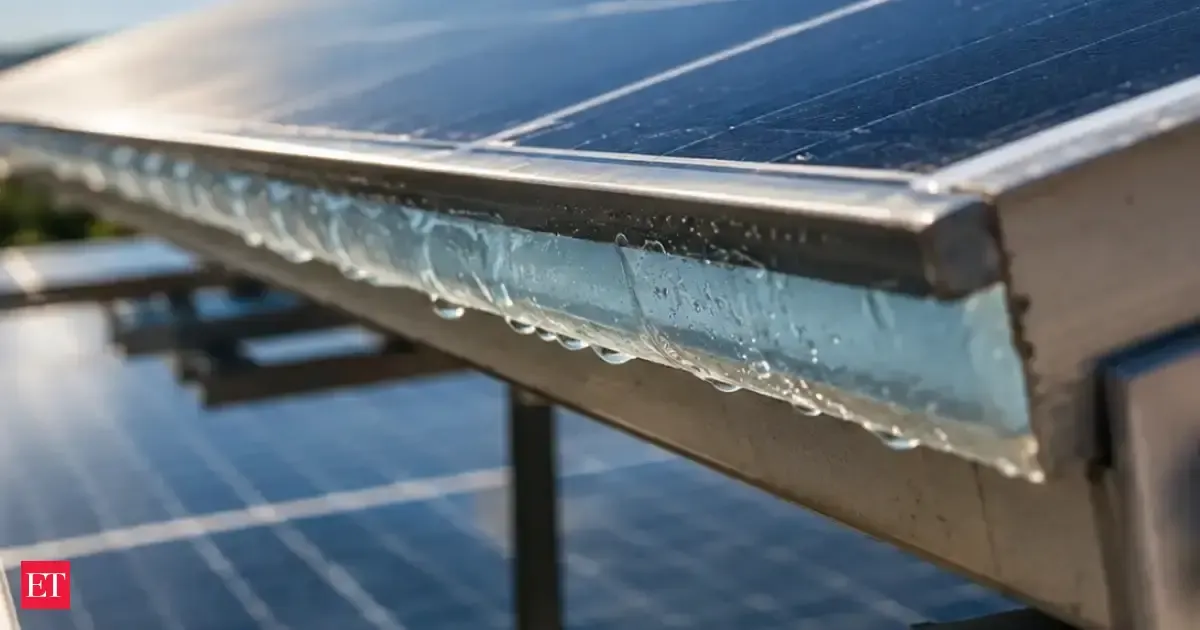
Recent studies published in Nature Sustainability explore innovative cooling technologies to enhance plant growth and solar panel efficiency. A 2024 study tested a three-layer radiative cooling film on dryland crops, reducing air temperatures by up to 4.6°C and increasing biomass by up to 370%. Separately, a 2020 study introduced a self-moistening hydrogel mat for solar panels that lowered temperatures by at least 10°C, boosting electricity output by 13-19%. Both technologies aim to improve performance under heat stress without blocking essential sunlight or requiring high maintenance.

Sentiment
75%
TBN's observations

First-hand measurement across 2 sources

We measured how 2 outlets covered this story. No outlet gave this story a measurable political slant — there is no left–right reading to report. Overall sentiment is positive (75/100). Lens Score 40/100.

Outlets measured: economictimes, economictimes. See how each one headlined and framed the same story in the source comparison below.

AI analysis of 2 sources · Published under editorial oversight by The Balanced News
Analysed 29 Aug 2026· How this analysis is produced· Editorial standards· Corrections

AI Analysis

Sentiment — Positive (75/100)

Sentiment was consistent across outlets (75–75/100), indicating broadly factual reporting rather than editorialising.

Coverage timeline

economictimes broke this story on 29 Aug, 09:23 am. Other outlets followed.

29 Aug, 09:23 am2 sources · 4 h29 Aug, 01:00 pm
AI analysis by the TBN Bias Engine · beat methodology byAshwin Alsi· Technology Editor· editorial standards byOjas Kale
Next →
Apple iPhone 18 Pro Series Expected to Feature Variable Aperture Camera and Foldable Model
  • 1
    economictimes29 Aug, 09:23 am
    In 2024, a Nature Sustainability study tested radiative cooling film on crops; field trials lowered air temperatures by up to 4.6 C and increased biomass by up to 370
  • 2
    economictimes29 Aug, 01:00 pm
    In 2020, researchers tested a self-moistening hydrogel mat under solar panels; it cooled them by at least 10 C and boosted output by up to 19
  • Story context

    Category
    Tech
    Location
    Saudi Arabia
    Sources analysed
    2
    Last analysed
    29 Aug 2026
    Key entities
    Nature (journal)SustainabilityHydrogelPhotosynthesisMicrometreCarbon sequestrationRadiative coolingPolymerBiomassEvaporationAtmosphereTemperature