Skip to content
Get the Balanced News app for a better experience!
The Balanced News Logo
Analytics
The Balanced News Logo

Stay Balanced, Stay Informed

Menu
  • Browse News
  • Underreported Stories
  • Curated Feeds
  • Insights
  • Analytics
  • Our Writers
  • About Us
  • Download App
Learn
  • How It Works
  • Bias Detection
  • Lens Score
  • Source Bias Checker
  • Accountability
  • Custom Feeds
Newsroom
  • Writers & Analysts
  • About TBN
  • Editorial Standards
  • Corrections Policy
  • Our Partners
  • Insights
Socials
  • Youtube
  • Instagram
  • X
  • Facebook
News Categories
  • Trending
  • Politics
  • Sports
  • Business
  • Tech
  • Entertainment
  • Health
  • Science
  • Crime
  • Lifestyle
  • National
  • International
  • Good News
  • Crypto

Get Our App

Available for iOS and Android


LensFeedsInsightsAnalyticsTrendingGood NewsSportsPoliticsBusinessCrimeTechEntertainmentHealthNationalInternational

© 2026 The Balanced News. All rights reserved.

About UsEditorial StandardsCorrectionsHelp & SupportPrivacy PolicyTerms & Conditions
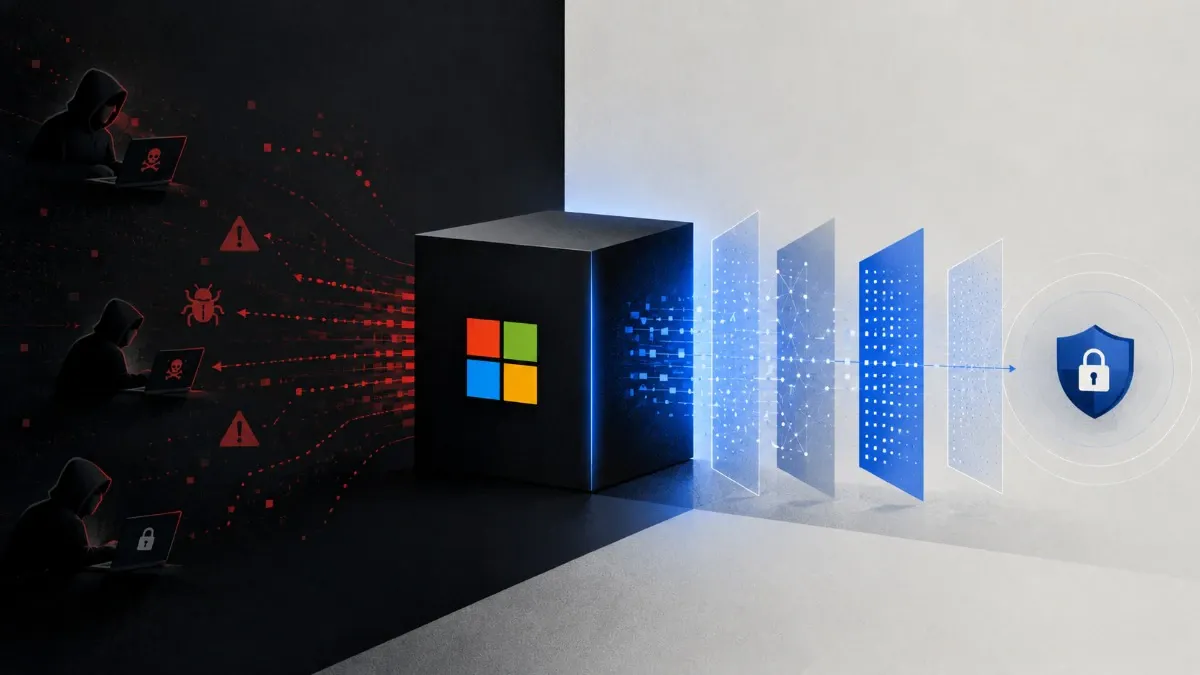
Microsoft Launches Specialized AI Model MAI-Cyber-1-Flash for Cybersecurity
Categories

Categories

Related Coverage

Select a news story to see related coverage from other media outlets.

Related Coverage

Select a news story to see related coverage from other media outlets.

  1. Home
  2. /
  3. Technology

Microsoft Launches Specialized AI Model MAI-Cyber-1-Flash for Cybersecurity

Analysed 28 Jul 2026·4 sources analysed·Technology
Microsoft Launches Specialized AI Model MAI-Cyber-1-Flash for CybersecurityPreviousNext

Microsoft has introduced MAI-Cyber-1-Flash, a specialized AI model designed to detect and remediate software vulnerabilities more efficiently and cost-effectively. Integrated with Microsoft's MDASH security system, the model reportedly outperforms competitors like Anthropic's Mythos 5 on the CyberGym benchmark while reducing operating costs by nearly 50%. MAI-Cyber-1-Flash handles most cybersecurity tasks, with complex cases escalated to larger AI models. The launch reflects Microsoft's focus on addressing increasingly sophisticated cyberattacks using targeted AI solutions.

Sentiment
62%
TBN's observations

First-hand measurement across 3 sources

We measured how 3 outlets covered this story. No outlet gave this story a measurable political slant — there is no left–right reading to report. Overall sentiment is positive (62/100). Lens Score 43/100.

Outlets measured: timesnow, indiatoday, firstpost. See how each one headlined and framed the same story in the source comparison below.

AI analysis of 3 sources · Published under editorial oversight by The Balanced News
Analysed 28 Jul 2026· How this analysis is produced· Editorial standards· Corrections

AI Analysis

Sentiment — Positive (62/100)

Sentiment was consistent across outlets (55–75/100), indicating broadly factual reporting rather than editorialising.

Coverage timeline

firstpost broke this story on 27 Jul, 05:45 pm. Other outlets followed.

27 Jul, 05:45 pm3 sources · 15 h28 Jul, 08:58 am
AI analysis by the TBN Bias Engine · beat methodology byAshwin Alsi· Technology Editor· editorial standards byOjas Kale
← Previous
Poco M8 Power Smartphone Launching in India on August 4 with 8,000mAh Battery
Next →
China Completes World's Largest Fusion Magnet to Advance Artificial Sun Project
  1. 1
    firstpost27 Jul, 05:45 pm
    Microsoft unveils MAI-Cyber-1-Flash, promises world-class AI security at half the cost
  2. 2
    indiatoday28 Jul, 08:18 am
    Microsoft wants to use smaller AI models to fight cyber attacks and save money
  3. 3
    timesnow28 Jul, 08:58 am
    Microsoft Says Its Latest AI Cybersecurity Model Better Than Mythos, Gemini And GPT

Who's involved

Institutions and figures named across source coverage.

Government
White House
Corporate
MicrosoftGoogleOpenAIAnthropic

Story context

Category
Tech
Sources analysed
4
Last analysed
28 Jul 2026
Key entities
Vulnerability (computing)Artificial intelligenceMicrosoftComputer securityBenchmark (computing)OpenAICyberattackSecurity hackerCloud computingSoftwareGoogleUnited States House of Representatives