Skip to content
Get the Balanced News app for a better experience!
The Balanced News Logo
Analytics
The Balanced News Logo

Stay Balanced, Stay Informed

Menu
  • Browse News
  • Underreported Stories
  • Curated Feeds
  • Insights
  • Analytics
  • Our Writers
  • About Us
  • Download App
Learn
  • How It Works
  • Bias Detection
  • Lens Score
  • Source Bias Checker
  • Accountability
  • Custom Feeds
Newsroom
  • Writers & Analysts
  • About TBN
  • Editorial Standards
  • Corrections Policy
  • Our Partners
  • Insights
Socials
  • Youtube
  • Instagram
  • X
  • Facebook
News Categories
  • Trending
  • Politics
  • Sports
  • Business
  • Tech
  • Entertainment
  • Health
  • Science
  • Crime
  • Lifestyle
  • National
  • International
  • Good News
  • Crypto

Get Our App

Available for iOS and Android


LensFeedsInsightsAnalyticsTrendingGood NewsSportsPoliticsBusinessCrimeTechEntertainmentHealthNationalInternational

© 2026 The Balanced News. All rights reserved.

About UsEditorial StandardsCorrectionsHelp & SupportPrivacy PolicyTerms & Conditions
19th Century American Innovations in DC Electric Motors and Electric Fans
Categories

Categories

Related Coverage

Select a news story to see related coverage from other media outlets.

Related Coverage

Select a news story to see related coverage from other media outlets.

  1. Home
  2. /
  3. Technology

19th Century American Innovations in DC Electric Motors and Electric Fans

Analysed 3 Sept 2026·2 sources analysed·Davenport, Iowa, United States·Technology
19th Century American Innovations in DC Electric Motors and Electric FansPreviousNext

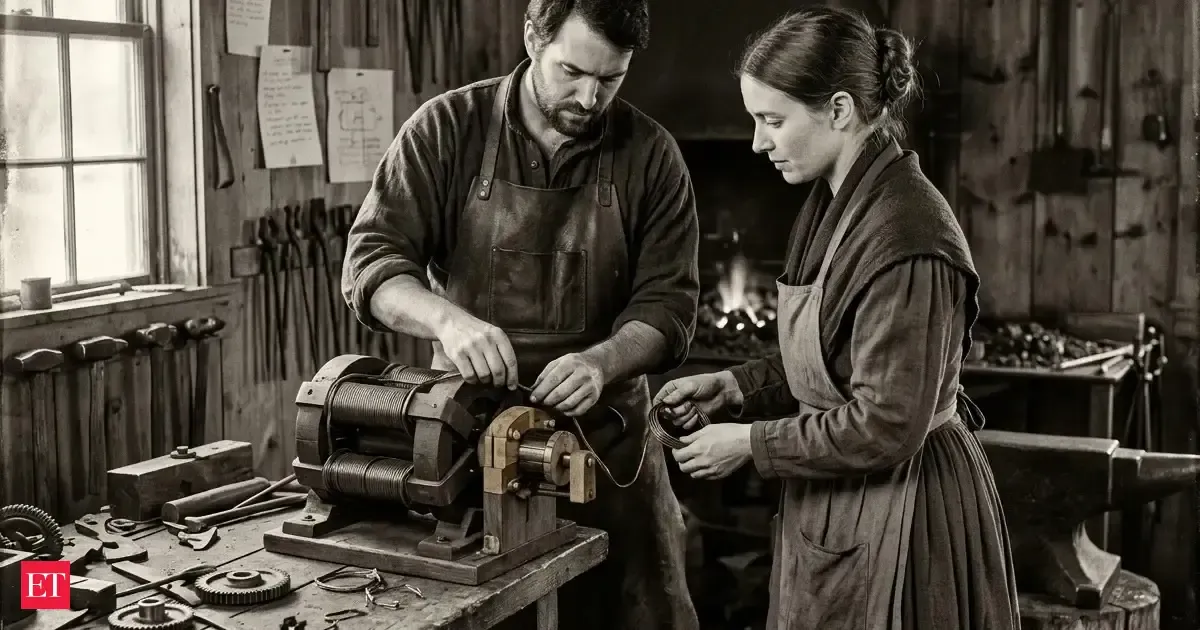
In the 19th century, American inventors made key advances in electric motor technology. In 1834, blacksmith Thomas Davenport and his wife Emily built the first practical direct current (DC) electric motor, enabling continuous rotary motion powered by a galvanic battery. Later, in 1882, electrical engineer Schuyler Skaats Wheeler invented the first electric table fan by attaching a two-bladed propeller to a DC motor shaft, creating a device that produced airflow without manual effort. These innovations laid foundations for modern electrical machinery and appliances.

Sentiment
50%
TBN's observations

First-hand measurement across 2 sources

We measured how 2 outlets covered this story. No outlet gave this story a measurable political slant — there is no left–right reading to report. Overall sentiment is neutral (50/100). Lens Score 29/100.

Outlets measured: economictimes, economictimes. See how each one headlined and framed the same story in the source comparison below.

AI analysis of 2 sources · Published under editorial oversight by The Balanced News
Analysed 3 Sept 2026· How this analysis is produced· Editorial standards· Corrections

AI Analysis

Sentiment — Neutral (50/100)

Sentiment was consistent across outlets (50–50/100), indicating broadly factual reporting rather than editorialising.

Coverage timeline

economictimes broke this story on 2 Sept, 05:21 pm. Other outlets followed.

2 Sept, 05:21 pm2 sources · 23 h3 Sept, 04:50 pm
AI analysis by the TBN Bias Engine · beat methodology byAshwin Alsi· Technology Editor· editorial standards byOjas Kale
← Previous
Makr Microsystems Raises Rs 10.2 Crore Seed Funding Led by Bluehill VC
Next →
Major AI Platforms ChatGPT, Claude, and Grok Experience Global Service Disruptions
  • 1
    economictimes2 Sept, 05:21 pm
    In 1882, an American engineer at the age of 22 invented a device which had a two-bladed propeller placed onto the rotating shaft of a DC electric motor: The story of the first electric fan
  • 2
    economictimes3 Sept, 04:50 pm
    In 1834, an American blacksmith along with his wife built the first practical DC electric motor, creating a blueprint for modern electrical machinery
  • Story context

    Category
    Tech
    Location
    Davenport, Iowa, United States
    Sources analysed
    2
    Last analysed
    3 Sept 2026
    Key entities
    Electric powerElectric motorDirect currentElectricityUnited StatesElectrical energyPropellerThomas EdisonMetalFan (machine)EngineerInvention