Skip to content
Get the Balanced News app for a better experience!
The Balanced News Logo
Analytics
The Balanced News Logo

Stay Balanced, Stay Informed

Menu
  • Browse News
  • Underreported Stories
  • Curated Feeds
  • Insights
  • Analytics
  • Our Writers
  • About Us
  • Download App
Learn
  • How It Works
  • Bias Detection
  • Lens Score
  • Source Bias Checker
  • Accountability
  • Custom Feeds
Newsroom
  • Writers & Analysts
  • About TBN
  • Editorial Standards
  • Corrections Policy
  • Our Partners
  • Insights
Socials
  • Youtube
  • Instagram
  • X
  • Facebook
News Categories
  • Trending
  • Politics
  • Sports
  • Business
  • Tech
  • Entertainment
  • Health
  • Science
  • Crime
  • Lifestyle
  • National
  • International
  • Good News
  • Crypto

Get Our App

Available for iOS and Android


LensFeedsInsightsAnalyticsTrendingGood NewsSportsPoliticsBusinessCrimeTechEntertainmentHealthNationalInternational

© 2026 The Balanced News. All rights reserved.

About UsEditorial StandardsCorrectionsHelp & SupportPrivacy PolicyTerms & Conditions
Researchers Develop Passive Cooling Technologies to Reduce Building Energy Use
Categories

Categories

Related Coverage

Select a news story to see related coverage from other media outlets.

Related Coverage

Select a news story to see related coverage from other media outlets.

  1. Home
  2. /
  3. Technology

Researchers Develop Passive Cooling Technologies to Reduce Building Energy Use

Analysed 30 Aug 2026·8 sources analysed·Phoenix, Arizona, United States·Technology
Researchers Develop Passive Cooling Technologies to Reduce Building Energy UsePreviousNext

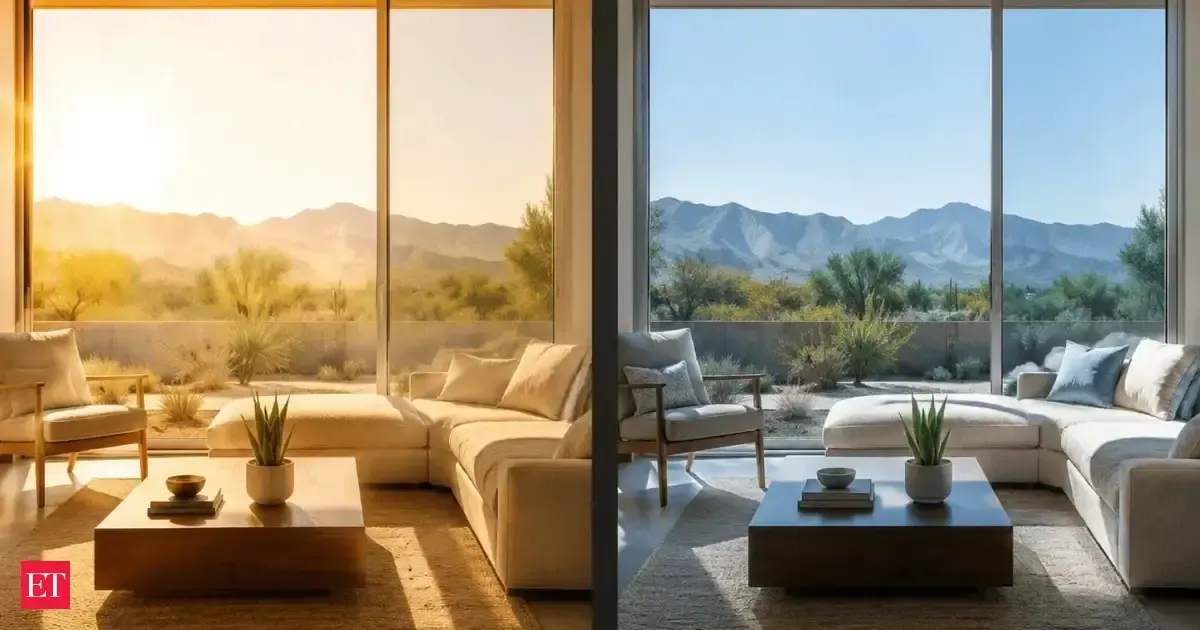
Researchers have developed various innovative passive cooling technologies to reduce reliance on energy-intensive air conditioning. These include porous PMMA sheets reflecting sunlight to lower temperatures by 15°F, two-layer polymer films mimicking skin's evaporative cooling, aluminum-coated films emitting heat to outer space, transparent window coatings blocking solar heat while allowing light, and fluid-filled microchannel windows that adjust heat and light transmission. These advancements aim to improve building energy efficiency and indoor comfort without electricity, showing promise for future sustainable cooling solutions.

Sentiment
68%
TBN's observations

First-hand measurement across 5 sources

We measured how 5 outlets covered this story. No outlet gave this story a measurable political slant — there is no left–right reading to report. Overall sentiment is positive (68/100). Lens Score 40/100.

Outlets measured: economictimes, economictimes, economictimes, economictimes, economictimes. See how each one headlined and framed the same story in the source comparison below.

AI analysis of 5 sources · Published under editorial oversight by The Balanced News
Analysed 30 Aug 2026· How this analysis is produced· Editorial standards· Corrections

AI Analysis

Sentiment — Positive (68/100)

Sentiment was consistent across outlets (62–75/100), indicating broadly factual reporting rather than editorialising.

Coverage timeline

economictimes broke this story on 28 Aug, 10:34 am. Other outlets followed.

28 Aug, 10:34 am5 sources · 28 h29 Aug, 02:25 pm
AI analysis by the TBN Bias Engine · beat methodology byAshwin Alsi· Technology Editor· editorial standards byOjas Kale
← Previous
Filmmaker Vishal Bhardwaj Urges Acceptance of AI as Inevitable Progress
Next →
Anthropic Study Shows AI Systems Improving Training of Other AI Models
  1. 1
    economictimes28 Aug, 10:34 am
    UPenn researchers copied elephant skin in porous cement tiles; a mockup home stayed near 32 C versus 42 C and 52 C with commercial stucco surfaces
  2. 2
    economictimes29 Aug, 09:05 am
    In a 2025 study, Penn State researchers tested porous PMMA sheets that reflected 96.4 of sunlight; a test box stayed 14.7 F cooler than the outdoor air
  3. 3
    economictimes29 Aug, 09:20 am
    In 2023, Princeton researchers tested a naturally ventilated cooling box; it stayed below outdoor air while using radiative cooling and buoyancy-driven airflow
  4. 4
    economictimes29 Aug, 02:25 pm
    In 2025, researchers built a box from porous PMMA sheets that reflected 96 of sunlight; 80 F outdoor air measured 65.3 F inside without electricity
  5. 5
    economictimes29 Aug, 02:25 pm
    In 2021, researchers built a two-layer polymer film that cools like skin; under direct sun, it stayed about 7 C below ambient with 150 W m2 cooling power

Who's involved

Institutions and figures named across source coverage.

Corporate
Minerava

Story context

Category
Tech
Location
Phoenix, Arizona, United States
Sources analysed
8
Last analysed
30 Aug 2026
Key entities
Air conditioningSunlightElectricityPolymerPorosityTemperatureScatteringSolar irradianceInfraredPassive coolingAtmosphereRadiative cooling