Skip to content
Get the Balanced News app for a better experience!
The Balanced News Logo
Analytics
The Balanced News Logo

Stay Balanced, Stay Informed

Menu
  • Browse News
  • Underreported Stories
  • Curated Feeds
  • Insights
  • Analytics
  • Our Writers
  • About Us
  • Download App
Learn
  • How It Works
  • Bias Detection
  • Lens Score
  • Source Bias Checker
  • Accountability
  • Custom Feeds
Newsroom
  • Writers & Analysts
  • About TBN
  • Editorial Standards
  • Corrections Policy
  • Our Partners
  • Insights
Socials
  • Youtube
  • Instagram
  • X
  • Facebook
News Categories
  • Trending
  • Politics
  • Sports
  • Business
  • Tech
  • Entertainment
  • Health
  • Science
  • Crime
  • Lifestyle
  • National
  • International
  • Good News
  • Crypto

Get Our App

Available for iOS and Android


LensFeedsInsightsAnalyticsTrendingGood NewsSportsPoliticsBusinessCrimeTechEntertainmentHealthNationalInternational

© 2026 The Balanced News. All rights reserved.

About UsEditorial StandardsCorrectionsHelp & SupportPrivacy PolicyTerms & Conditions
Scientists Develop Passive Cooling Technologies to Reduce Building Temperatures and Energy Use
Categories

Categories

Related Coverage

Select a news story to see related coverage from other media outlets.

Related Coverage

Select a news story to see related coverage from other media outlets.

  1. Home
  2. /
  3. Technology

Scientists Develop Passive Cooling Technologies to Reduce Building Temperatures and Energy Use

Analysed 19 Aug 2026·6 sources analysed·Miami, United States·Technology
Scientists Develop Passive Cooling Technologies to Reduce Building Temperatures and Energy UsePreviousNext

Researchers worldwide have developed various passive cooling technologies to reduce building temperatures and energy costs without electricity. Innovations include rooftop tiles with self-adjusting vents, cement-based paints that evaporate moisture, smart windows that reflect and radiate heat, zigzag-shaped walls that direct heat skyward, and reflective roof coatings combined with evaporative cooling. These solutions demonstrate significant temperature reductions in tests, offering promising, energy-efficient alternatives to conventional air conditioning, though further development is needed for widespread adoption.

Sentiment
69%
TBN's observations

First-hand measurement across 6 sources

We measured how 6 outlets covered this story. No outlet gave this story a measurable political slant — there is no left–right reading to report. Overall sentiment is positive (69/100). Lens Score 37/100.

Outlets measured: economictimes, economictimes, economictimes, economictimes, economictimes, economictimes. See how each one headlined and framed the same story in the source comparison below.

AI analysis of 6 sources · Published under editorial oversight by The Balanced News
Analysed 19 Aug 2026· How this analysis is produced· Editorial standards· Corrections

AI Analysis

Sentiment — Positive (69/100)

Sentiment was consistent across outlets (56–75/100), indicating broadly factual reporting rather than editorialising.

Coverage timeline

economictimes broke this story on 18 Aug, 01:25 pm. Other outlets followed.

18 Aug, 01:25 pm6 sources · 20 h19 Aug, 09:15 am
AI analysis by the TBN Bias Engine · beat methodology byAshwin Alsi· Technology Editor· editorial standards byOjas Kale
← Previous
iQOO Announces Z11 Launch in India and Neo 11 Ultra Release in China with Advanced Features
Next →
Pew Survey Finds Rising AI Concerns Among Young Americans Over Job Impact
  1. 1
    economictimes18 Aug, 01:25 pm
    A cement-based paint that "sweats" water kept a model house more than 4.5 C cooler than conventional white paint
  2. 2
    economictimes19 Aug, 08:31 am
    In 2023, scientists built a rooftop tile that opens its cooling vents when hot and closes them when cold, using no electricity and cutting cooling costs 3.1-fold
  3. 3
    economictimes19 Aug, 08:42 am
    In 2024, scientists built a window that kept a model house about 7 C cooler, without electricity or blocking the view
  4. 4
    economictimes19 Aug, 09:03 am
    In 2024, scientists tested a zigzag-shaped wall prototype; it was up to 3.1 C cooler than a conventional radiative-cooling wall in outdoor tests
  5. 5
    economictimes19 Aug, 09:03 am
    A reflective roof coating reduced peak roof temperature by 14.1 C and indoor temperature by 2.4 C; later research found evaporative cooling could add further benefits
  6. 6
    economictimes19 Aug, 09:15 am
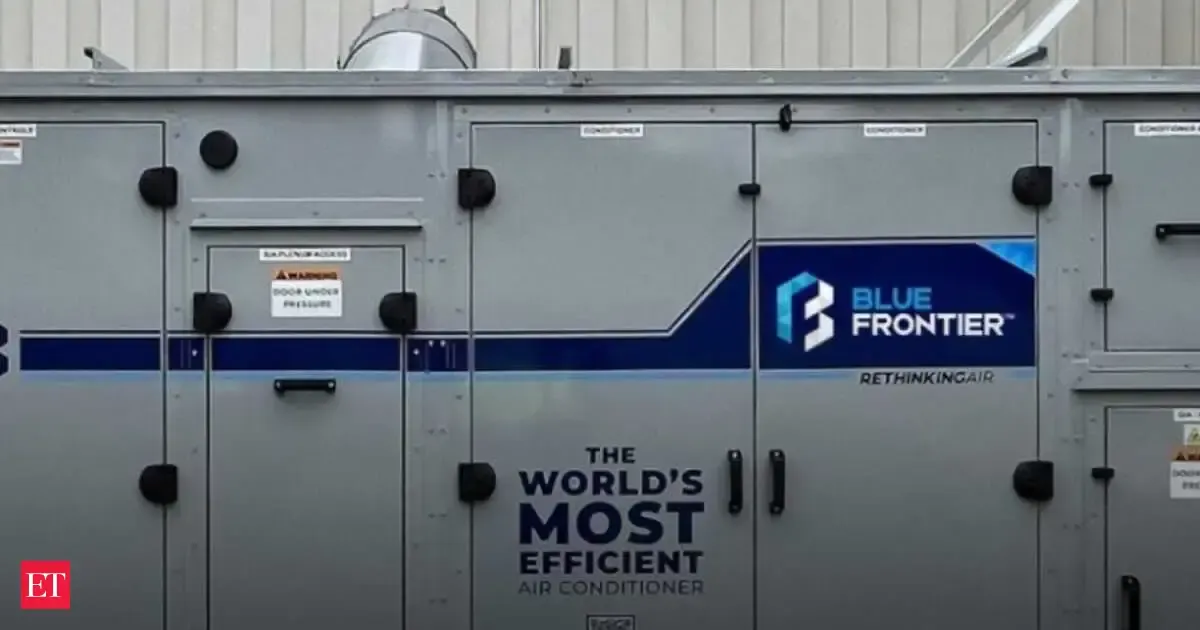
    In 2025, U.S. researchers developed an air-conditioning system that stores cooling in a salt solution; a Miami simulation projected a 93 cut in peak electricity demand

Story context

Category
Tech
Location
Miami, United States
Sources analysed
6
Last analysed
19 Aug 2026
Key entities
ElectricityTemperatureAir conditioningSunlightEnergy Information AdministrationUnited StatesThermostatInfraredRadiative coolingThermoregulationKilowatt-hourEvaporation