Skip to content
Get the Balanced News app for a better experience!
The Balanced News Logo
Analytics
The Balanced News Logo

Stay Balanced, Stay Informed

Menu
  • Browse News
  • Underreported Stories
  • Curated Feeds
  • Insights
  • Analytics
  • Our Writers
  • About Us
  • Download App
Learn
  • How It Works
  • Bias Detection
  • Lens Score
  • Source Bias Checker
  • Accountability
  • Custom Feeds
Newsroom
  • Writers & Analysts
  • About TBN
  • Editorial Standards
  • Corrections Policy
  • Our Partners
  • Insights
Socials
  • Youtube
  • Instagram
  • X
  • Facebook
News Categories
  • Trending
  • Politics
  • Sports
  • Business
  • Tech
  • Entertainment
  • Health
  • Science
  • Crime
  • Lifestyle
  • National
  • International
  • Good News
  • Crypto

Get Our App

Available for iOS and Android


LensFeedsInsightsAnalyticsTrendingGood NewsSportsPoliticsBusinessCrimeTechEntertainmentHealthNationalInternational

© 2026 The Balanced News. All rights reserved.

About UsEditorial StandardsCorrectionsHelp & SupportPrivacy PolicyTerms & Conditions
Researchers Develop Advanced Methods to Harvest Freshwater from Air in Dry Regions
Categories

Categories

Related Coverage

Select a news story to see related coverage from other media outlets.

Related Coverage

Select a news story to see related coverage from other media outlets.

  1. Home
  2. /
  3. Technology

Researchers Develop Advanced Methods to Harvest Freshwater from Air in Dry Regions

Analysed 21 Aug 2026·2 sources analysed·Chile·Technology
Researchers Develop Advanced Methods to Harvest Freshwater from Air in Dry RegionsPreviousNext

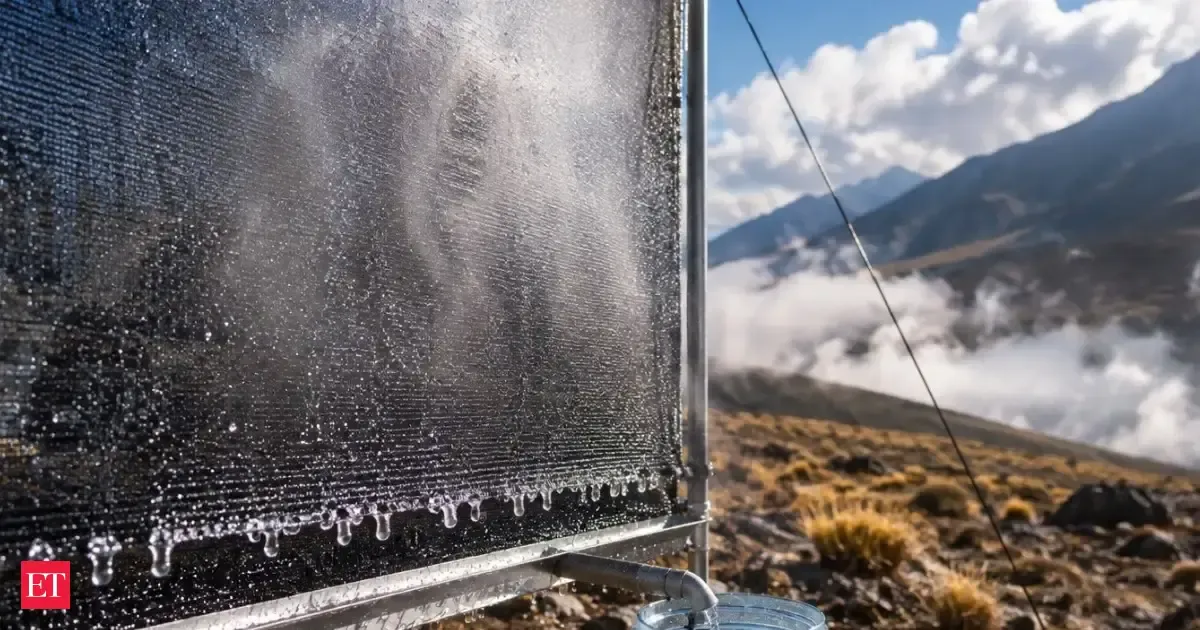
Researchers at MIT and Kiel University have developed innovative technologies to harvest freshwater from air in dry regions. MIT improved fog nets by optimizing mesh design and coatings, enhancing water capture in Chile's Atacama Desert. Meanwhile, Kiel University advanced a porous material, CAU-10-H, capable of extracting moisture from air with as low as 18% humidity, with potential for solar-powered water release. Both approaches offer promising, energy-efficient solutions to address water scarcity in arid environments.

Sentiment
65%
TBN's observations

First-hand measurement across 2 sources

We measured how 2 outlets covered this story. No outlet gave this story a measurable political slant — there is no left–right reading to report. Overall sentiment is positive (65/100). Lens Score 38/100.

Outlets measured: economictimes, economictimes. See how each one headlined and framed the same story in the source comparison below.

AI analysis of 2 sources · Published under editorial oversight by The Balanced News
Analysed 21 Aug 2026· How this analysis is produced· Editorial standards· Corrections

AI Analysis

Sentiment — Positive (65/100)

Sentiment was consistent across outlets (55–75/100), indicating broadly factual reporting rather than editorialising.

Coverage timeline

economictimes broke this story on 20 Aug, 06:13 pm. Other outlets followed.

20 Aug, 06:13 pm2 sources · 14 h21 Aug, 08:11 am
AI analysis by the TBN Bias Engine · beat methodology byAshwin Alsi· Technology Editor· editorial standards byOjas Kale
← Previous
Tech Billionaires Invest in Longevity Research to Extend Human Lifespans
Next →
Chandigarh University Develops Solar-Powered Robot for Automated Garbage Management
  1. 1
    economictimes20 Aug, 06:13 pm
    In 2011, Kiel University researchers began studying CAU-10-H for water harvesting, a project that lasted over a decade. 15 years later, they produced 66 pounds of the material, opening a path to harvest freshwater from air as dry as 18 humidity
  2. 2
    economictimes21 Aug, 08:11 am
    MIT researchers redesigned ordinary fog nets, changing the mesh and coating, to extract drinking water from air in some of Earth's driest regions

Story context

Category
Tech
Location
Chile
Sources analysed
2
Last analysed
21 Aug 2026
Key entities
Fresh waterWater scarcityMeshFiberMassachusetts Institute of TechnologyEarthFogChileAtacama DesertCamanchacaCoatingArid