India Commissions World's First Nuclear Heat-Based Hydrogen Production Facility
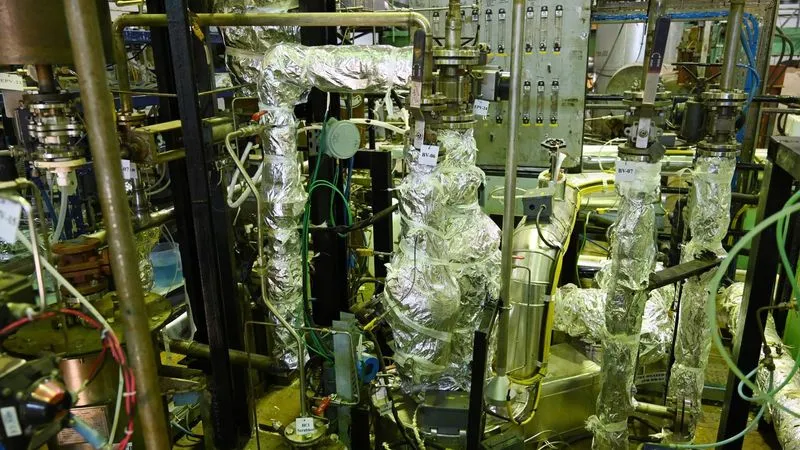
India has commissioned the world's first hydrogen production plant using nuclear reactor heat instead of electricity, located at the Indira Gandhi Centre for Atomic Research in Kalpakkam, Tamil Nadu. Developed by BARC and IGCAR, the facility employs the Copper-Chlorine thermochemical cycle powered by the Fast Breeder Test Reactor's heat to produce low-carbon hydrogen. This innovation aims to enhance energy efficiency, support India's climate goals, and advance sustainable, carbon-free hydrogen production using nuclear technology.
First-hand measurement across 14 sources
We measured how 14 outlets covered this story. Coverage leans balanced overall (Left 8%, Centre 86%, Right 6%). Overall sentiment is positive (75/100). Lens Score 36/100 — moderate-to-low public interest.
Outlets analysed (first-hand measurement by TBN's Bias Engine):
- theprint— balanced framing, positive sentiment
- ndtv— balanced framing, positive sentiment
- zeenews— balanced framing, positive sentiment
- thetribune— balanced framing, positive sentiment
- ndtv— balanced framing, positive sentiment
- republicworld— balanced framing, positive sentiment
- economictimes— balanced framing, positive sentiment
- indiatoday— balanced framing, positive sentiment
AI Analysis
The articles primarily present a technological and scientific perspective highlighting India's advancements in clean energy without partisan framing. They emphasize government and research institutions' roles, reflecting a pro-innovation stance common in official and mainstream media. There is no evident political controversy or opposition viewpoint, focusing instead on national progress and energy policy goals.
The overall tone across the articles is positive and optimistic, emphasizing a significant breakthrough in clean energy technology. Coverage highlights the environmental benefits and strategic importance of the development, with no critical or negative sentiment present. The language conveys confidence in the project's potential to contribute to India's sustainability and energy security objectives.