Skip to content
Get the Balanced News app for a better experience!
The Balanced News Logo
Analytics
The Balanced News Logo

Stay Balanced, Stay Informed

Menu
  • Browse News
  • Underreported Stories
  • Curated Feeds
  • Insights
  • Analytics
  • Our Writers
  • About Us
  • Download App
Learn
  • How It Works
  • Bias Detection
  • Lens Score
  • Source Bias Checker
  • Accountability
  • Custom Feeds
Newsroom
  • Writers & Analysts
  • About TBN
  • Editorial Standards
  • Corrections Policy
  • Our Partners
  • Insights
Socials
  • Youtube
  • Instagram
  • X
  • Facebook
News Categories
  • Trending
  • Politics
  • Sports
  • Business
  • Tech
  • Entertainment
  • Health
  • Science
  • Crime
  • Lifestyle
  • National
  • International
  • Good News
  • Crypto

Get Our App

Available for iOS and Android


LensFeedsInsightsAnalyticsTrendingGood NewsSportsPoliticsBusinessCrimeTechEntertainmentHealthNationalInternational

© 2026 The Balanced News. All rights reserved.

About UsEditorial StandardsCorrectionsHelp & SupportPrivacy PolicyTerms & Conditions
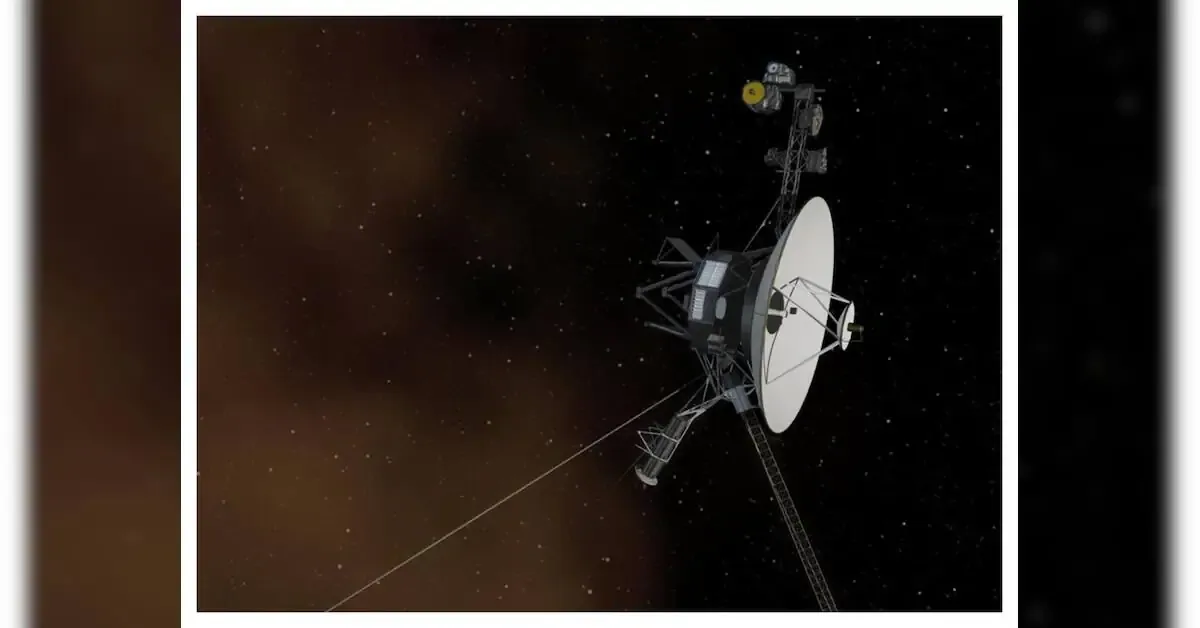
NASA's Voyager 1 Reaches One Light-Day Distance from Earth
Categories

Categories

Related Coverage

Select a news story to see related coverage from other media outlets.

Related Coverage

Select a news story to see related coverage from other media outlets.

  1. Home
  2. /
  3. Technology

NASA's Voyager 1 Reaches One Light-Day Distance from Earth

Analysed 18 Nov 2026·3 sources analysed·Florida, United States·Technology
NASA's Voyager 1 Reaches One Light-Day Distance from EarthPreviousNext

NASA's Voyager 1 spacecraft, launched in 1977 to study outer planets, has reached a distance of about 25.9 billion kilometres, or one light-day, from Earth. This milestone means radio signals take 24 hours to reach the probe and another 24 hours for a reply. Voyager 1, now in interstellar space since 2012, continues to send data despite its aging power source, with two instruments still operational. Its twin, Voyager 2, entered interstellar space in 2018 after exploring four planets.

Sentiment
68%
TBN's observations

First-hand measurement across 3 sources

We measured how 3 outlets covered this story. No outlet gave this story a measurable political slant — there is no left–right reading to report. Overall sentiment is positive (68/100). Lens Score 36/100.

Outlets measured: businessstandard, moneycontrol, theprint. See how each one headlined and framed the same story in the source comparison below.

AI analysis of 3 sources · Published under editorial oversight by The Balanced News
Analysed 18 Nov 2026· How this analysis is produced· Editorial standards· Corrections

AI Analysis

Sentiment — Positive (68/100)

Sentiment was consistent across outlets (55–78/100), indicating broadly factual reporting rather than editorialising.

Coverage timeline

theprint broke this story on 17 Nov, 06:28 pm. Other outlets followed.

17 Nov, 06:28 pm3 sources · 11 h18 Nov, 05:48 am
AI analysis by the TBN Bias Engine · beat methodology byAshwin Alsi· Technology Editor· editorial standards byOjas Kale
← Previous
Effective Methods for Sharing Large CAD Files Across Multiple Sites
Next →
Critical Java Vulnerabilities Prompt Urgent Security Advisories in US and South Korea
  1. 1
    theprint17 Nov, 06:28 pm
    Voyager 1 is nearly a light-day away. NASA's message will take 2 days to get a reply
  2. 2
    moneycontrol18 Nov, 05:40 am
    NASA's Voyager 1 reaches one light-day from Earth! What does this 25.9 billion km milestone mean?- Moneycontrol.com
  3. 3
    businessstandard18 Nov, 05:48 am
    Voyager 1 reaches one light-day: How a 1977 spacecraft defied expectations

Who's involved

Institutions and figures named across source coverage.

Government
Jet Propulsion LaboratoryNational Aeronautics and Space Administration

Story context

Category
Tech
Location
Florida, United States
Sources analysed
3
Last analysed
18 Nov 2026
Key entities
Voyager 1JupiterSaturnNASAOuter spaceEarthMagnetic fieldNatural satelliteVoyager 2HeliosphereSpacecraftSolar System