Skip to content
Get the Balanced News app for a better experience!
The Balanced News Logo
Analytics
The Balanced News Logo

Stay Balanced, Stay Informed

Menu
  • Browse News
  • Underreported Stories
  • Curated Feeds
  • Insights
  • Analytics
  • Our Writers
  • About Us
  • Download App
Learn
  • How It Works
  • Bias Detection
  • Lens Score
  • Source Bias Checker
  • Accountability
  • Custom Feeds
Newsroom
  • Writers & Analysts
  • About TBN
  • Editorial Standards
  • Corrections Policy
  • Our Partners
  • Insights
Socials
  • Youtube
  • Instagram
  • X
  • Facebook
News Categories
  • Trending
  • Politics
  • Sports
  • Business
  • Tech
  • Entertainment
  • Health
  • Science
  • Crime
  • Lifestyle
  • National
  • International
  • Good News
  • Crypto

Get Our App

Available for iOS and Android


LensFeedsInsightsAnalyticsTrendingGood NewsSportsPoliticsBusinessCrimeTechEntertainmentHealthNationalInternational

© 2026 The Balanced News. All rights reserved.

About UsEditorial StandardsCorrectionsHelp & SupportPrivacy PolicyTerms & Conditions
Ghost Font Uses Animated Dots to Challenge AI Text Recognition While Remaining Human-Readable
Categories

Categories

Related Coverage

Select a news story to see related coverage from other media outlets.

Related Coverage

Select a news story to see related coverage from other media outlets.

  1. Home
  2. /
  3. Technology

Ghost Font Uses Animated Dots to Challenge AI Text Recognition While Remaining Human-Readable

Analysed 16 Jul 2026·6 sources analysed·United States·Technology
Ghost Font Uses Animated Dots to Challenge AI Text Recognition While Remaining Human-ReadablePreviousNext

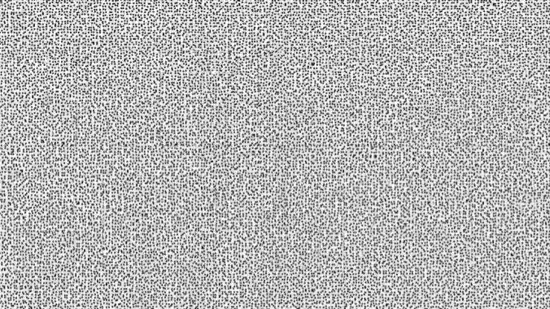
Ghost Font, created by designer Eric Lu, is an experimental typography that uses animated dot patterns to hide text readable by humans but challenging for advanced AI models like GPT-Sol 5.6 Ultra and Claude Fable. The font employs motion and visual noise, causing AI to misinterpret or fail to decode messages, though it is not entirely secure against AI instructed to analyze frame movements. Lu aims to apply Ghost Font in CAPTCHA systems to enhance human verification.

TBN's observations

First-hand measurement across 6 sources

We measured how 6 outlets covered this story. Coverage leans balanced overall (Left 0%, Centre 100%, Right 0%). Overall sentiment is positive (67/100). Lens Score 25/100 — low public interest.

Outlets analysed (first-hand measurement by TBN's Bias Engine):

  • thetribune— balanced framing, positive sentiment
  • thefinancialexpress— balanced framing, positive sentiment
  • news18— balanced framing, neutral sentiment
  • timesnow— balanced framing, neutral sentiment
  • hindustantimes— balanced framing, neutral sentiment
  • ndtv— balanced framing, positive sentiment
Political Bias
0%100%0%
Sentiment
67%
AI analysis of 6 sources · Published under editorial oversight by The Balanced News
Analysed 16 Jul 2026· How this analysis is produced· Editorial standards· Corrections

AI Analysis

Political bias across 6 sources
● Left 0%● Center 100%● Right 0%

The articles present a largely technical and neutral perspective focused on the innovation and limitations of Ghost Font. They include viewpoints from the creator and note AI capabilities without political framing. Discussions about AI privacy and security concerns appear but are not politicized, reflecting a balanced coverage of technological implications rather than ideological positions.

Sentiment — Positive (67/100)

The overall tone is informative and exploratory, highlighting both the novelty and current limitations of Ghost Font. While some skepticism is noted regarding its long-term effectiveness, the coverage remains mostly neutral to mildly positive, emphasizing the font's potential applications and the ongoing challenges in AI text recognition.

How 6 sources covered this story

Each source's own headline, political lean, and sentiment — so you can see framing differences at a glance.

AI analysis by the TBN Bias Engine · beat methodology byAshwin Alsi· Technology Editor· editorial standards byOjas Kale
← Previous
Cloudflare Outage Disrupts ChatGPT and Other Major Internet Services Worldwide
Next →
AI Innovations, Apple’s China Expansion, and Mozilla’s Critique of Microsoft Browser Practices
SourceTheir headlineBiasSentiment
thetribune'Ghost Font': An anti-AI font that can be read by humans but not leading AI models - The TribuneCenterPositive
thefinancialexpressWhat is the Ghost Font? New typography that promises to 'kill' AI scrapingCenterPositive
news18'Don't See The Point Of Such Efforts': Internet Divided Over 'Ghost Font' That Claims To Outsmart AICenterNeutral
timesnowWhy AI Struggles With Ghost Font While Humans Read It With EaseCenterNeutral
hindustantimesWhat is Ghost Font, the anti-AI font touted to be legible only to humans?CenterNeutral
ndtvThis 'Ghost Font' Can Only Be Read by Humans, Leaves Top AI Models StumpedCenterPositive

Coverage timeline

ndtv broke this story on 15 Jul, 09:55 am. Other outlets followed.

  1. 1
    ndtv15 Jul, 09:55 am
    This 'Ghost Font' Can Only Be Read by Humans, Leaves Top AI Models Stumped
  2. 2
    hindustantimes15 Jul, 11:08 am
    What is Ghost Font, the anti-AI font touted to be legible only to humans?
  3. 3
    timesnow15 Jul, 11:50 am
    Why AI Struggles With Ghost Font While Humans Read It With Ease
  4. 4
    news1816 Jul, 02:32 am
    'Don't See The Point Of Such Efforts': Internet Divided Over 'Ghost Font' That Claims To Outsmart AI
  5. 5
    thefinancialexpress16 Jul, 09:04 am
    What is the Ghost Font? New typography that promises to 'kill' AI scraping
  6. 6
    thetribune16 Jul, 10:24 am
    'Ghost Font': An anti-AI font that can be read by humans but not leading AI models - The Tribune

Lens Score breakdown

25/100
Public interest0/100
Coverage gap100%

Well-covered story — coverage matches public importance.

Story context

Category
Tech
Location
United States
Sources analysed
6
Last analysed
16 Jul 2026
Key entities
Artificial intelligenceCAPTCHATypographyAnimationTypefacePerceptionExperimental musicInternetFontGUID Partition TableBlogHuman brain