Skip to content
Get the Balanced News app for a better experience!
The Balanced News Logo
Analytics
The Balanced News Logo

Stay Balanced, Stay Informed

Menu
  • Browse News
  • Underreported Stories
  • Curated Feeds
  • Insights
  • Analytics
  • Our Writers
  • About Us
  • Download App
Learn
  • How It Works
  • Bias Detection
  • Lens Score
  • Source Bias Checker
  • Accountability
  • Custom Feeds
Newsroom
  • Writers & Analysts
  • About TBN
  • Editorial Standards
  • Corrections Policy
  • Our Partners
  • Insights
Socials
  • Youtube
  • Instagram
  • X
  • Facebook
News Categories
  • Trending
  • Politics
  • Sports
  • Business
  • Tech
  • Entertainment
  • Health
  • Science
  • Crime
  • Lifestyle
  • National
  • International
  • Good News
  • Crypto

Get Our App

Available for iOS and Android


LensFeedsInsightsAnalyticsTrendingGood NewsSportsPoliticsBusinessCrimeTechEntertainmentHealthNationalInternational

© 2026 The Balanced News. All rights reserved.

About UsEditorial StandardsCorrectionsHelp & SupportPrivacy PolicyTerms & Conditions
Scientists Use AI to Create Functional Viruses Targeting Drug-Resistant Bacteria
Categories

Categories

Related Coverage

Select a news story to see related coverage from other media outlets.

Related Coverage

Select a news story to see related coverage from other media outlets.

  1. Home
  2. /
  3. Technology

Scientists Use AI to Create Functional Viruses Targeting Drug-Resistant Bacteria

Analysed 7 Aug 2026·7 sources analysed·California, United States·Technology
Scientists Use AI to Create Functional Viruses Targeting Drug-Resistant BacteriaPreviousNext

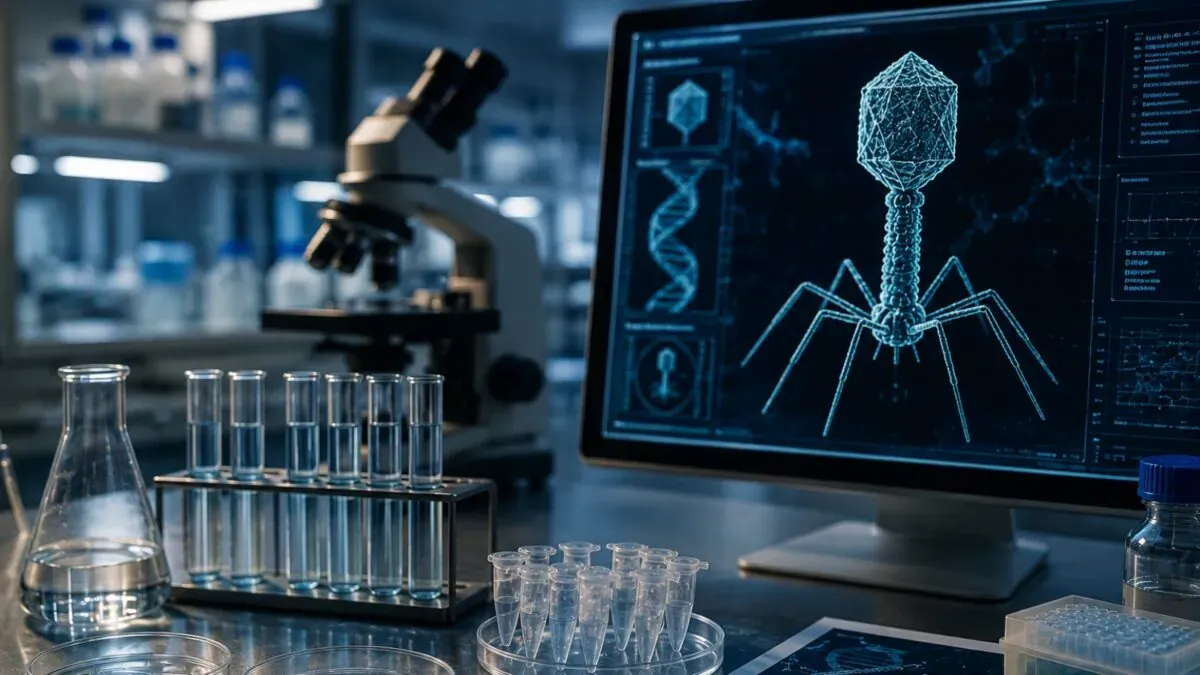
Researchers from Stanford University and the Arc Institute have used artificial intelligence to design and synthesize 16 new bacteriophages—viruses that infect bacteria but not humans. Published in Science, the study marks the first time AI has created fully functional viral genomes that can replicate and kill antibiotic-resistant E. coli. While the breakthrough offers potential for medical advances against drug-resistant infections, it also raises biosecurity and biosafety concerns about AI's role in biotechnology.

Sentiment
61%
TBN's observations

First-hand measurement across 4 sources

We measured how 4 outlets covered this story. No outlet gave this story a measurable political slant — there is no left–right reading to report. Overall sentiment is positive (61/100). Lens Score 44/100.

Outlets measured: thefinancialexpress, indiatoday, firstpost, mint. See how each one headlined and framed the same story in the source comparison below.

AI analysis of 4 sources · Published under editorial oversight by The Balanced News
Analysed 7 Aug 2026· How this analysis is produced· Editorial standards· Corrections

AI Analysis

Sentiment — Positive (61/100)

Sentiment was consistent across outlets (55–65/100), indicating broadly factual reporting rather than editorialising.

Coverage timeline

mint broke this story on 7 Aug, 02:14 am. Other outlets followed.

7 Aug, 02:14 am4 sources · 2 h7 Aug, 04:37 am
AI analysis by the TBN Bias Engine · beat methodology byAshwin Alsi· Technology Editor· editorial standards byOjas Kale
← Previous
Maharashtra Approves Rs 11.26 Crore Deployment of Sarvam AI for Government Use
Next →
OpenAI Plans Doughnut-Shaped AI Smart Speaker Launching in 2027 Priced Over $300
  1. 1
    mint7 Aug, 02:14 am
    The latest scary-sounding AI milestone: A brand-new virus Mint
  2. 2
    firstpost7 Aug, 03:14 am
    AI's next breakthrough isn't another chatbot -- it's a virus
  3. 3
    indiatoday7 Aug, 04:00 am
    AI creates a new virus, but here's why you shouldn't freak out yet
  4. 4
    thefinancialexpress7 Aug, 04:37 am
    Scientists design AI viruses unknown in nature spark medical hope and biosecurity alarm

Who's involved

Institutions and figures named across source coverage.

Corporate
Meta PlatformsAnthropicOpenAI

Story context

Category
Tech
Location
California, United States
Sources analysed
7
Last analysed
7 Aug 2026
Key entities
Artificial intelligenceVirusStanford UniversityGenomeBacteriaBacteriophageChemical synthesisEscherichia coliAntimicrobial resistanceDNABiosafetyNucleic acid sequence