NASA's Webb Telescope Discovers Hidden Giant Exoplanet in Beta Pictoris System
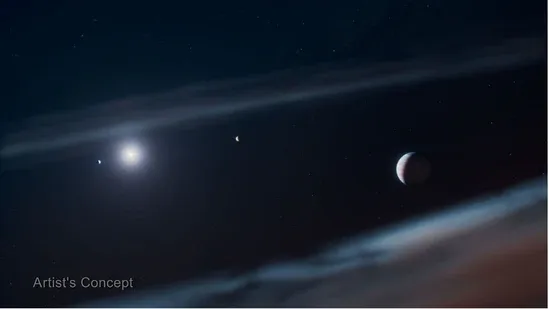
Astronomers using NASA's James Webb Space Telescope have discovered a new giant exoplanet, Beta Pictoris d, in the well-studied Beta Pictoris system located 63 light-years from Earth. Unlike the previously known planets Beta Pictoris b and c, this planet was detected through its atmospheric chemical signature using spectroscopy rather than direct imaging. This accidental discovery, detailed in The Astrophysical Journal Letters, introduces a novel method for identifying exoplanets and offers new insights into planetary system formation.
First-hand measurement across 2 sources
We measured how 2 outlets covered this story. Coverage leans balanced overall (Left 0%, Centre 100%, Right 0%). Overall sentiment is positive (75/100). Lens Score 30/100 — low public interest.
Outlets analysed (first-hand measurement by TBN's Bias Engine):
- hindustantimes— balanced framing, positive sentiment
- economictimes— balanced framing, positive sentiment
AI Analysis
The article group presents a scientific discovery without political framing, focusing on factual reporting from NASA and academic sources. Both articles emphasize the technological and research aspects, quoting the lead scientist and referencing peer-reviewed publication. There is no evident political perspective or partisan interpretation, reflecting neutral science communication.
The overall tone across the articles is positive and informative, highlighting the significance of the discovery and the innovative detection method. The language is optimistic about the implications for exoplanet research, with no negative or controversial elements, maintaining a neutral and factual sentiment.
How 2 sources covered this story
Each source's own headline, political lean, and sentiment — so you can see framing differences at a glance.