SpaceX Leads Reusable Rocket Innovation as China Advances and Launch Costs Decline
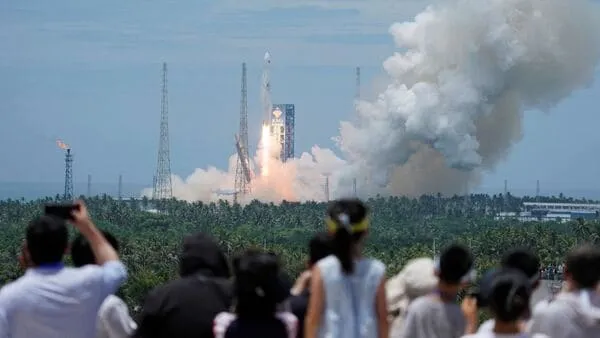
SpaceX pioneered reusable rocket technology with its Falcon 9, significantly reducing launch costs and dominating satellite deployment. Recently, China's Long March 10B achieved a successful reusable first-stage booster landing on an offshore platform, marking a notable advancement outside the US. Meanwhile, a study highlights that rocket launch costs have dropped by 95% over 65 years, driven by innovations like reusable rockets, manufacturing advances, and increased production experience, with further cost reductions expected by 2040.
First-hand measurement across 2 sources
We measured how 2 outlets covered this story. Coverage leans balanced overall (Left 3%, Centre 94%, Right 3%). Overall sentiment is positive (73/100). Lens Score 24/100 — low public interest.
Outlets analysed (first-hand measurement by TBN's Bias Engine):
- theprint— balanced framing, positive sentiment
- mint— balanced framing, positive sentiment
AI Analysis
The articles present a balanced view of US and Chinese advancements in reusable rocket technology, highlighting SpaceX's pioneering role and China's recent progress without favoring either. The coverage includes industry-wide cost trends and technological improvements, reflecting a neutral stance focused on technological and economic developments rather than political implications.
The overall tone is positive and forward-looking, emphasizing technological achievements and cost reductions in the space launch industry. Both SpaceX's successes and China's advancements are described with respect, while the study's projections suggest optimism about future affordability and innovation in rocket launches.
How 2 sources covered this story
Each source's own headline, political lean, and sentiment — so you can see framing differences at a glance.