Haryana and Rajasthan Sign Agreement to Implement 1994 Yamuna Water Sharing Pact
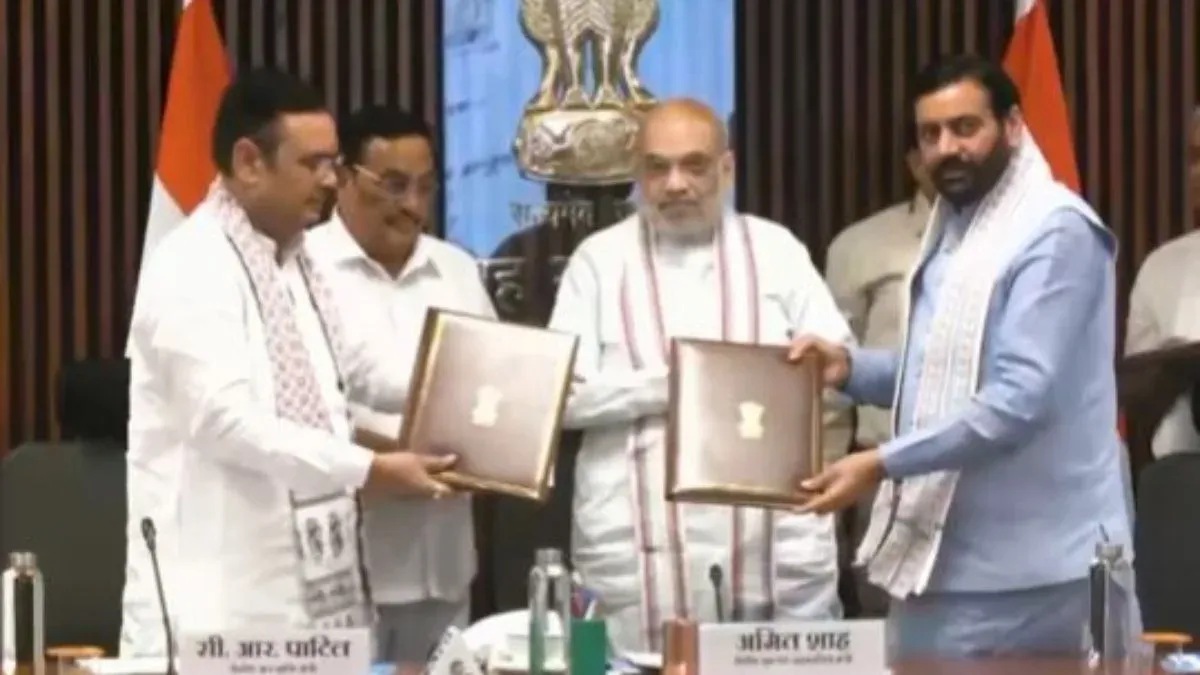
Haryana and Rajasthan signed a Memorandum of Understanding to implement the 1994 Upper Yamuna River Board agreement, enabling Rajasthan to receive 580 million cubic metres of Yamuna water annually via three underground pipelines from Hathini Kund barrage during monsoon months. The Rs 3,900-crore project aims to improve water supply for drinking and irrigation in drought-prone areas. The agreement, witnessed by Union Home Minister Amit Shah and Jal Shakti Minister C.R. Patil, emphasizes cooperative federalism and joint infrastructure development, also supporting pending dam projects in the basin.
First-hand measurement across 8 sources
We measured how 8 outlets covered this story. Coverage leans balanced overall (Left 14%, Centre 70%, Right 16%). Overall sentiment is positive (69/100). Lens Score 40/100 — moderate-to-low public interest.
Outlets analysed (first-hand measurement by TBN's Bias Engine):
- freepressjournal— balanced framing, positive sentiment
- thestatesman— balanced framing, positive sentiment
- thetribune— balanced framing, positive sentiment
- indianexpress— balanced framing, neutral sentiment
- thehindu— balanced framing, positive sentiment
- indiatvnews— balanced framing, neutral sentiment
- thestatesman— balanced framing, neutral sentiment
- economictimes— balanced framing, positive sentiment
AI Analysis
The articles predominantly present a government-centric perspective highlighting the cooperative federalism approach and leadership roles of Union and state ministers. They emphasize official statements and the resolution of a longstanding dispute without critical viewpoints or opposition perspectives. The coverage reflects a consensus on the agreement's significance, focusing on administrative and infrastructural aspects rather than political contestation.
The overall tone across the articles is positive, emphasizing the resolution of a decades-old water-sharing issue and the benefits for water supply and regional cooperation. The language conveys optimism about the project's impact and government efforts, with no significant negative or critical sentiment observed. The coverage highlights progress and collaboration, fostering a constructive narrative.