NASA Launches Mission to Boost Aging Swift Telescope to Higher Orbit
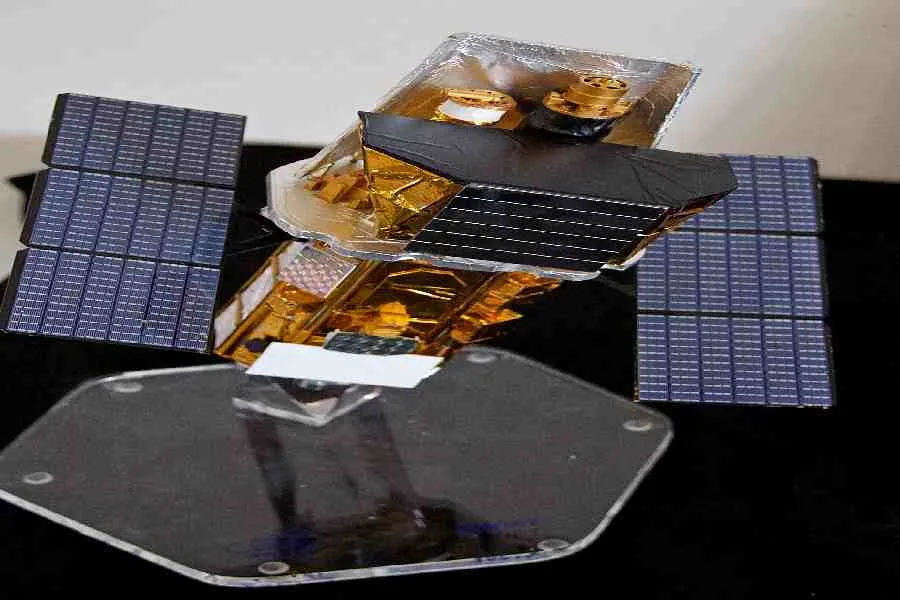
NASA is launching a $30 million mission this week to rescue the aging Neil Gehrels Swift Observatory, which is rapidly losing altitude due to increased solar activity heating Earth's atmosphere. The agency has partnered with startup Katalyst Space Technologies, whose robotic spacecraft, Link, will rendezvous with Swift after launch aboard an air-launched Pegasus rocket, then raise its orbit from about 360 km to 600 km over several months. This pioneering effort could pave the way for future servicing of other satellites like the Hubble Space Telescope, which faces similar risks.
First-hand measurement across 7 sources
We measured how 7 outlets covered this story. Coverage leans balanced overall (Left 0%, Centre 100%, Right 0%). Overall sentiment is positive (75/100). Lens Score 32/100 — low public interest.
Outlets analysed (first-hand measurement by TBN's Bias Engine):
- economictimes— balanced framing, positive sentiment
- mint— balanced framing, positive sentiment
- thetribune— balanced framing, positive sentiment
- ndtv— balanced framing, positive sentiment
- economictimes— balanced framing, positive sentiment
- thetelegraph— balanced framing, positive sentiment
- wion— balanced framing, positive sentiment
AI Analysis
The article group presents a largely technical and scientific perspective focused on NASA's mission and its partnership with a private startup, Katalyst Space Technologies. Coverage is neutral, emphasizing innovation and space technology without political framing. The sources highlight NASA's efforts and potential future applications, with no evident partisan viewpoints or political controversy.
The overall tone across the articles is cautiously optimistic and factual, emphasizing the mission's pioneering nature and potential benefits. While acknowledging the risk of the telescope falling back to Earth, the coverage focuses on the innovative rescue attempt and its significance, maintaining a positive yet measured sentiment without sensationalism.
How 7 sources covered this story
Each source's own headline, political lean, and sentiment — so you can see framing differences at a glance.