3 hours agoEducation
21LENS
2 SourcesIndia
 thebalanced.news
Comparing Education Approaches: China’s Reforms and India’s Traditional Challenges
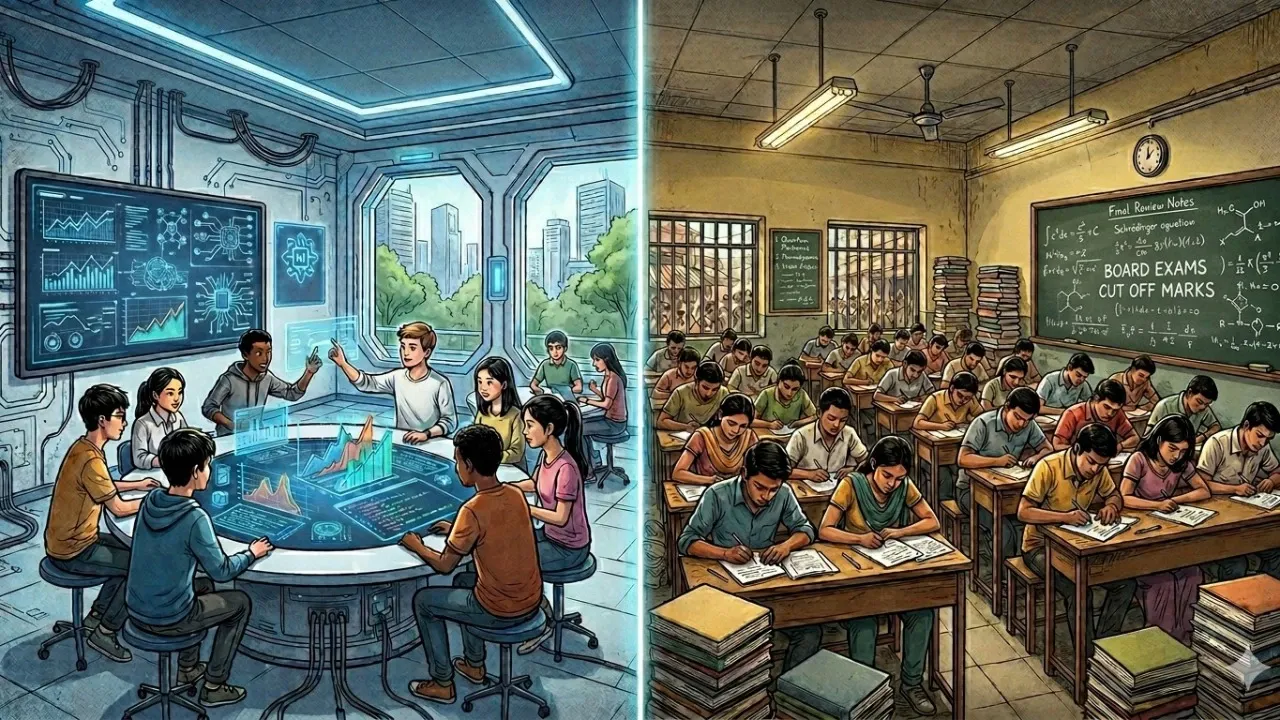
China has reformed its education system since 2021 by reducing homework and private tutoring to emphasize application-based learning and skill development aligned with national goals. In contrast, India faces challenges in updating its large education system, with concerns over graduates being academically qualified but lacking job readiness. Historically, education in India and other cultures relied on oral, experiential teaching, highlighting a shift from traditional methods to modern demands, including balancing AI tools with human creativity.
Political Bias
10%88%2%
Sentiment
60%
20 stories available
View AI Analysis
Bias Analysis: The articles present perspectives focusing on educational policy and cultural history without partisan framing. One highlights China's government-led reforms emphasizing skill-building, while the other reflects on India's traditional pedagogical roots and current systemic challenges. Both sources discuss education from policy and historical viewpoints, avoiding political partisanship and focusing on structural and cultural factors.
Sentiment: The overall tone is analytical and neutral, acknowledging positive reforms in China and challenges in India without judgment. The historical context article adopts a reflective tone on traditional education methods, while the policy-focused article discusses systemic issues pragmatically. Coverage balances optimism about innovation with recognition of ongoing difficulties, resulting in a mixed but measured sentiment.
Lens Score: 21/100 — Story is well-covered by media outlets. Public interest: 0/100. Coverage gap: 100%.
Related Coverage
Select a news story to see related coverage from other media outlets.