Astronomers Link Repeating Radio Bursts to Binary Star System's Orbit
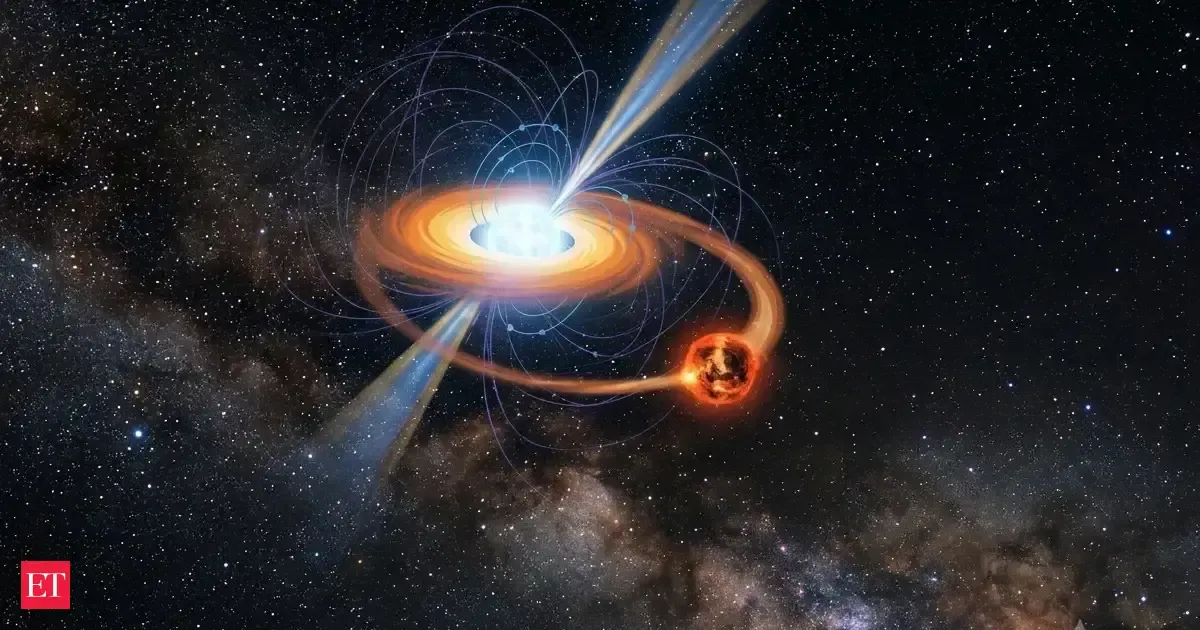
In 2026, a University of Sydney PhD student identified a 1.34497-hour radio pulse from ASKAP J1745-5051, a binary system in the Milky Way with a white dwarf and a low-mass companion. Subsequent observations revealed an orbital period of about 1.368 hours, explaining the repeating radio bursts. The source was discovered during the Rapid ASKAP Continuum Survey using CSIRO's Australian SKA Pathfinder, with further positional refinement by the MeerKAT telescope and optical matching via Gaia. The bursts vary in behavior and can temporarily cease.
First-hand measurement across 2 sources
We measured how 2 outlets covered this story. No outlet gave this story a measurable political slant — there is no left–right reading to report. Overall sentiment is neutral (50/100). Lens Score 31/100.
Outlets measured: economictimes, economictimes. See how each one headlined and framed the same story in the source comparison below.
AI Analysis
Sentiment was consistent across outlets (50–50/100), indicating broadly factual reporting rather than editorialising.
Coverage timeline
economictimes broke this story on 22 Aug, 02:10 pm. Other outlets followed.