Caracas Sky Turns Deep Red After Earthquakes Due to Atmospheric Dust and Light Scattering
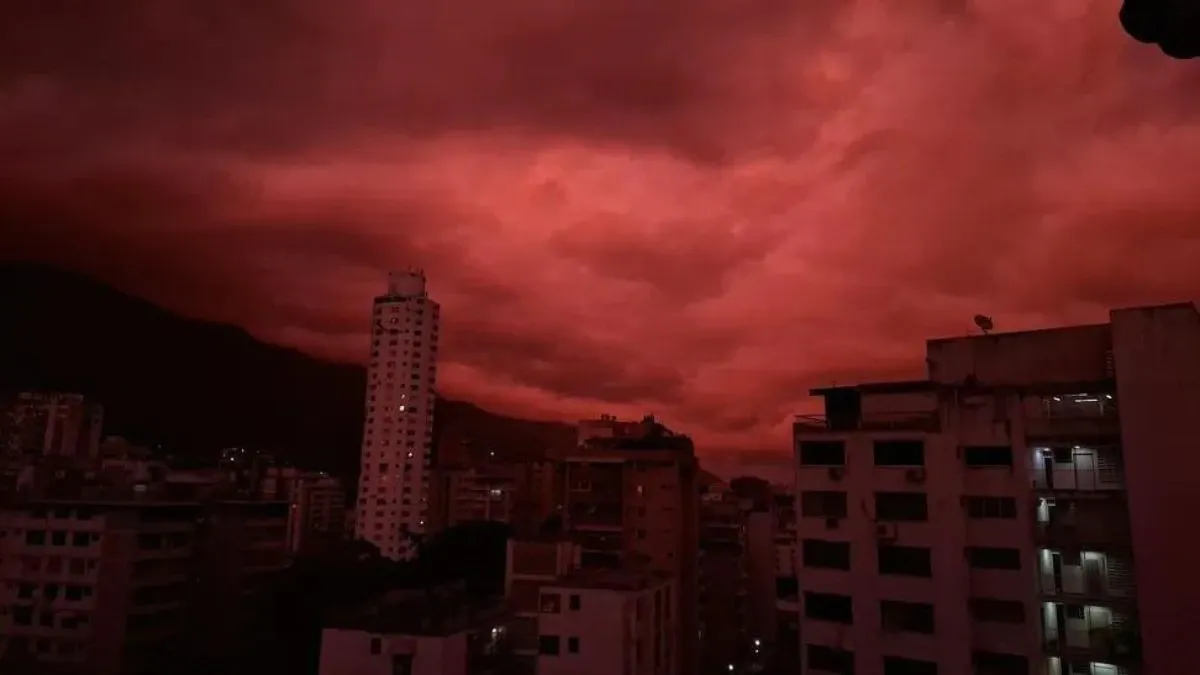
Days after two powerful earthquakes struck Venezuela, the sky over Caracas turned a deep red during sunset, drawing widespread attention and speculation. Scientists attribute this vivid 'candilazo' effect to Rayleigh scattering intensified by fine dust particles from collapsed buildings and Saharan dust carried by trade winds. While some locals viewed the phenomenon as an ominous sign, experts emphasize it is a natural atmospheric occurrence unrelated to the earthquakes themselves.
First-hand measurement across 5 sources
We measured how 5 outlets covered this story. Coverage leans balanced overall (Left 0%, Centre 100%, Right 0%). Overall sentiment is neutral (38/100). Lens Score 41/100 — moderate-to-low public interest.
Outlets analysed (first-hand measurement by TBN's Bias Engine):
- indianexpress— balanced framing, negative sentiment
- timesnow— balanced framing, negative sentiment
- republicworld— balanced framing, neutral sentiment
- indiatoday— balanced framing, neutral sentiment
- wion— balanced framing, neutral sentiment
AI Analysis
The article group presents a range of perspectives, including scientific explanations from meteorologists and local media, alongside public reactions and social media speculation linking the red sky to the recent earthquakes. Coverage includes both naturalistic interpretations and cultural or superstitious viewpoints without endorsing any particular stance, maintaining a balanced representation of the event and its interpretations.
The overall tone across the articles is mixed, combining awe and concern from residents and social media users with neutral, explanatory scientific commentary. While some narratives express fear or interpret the red sky as a warning, the predominant sentiment conveyed by experts is factual and reassuring, focusing on natural atmospheric processes rather than disaster-related causes.