Skip to content
Get the Balanced News app for a better experience!
The Balanced News Logo
Analytics
The Balanced News Logo

Stay Balanced, Stay Informed

Menu
  • Browse News
  • Underreported Stories
  • Curated Feeds
  • Insights
  • Analytics
  • Our Writers
  • About Us
  • Download App
Learn
  • How It Works
  • Bias Detection
  • Lens Score
  • Source Bias Checker
  • Accountability
  • Custom Feeds
Newsroom
  • Writers & Analysts
  • About TBN
  • Editorial Standards
  • Corrections Policy
  • Our Partners
  • Insights
Socials
  • Youtube
  • Instagram
  • X
  • Facebook
News Categories
  • Trending
  • Politics
  • Sports
  • Business
  • Tech
  • Entertainment
  • Health
  • Science
  • Crime
  • Lifestyle
  • National
  • International
  • Good News
  • Crypto

Get Our App

Available for iOS and Android


LensFeedsInsightsAnalyticsTrendingGood NewsSportsPoliticsBusinessCrimeTechEntertainmentHealthNationalInternational

© 2026 The Balanced News. All rights reserved.

About UsEditorial StandardsCorrectionsHelp & SupportPrivacy PolicyTerms & Conditions
Astronomers Discover Evolving Ten-Sided Atmospheric Wave at Saturn's South Pole
Categories

Categories

Related Coverage

Select a news story to see related coverage from other media outlets.

Related Coverage

Select a news story to see related coverage from other media outlets.

  1. Home
  2. /
  3. General

Astronomers Discover Evolving Ten-Sided Atmospheric Wave at Saturn's South Pole

Analysed 3 Sept 2026·2 sources analysed·Spain·General
Astronomers Discover Evolving Ten-Sided Atmospheric Wave at Saturn's South PolePreviousNext

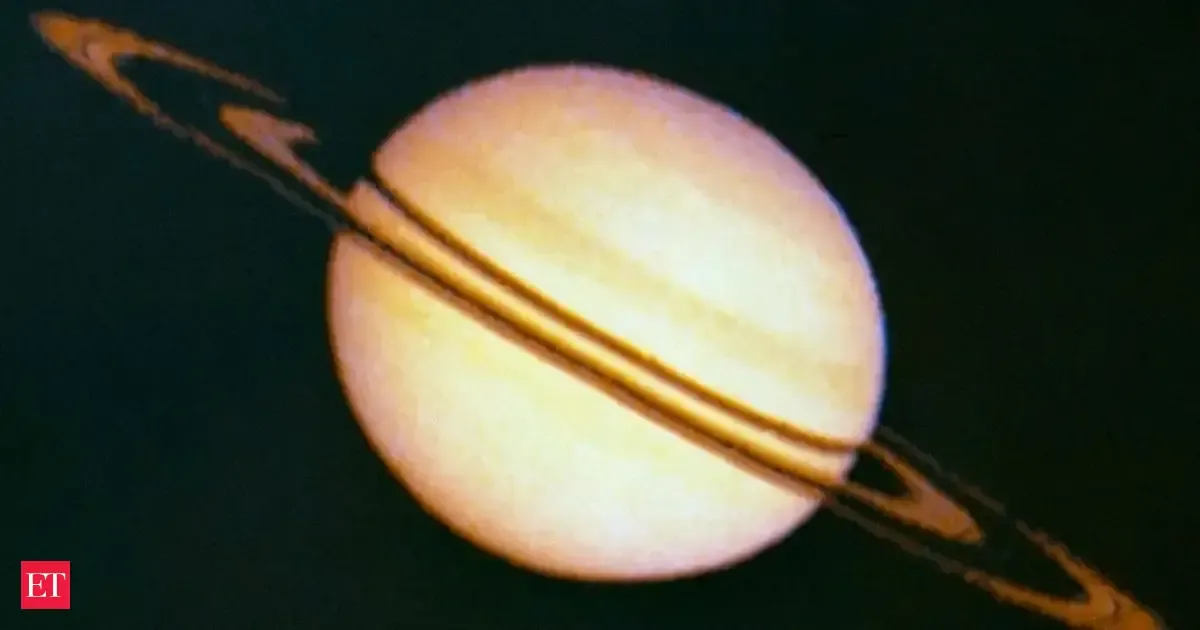
Astronomers have discovered a large, evolving ten-sided atmospheric wave, or decagon, near Saturn's south pole, contrasting with the stable northern hexagon observed for over 40 years. This feature was identified through Hubble Space Telescope and ground-based observations, with evidence suggesting it developed recently, possibly after 2017. Scientists are closely monitoring the decagon to understand its origins and behavior, offering new insights into Saturn's atmospheric dynamics and planetary weather systems.

Sentiment
55%
TBN's observations

First-hand measurement across 2 sources

We measured how 2 outlets covered this story. No outlet gave this story a measurable political slant — there is no left–right reading to report. Overall sentiment is neutral (55/100). Lens Score 34/100.

Outlets measured: economictimes, economictimes. See how each one headlined and framed the same story in the source comparison below.

AI analysis of 2 sources · Published under editorial oversight by The Balanced News
Analysed 3 Sept 2026· How this analysis is produced· Editorial standards· Corrections

AI Analysis

Sentiment — Neutral (55/100)

Sentiment was consistent across outlets (55–55/100), indicating broadly factual reporting rather than editorialising.

Coverage timeline

economictimes broke this story on 3 Sept, 06:44 am. Other outlets followed.

3 Sept, 06:44 am2 sources · 10 h3 Sept, 04:34 pm
AI analysis by the TBN Bias Engine · beat methodology byOjas Kale· Founder & Editor
← Previous
Passenger MEMU Train Detained Near Khurda Road Due to Technical Snag
Next →
Delhi Records Slightly Above-Average Temperature; Rain Forecasted for Friday and Saturday
  • 1
    economictimes3 Sept, 06:44 am
    'Decagon' at Saturn's South Pole? After the long-lived 'hexagon' at its north pole, astronomers spot a mysterious 10-sided atmospheric wave in the planet's southern hemisphere - Here's what we know so far
  • 2
    economictimes3 Sept, 04:34 pm
    Astronomers finally spot what Saturn's South Pole was hiding: A massive 10-sided atmospheric wave that scientists still can't explain
  • Who's involved

    Institutions and figures named across source coverage.

    Government
    European Space AgencyNational Aeronautics and Space Administration

    Story context

    Category
    Generic
    Location
    Spain
    Sources analysed
    2
    Last analysed
    3 Sept 2026
    Key entities
    DecagonHexagonSouth PoleSaturnNASAJet streamNorth PoleGeometryAstronomerSouthern HemisphereCassini–HuygensSolar System