Southwest Monsoon Stalls with Significant Rainfall Deficits Across Central India
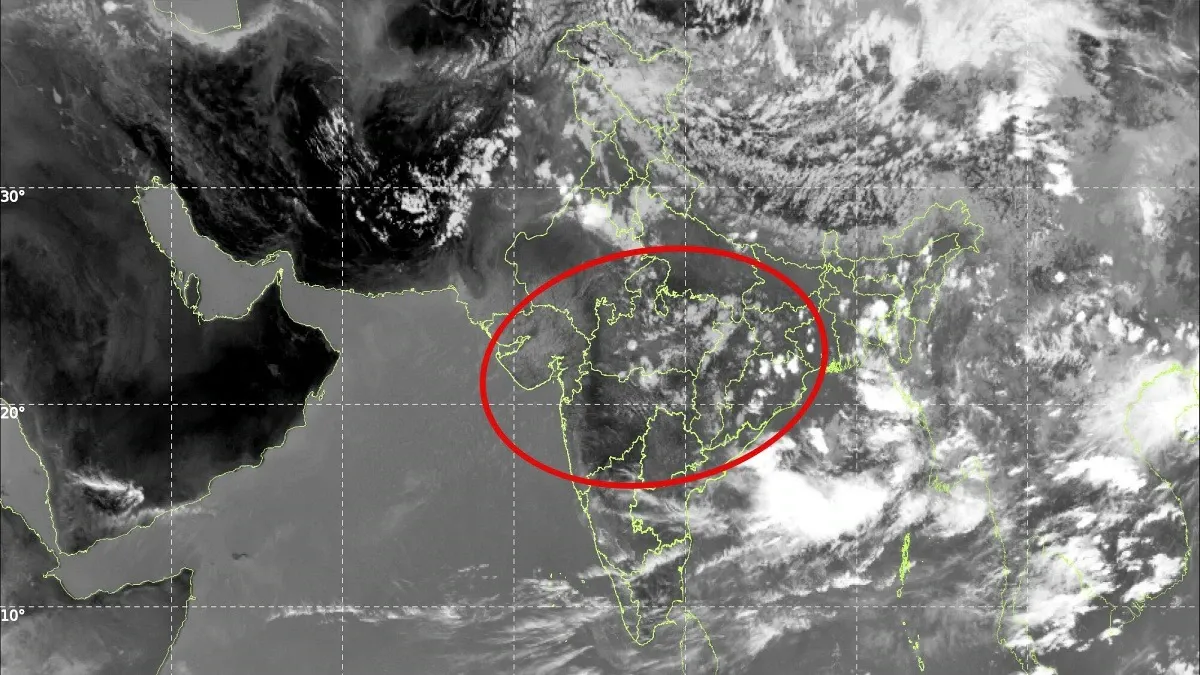
India's southwest monsoon, which began early in June 2026, has stalled, causing significant rainfall deficits across central and eastern regions. Central India faces a 63-65% shortfall, with states like Madhya Pradesh, Chhattisgarh, and Maharashtra severely affected. Satellite images reveal sparse cloud cover and weak monsoon circulation, linked to reduced moisture transport and atmospheric patterns. While northwest and southern peninsular India have near-normal rainfall, the overall national deficit ranges from 35 to 40%, raising concerns for agriculture, especially rice cultivation, amid a potential Super El Niño year.
First-hand measurement across 10 sources
We measured how 10 outlets covered this story. Coverage leans balanced overall (Left 1%, Centre 99%, Right 0%). Overall sentiment is neutral (37/100). Lens Score 29/100 — low public interest.
Outlets analysed (first-hand measurement by TBN's Bias Engine):
- news18— balanced framing, neutral sentiment
- indiatoday— balanced framing, negative sentiment
- indiatoday— balanced framing, neutral sentiment
- hindustantimes— balanced framing, neutral sentiment
- thehindu— balanced framing, neutral sentiment
- thehindu— balanced framing, neutral sentiment
- indiatoday— balanced framing, neutral sentiment
- republicworld— balanced framing, negative sentiment
AI Analysis
The article group presents a largely technical and scientific perspective on the monsoon's progress, relying on data from the India Meteorological Department and satellite imagery. Coverage includes expert analysis and government statistics without partisan framing. There is no evident political bias; instead, the focus is on meteorological facts and agricultural implications, reflecting consensus among sources about the monsoon's unusual behavior and its potential impact.
The overall tone across the articles is cautious and concerned, emphasizing the negative implications of the stalled monsoon and rainfall deficits. While the language remains factual and measured, the coverage highlights risks to agriculture and water availability, conveying a sense of urgency without sensationalism. The sentiment is predominantly negative due to the adverse weather conditions and their potential socioeconomic effects.