UK Roads Melt in Heatwave Due to Climate-Specific Construction Differences
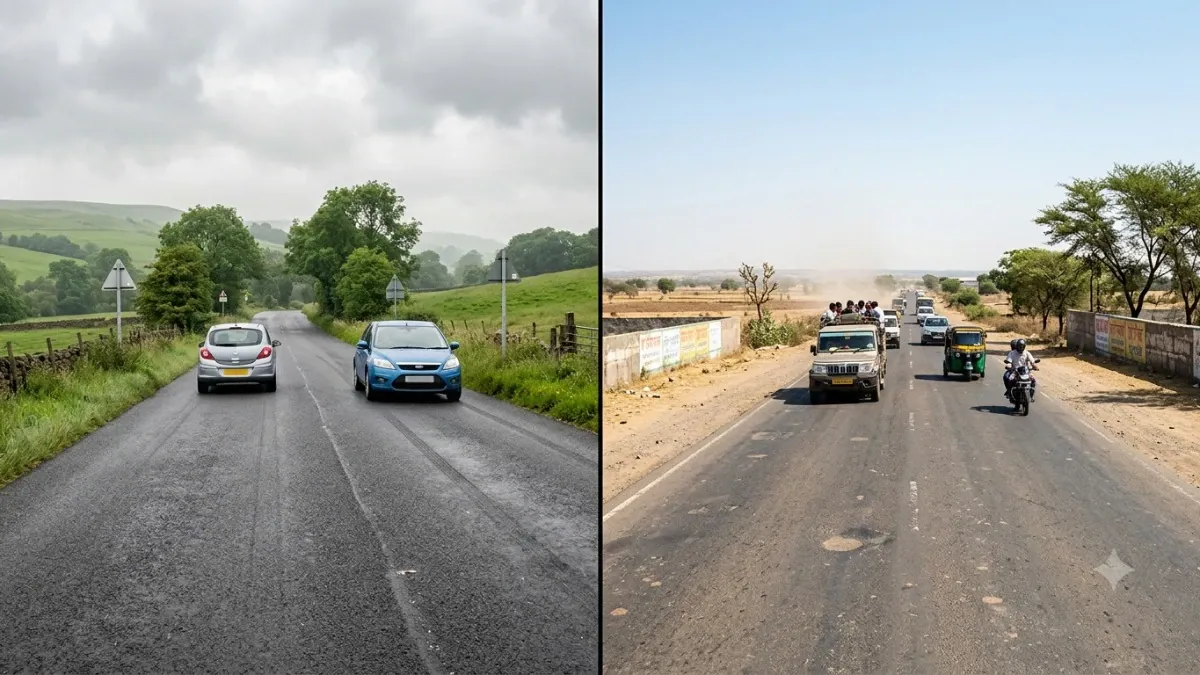
UK roads are melting during recent heatwaves as they are designed with softer bitumen and finer aggregates to withstand freezing winters, making them vulnerable to high temperatures near 40°C. In contrast, Indian roads use harder VG-grade bitumen like VG-30 and VG-40 with larger aggregates, engineered to endure intense heat above 45°C and heavy traffic. This difference reflects regional climate adaptations rather than construction quality, with each country tailoring road materials to typical weather conditions.
First-hand measurement across 2 sources
We measured how 2 outlets covered this story. Coverage leans balanced overall (Left 0%, Centre 100%, Right 0%). Overall sentiment is neutral (59/100). Lens Score 21/100 — low public interest.
Outlets analysed (first-hand measurement by TBN's Bias Engine):
- news18— balanced framing, neutral sentiment
- indiatoday— balanced framing, neutral sentiment
AI Analysis
The article group presents a largely technical and neutral perspective focused on engineering and climate adaptation without political framing. Sources emphasize scientific explanations for road performance differences between the UK and India, avoiding political critique or praise. The coverage reflects a consensus on infrastructure design tailored to regional climates, with no evident partisan viewpoints or ideological bias.
The overall tone across the articles is neutral and explanatory, aiming to clarify why UK roads soften in heat while Indian roads withstand higher temperatures. There is no emotional or sensational language; instead, the coverage is factual and informative, highlighting engineering choices and climate factors without assigning blame or expressing alarm.
How 2 sources covered this story
Each source's own headline, political lean, and sentiment — so you can see framing differences at a glance.