Satellite Data Confirms Strong El Niño with Elevated Pacific Sea Levels
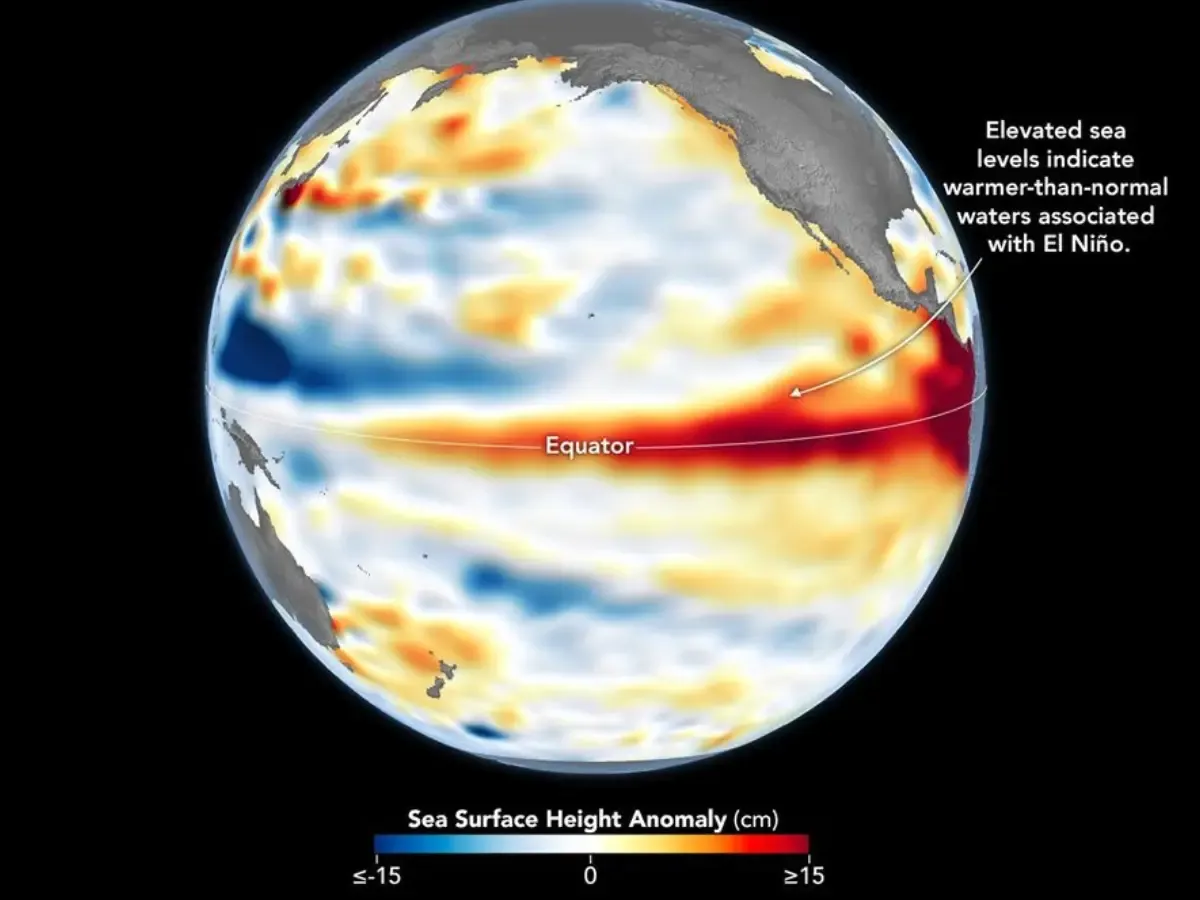
NASA and ESA's Sentinel-6 Michael Freilich satellite has captured elevated sea levels across the equatorial Pacific, confirming the development of a strong El Niño event in 2026. This rise in sea surface height indicates significant ocean warming and heat accumulation beneath the surface. Conditions resemble those of the 1997 'Godzilla El Niño,' which caused widespread climate impacts. NOAA officially declared El Niño on June 11, with scientists warning of potential extreme heat and weather disruptions globally.
First-hand measurement across 2 sources
We measured how 2 outlets covered this story. Coverage leans balanced overall (Left 0%, Centre 100%, Right 0%). Overall sentiment is neutral (35/100). Lens Score 28/100 — low public interest.
Outlets analysed (first-hand measurement by TBN's Bias Engine):
- wion— balanced framing, negative sentiment
- indiatoday— balanced framing, neutral sentiment
AI Analysis
The articles present scientific observations from NASA, ESA, and NOAA without political framing. Coverage focuses on climate data and potential environmental impacts, reflecting a consensus among scientific agencies. There is no evident political perspective or partisan interpretation, as the sources emphasize factual reporting on the El Niño phenomenon and its implications.
The tone across the articles is cautiously informative, highlighting the significance of the El Niño event and its potential for extreme weather. While the language conveys concern about possible climate impacts, it remains neutral and fact-based, avoiding alarmism. The sentiment is balanced, combining scientific explanation with warnings about environmental risks.
How 2 sources covered this story
Each source's own headline, political lean, and sentiment — so you can see framing differences at a glance.